
Details of Drug-Drug Interaction
| Drug General Information (ID: DDIGH2JIZO) | |||||||||
|---|---|---|---|---|---|---|---|---|---|
| Drug Name | Fenfluramine | Drug Info | Methylene blue | Drug Info | |||||
| Drug Type | Small molecule | Small molecule | |||||||
| Therapeutic Class | Cns Stimulants | Antidotes/Mao Inhibitors | |||||||
| Structure | |||||||||
| Mechanism of Fenfluramine-Methylene blue Interaction (Severity Level: Major) | |||||||||
|---|---|---|---|---|---|---|---|---|---|
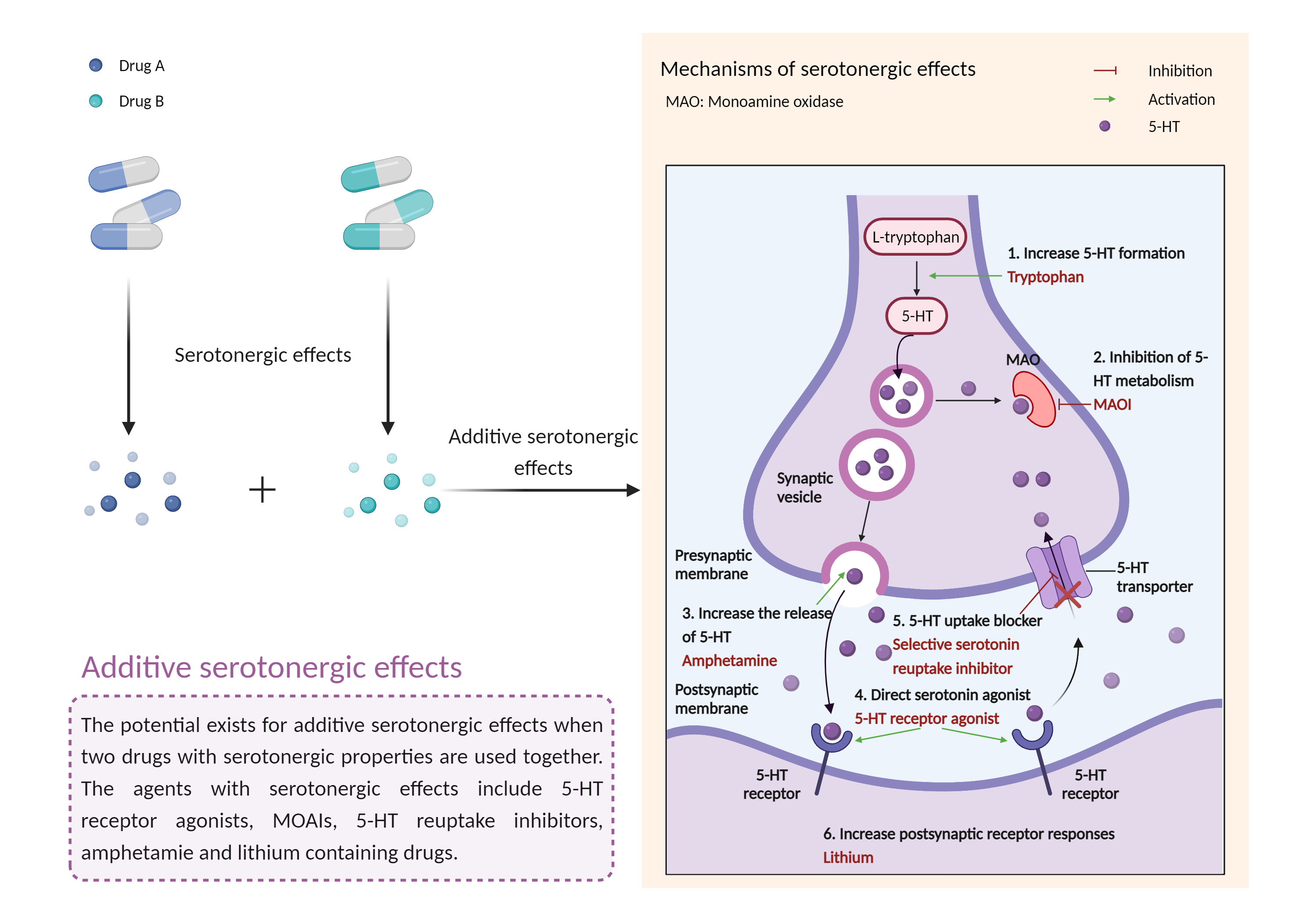
| Additive serotonergic effects Click to Show/Hide Mechanism Graph | |||||||||
 |
|||||||||
| Drug Name | Fenfluramine | Methylene blue | |||||||
| Mechanism |
Serotonergic effects 5-HT 2 receptor Agonist |
Serotonergic effects Monoamine oxidase non-selective Inhibitor |
|||||||
| Key Mechanism Factor 1 | |||||||||
| Factor Name | 5-HT 2 receptor | Structure Sequence | |||||||
| Protein Family | G-protein coupled receptor 1 family | ||||||||
| Protein Function |
G-protein coupled receptor for 5-hydroxytryptamine (serotonin) (PubMed:1330647, PubMed:18703043, PubMed:19057895). Also functions as a receptor for various drugs and psychoactive substances, including mescaline, psilocybin, 1-(2,5-dimethoxy-4-iodophenyl)-2-aminopropane (DOI) and lysergic acid diethylamide (LSD) (PubMed:28129538). Ligand binding causes a conformation change that triggers signaling via guanine nucleotide-binding proteins (G proteins) and modulates the activity of down-stream effectors (PubMed:28129538). Beta-arrestin family members inhibit signaling via G proteins and mediate activation of alternative signaling pathways (PubMed:28129538). Signaling activates phospholipase C and a phosphatidylinositol-calcium second messenger system that modulates the activity of phosphatidylinositol 3-kinase and promotes the release of Ca(2+) ions from intracellular stores (PubMed:18703043, PubMed:28129538). Affects neural activity, perception, cognition and mood (PubMed:18297054). Plays a role in the regulation of behavior, including responses to anxiogenic situations and psychoactive substances. Plays a role in intestinal smooth muscle contraction, and may play a role in arterial vasoconstriction.
Click to Show/Hide
|
||||||||
| Key Mechanism Factor 2 | |||||||||
| Factor Name | Monoamine oxidase | Structure Sequence | |||||||
| Protein Family | Flavin monoamine oxidase family | ||||||||
| Protein Function |
Catalyzes the oxidative deamination of primary and some secondary amine such as neurotransmitters, with concomitant reduction of oxygen to hydrogen peroxide and has important functions in the metabolism of neuroactive and vasoactive amines in the central nervous system and peripheral tissues (PubMed:20493079, PubMed:8316221, PubMed:18391214, PubMed:24169519). Preferentially oxidizes serotonin (PubMed:20493079, PubMed:24169519). Also catalyzes the oxidative deamination of kynuramine to 3-(2-aminophenyl)-3-oxopropanal that can spontaneously condense to 4-hydroxyquinoline (By similarity).
Click to Show/Hide
|
||||||||
| Mechanism Description |
|
||||||||
| Recommended Action | |||||||||
|---|---|---|---|---|---|---|---|---|---|
| Management | Serotonergic agents should not be used in patients receiving methylene blue intravenously. Most serotonergic psychiatric drugs should be stopped 1 to 2 weeks (i.e., 4 to 5 half-lives) prior to treatment with methylene blue if possible, while others such as fluoxetine may require discontinuation up to 5 weeks in advance due to its prolonged half-life. | ||||||||