
Details of Drug-Drug Interaction
| Drug General Information (ID: DDIG7WPOX2) | |||||||||
|---|---|---|---|---|---|---|---|---|---|
| Drug Name | Trifluoperazine | Drug Info | Pergolide | Drug Info | |||||
| Drug Type | Small molecule | Small molecule | |||||||
| Therapeutic Class | Antipsychotic Agents | Antiparkinson Agents | |||||||
| Structure | |||||||||
| Mechanism of Trifluoperazine-Pergolide Interaction (Severity Level: Moderate) | |||||||||
|---|---|---|---|---|---|---|---|---|---|
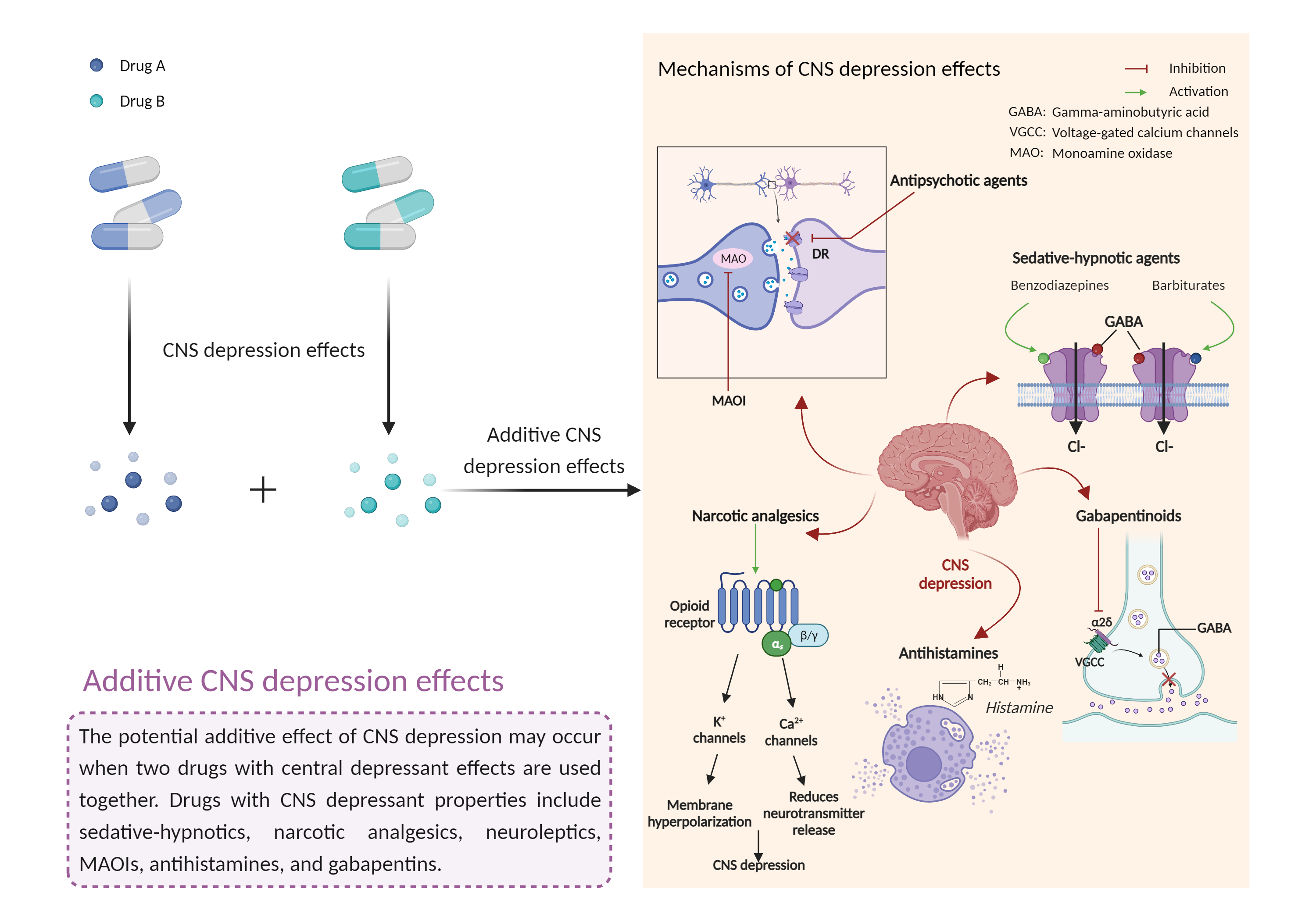
| Additive CNS depression effects Click to Show/Hide Mechanism Graph | |||||||||
 |
|||||||||
| Drug Name | Trifluoperazine | Pergolide | |||||||
| Mechanism 1 | CNS depression effects | CNS depression effects | |||||||
| Key Mechanism Factor 1 | |||||||||
| Factor Name | CNS depression effects | ||||||||
| Factor Description | CNS depressants are drugs that inhibit or suppress brain activity and can reduce mental and physical processes. Excessive CNS depression can lead to decreased heart rate, slow breathing (less than 10 breaths per minute), extreme confusion or loss of memory, nausea and vomiting, poor judgment, blue lips or fingertips, irritability and aggression, and clammy or cold skin. | ||||||||
| Mechanism Description |
|
||||||||
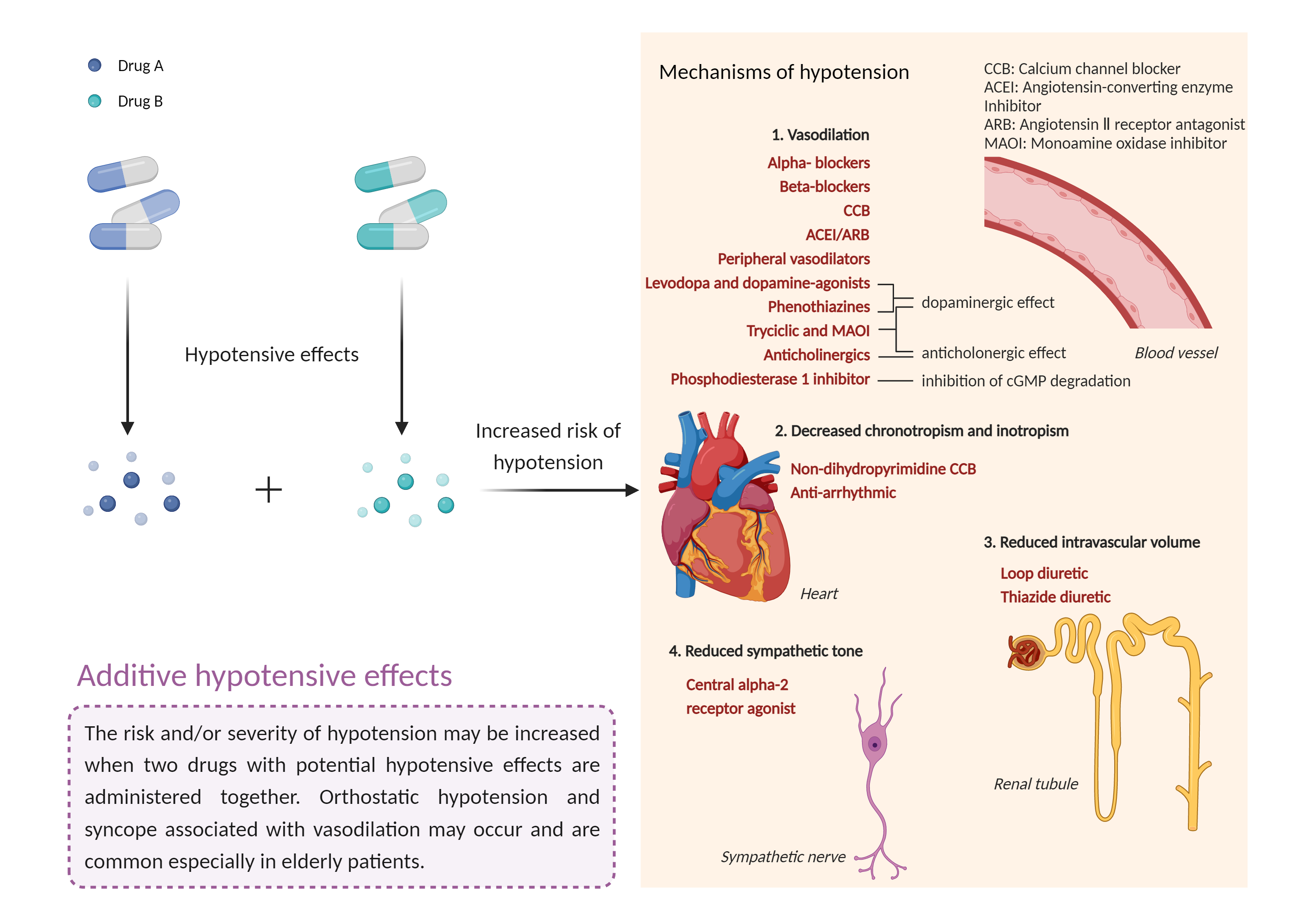
| Additive hypotensive effects Click to Show/Hide Mechanism Graph | |||||||||
 |
|||||||||
| Drug Name | Trifluoperazine | Pergolide | |||||||
| Mechanism 2 |
Hypotensive effects Calmodulin Inhibitor |
Hypotensive effects Dopamine D1 receptor Agonist |
|||||||
| Key Mechanism Factor 2 | |||||||||
| Factor Name | Calmodulin-1 |
×
Structure
Sequence
MADQLTEEQIAEFKEAFSLFDKDGDGTITTKELGTVMRSLGQNPTEAELQDMINEVDADGNGTIDFPEFLTMMARKMKDTDSEEEIREAFRVFDKDGNGYISAAELRHVMTNLGEKLTDEEVDEMIREADIDGDGQVNYEEFVQMMTAK
|
|||||||
| Gene Name | CALM1 | ||||||||
| Uniprot ID | CALM1_HUMAN | ||||||||
| KEGG Pathway | hsa:801 | ||||||||
| Protein Family | Calmodulin family | ||||||||
| Protein Function |
Calmodulin mediates the control of a large number of enzymes, ion channels, aquaporins and other proteins through calcium-binding. Among the enzymes to be stimulated by the calmodulin-calcium complex are a number of protein kinases and phosphatases. Together with CCP110 and centrin, is involved in a genetic pathway that regulates the centrosome cycle and progression through cytokinesis (PubMed:16760425). Is a regulator of voltage-dependent L-type calcium channels (PubMed:31454269). Mediates calcium-dependent inactivation of CACNA1C (PubMed:26969752). Positively regulates calcium-activated potassium channel activity of KCNN2 (PubMed:27165696). Forms a potassium channel complex with KCNQ1 and regulates electrophysiological activity of the channel via calcium-binding (PubMed:25441029). Acts as a sensor to modulate the endoplasmic reticulum contacts with other organelles mediated by VMP1:ATP2A2 (PubMed:28890335).
Click to Show/Hide
|
||||||||
| Key Mechanism Factor 3 | |||||||||
| Factor Name | Dopamine D1 receptor |
×
Structure
Sequence
MRTLNTSAMDGTGLVVERDFSVRILTACFLSLLILSTLLGNTLVCAAVIRFRHLRSKVTNFFVISLAVSDLLVAVLVMPWKAVAEIAGFWPFGSFCNIWVAFDIMCSTASILNLCVISVDRYWAISSPFRYERKMTPKAAFILISVAWTLSVLISFIPVQLSWHKAKPTSPSDGNATSLAETIDNCDSSLSRTYAISSSVISFYIPVAIMIVTYTRIYRIAQKQIRRIAALERAAVHAKNCQTTTGNGKPVECSQPESSFKMSFKRETKVLKTLSVIMGVFVCCWLPFFILNCILPFCGSGETQPFCIDSNTFDVFVWFGWANSSLNPIIYAFNADFRKAFSTLLGCYRLCPATNNAIETVSINNNGAAMFSSHHEPRGSISKECNLVYLIPHAVGSSEDLKKEEAAGIARPLEKLSPALSVILDYDTDVSLEKIQPITQNGQHPT
|
|||||||
| Gene Name | DRD1 | ||||||||
| Uniprot ID | DRD1_HUMAN | ||||||||
| KEGG Pathway | hsa:1812 | ||||||||
| Protein Family | G-protein coupled receptor 1 family | ||||||||
| Protein Function |
Dopamine receptor whose activity is mediated by G proteins which activate adenylyl cyclase.
Click to Show/Hide
|
||||||||
| Mechanism Description |
|
||||||||
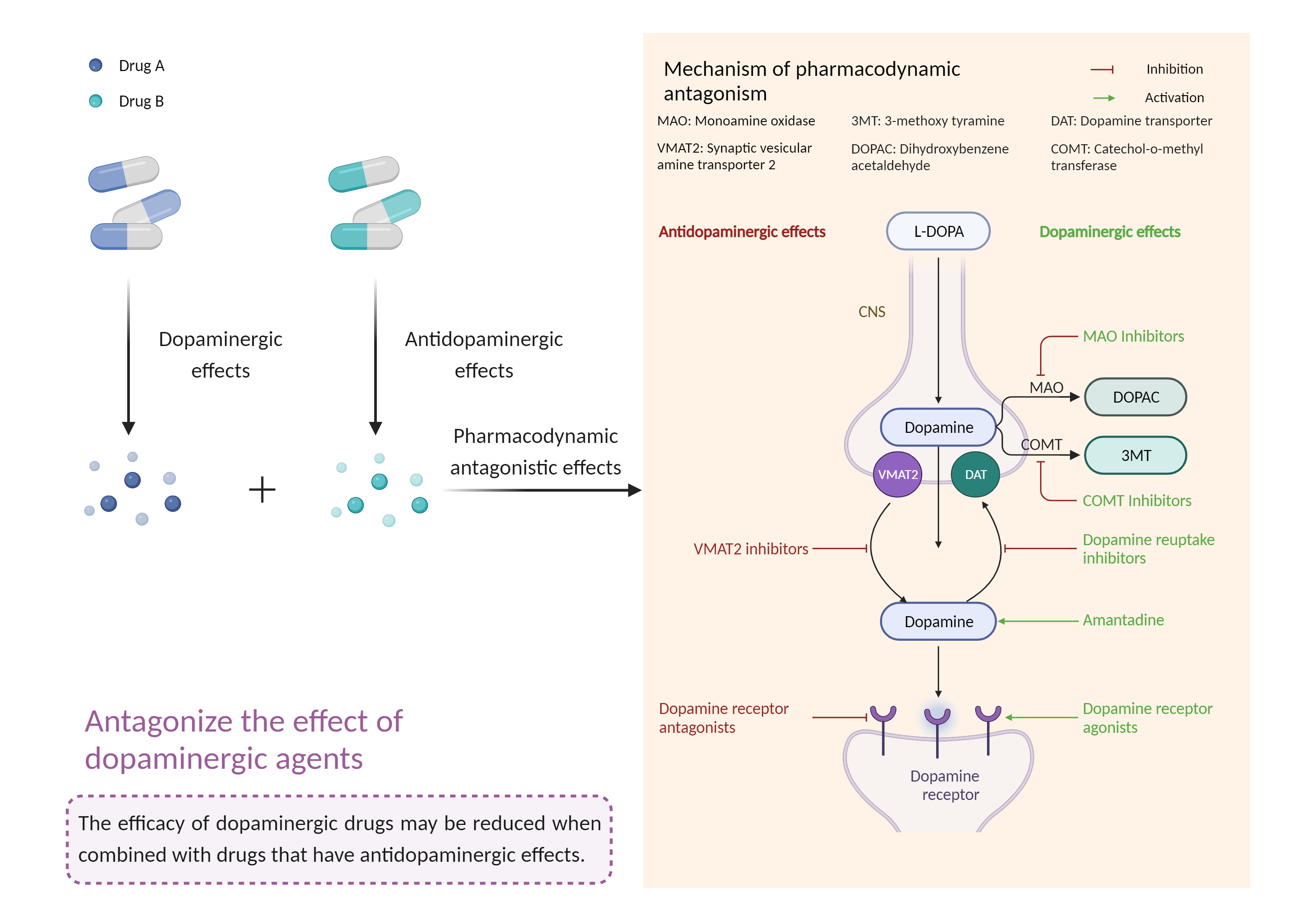
| Antagonize the effect of dopaminergic agents Click to Show/Hide Mechanism Graph | |||||||||
 |
|||||||||
| Drug Name | Trifluoperazine | Pergolide | |||||||
| Mechanism 3 |
Antidopaminergic effects Dopamine receptor Antagonist |
Dopaminergic agent Dopamine receptor Agonist |
|||||||
| Key Mechanism Factor 4 | |||||||||
| Factor Name | Dopamine receptor | Structure Sequence | |||||||
| Protein Family | G-protein coupled receptor 1 family | ||||||||
| Protein Function |
Dopamine receptor whose activity is mediated by G proteins which activate adenylyl cyclase.
Click to Show/Hide
|
||||||||
| Mechanism Description |
|
||||||||
| Recommended Action | |||||||||
|---|---|---|---|---|---|---|---|---|---|
| Management | Concomitant use of dopaminergic drugs with antidopaminergic agents should generally be avoided. If coadministration is necessary, patients should be alerted to the possibility of excessive drowsiness and monitored for potentially diminished therapeutic response to both treatments. Patients treated for Parkinson's disease should generally avoid antidopaminergic agents, particularly phenothiazines and older neuroleptic agents, since these agents may cause extrapyramidal reactions and exacerbate the symptoms of Parkinson's disease. Likewise, patients with a major psychotic disorder should ordinarily not be treated with dopaminergic drugs because of the risk of exacerbating the psychosis with an increase in central dopaminergic tone. | ||||||||