| Mechanism of Botulinum Toxin Type B-Orphenadrine Interaction
(Severity Level: Moderate)
|
|
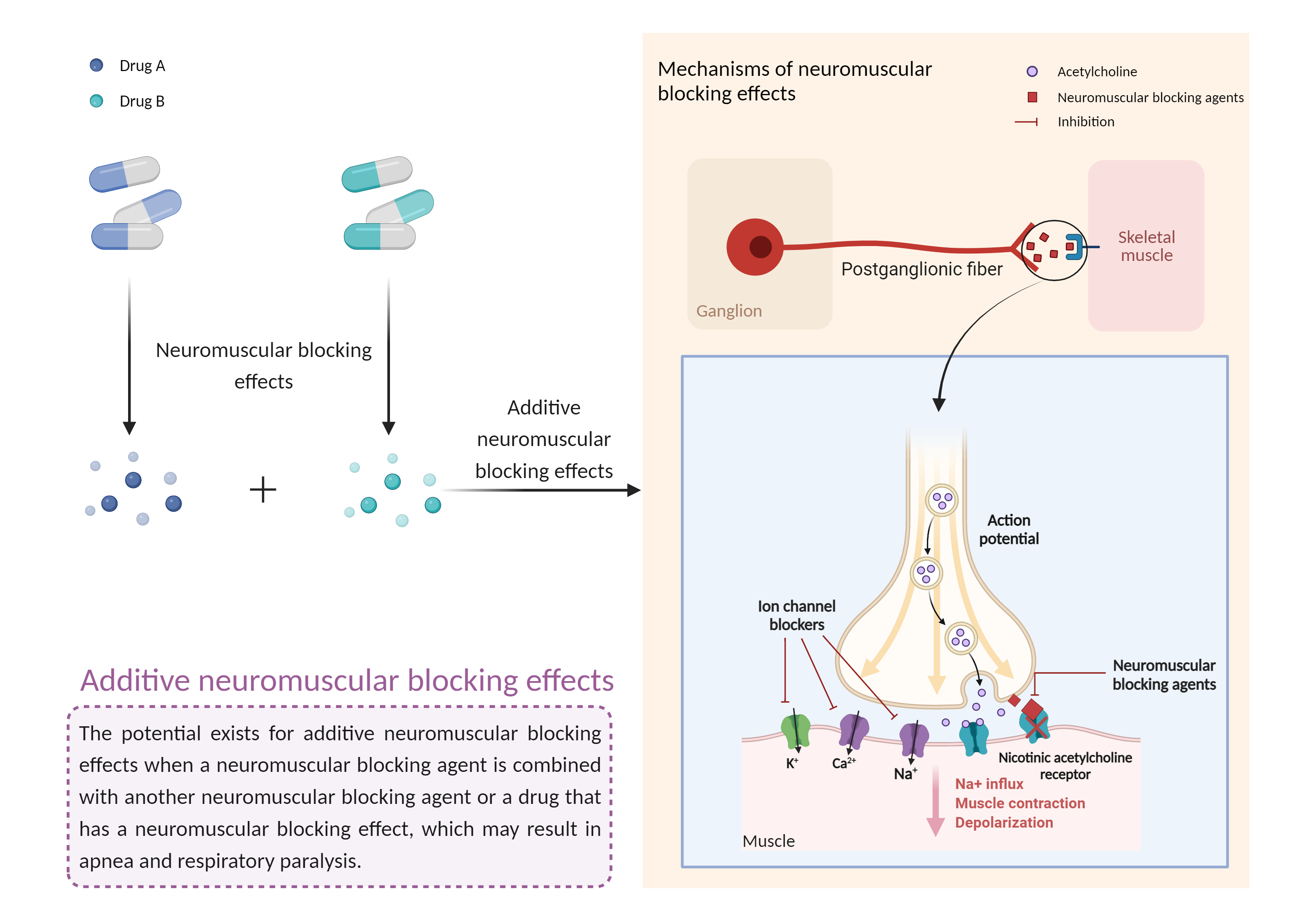
Additive neuromuscular blocking effects
Click to Show/Hide Mechanism Graph
|
 |
| Drug Name |
Botulinum Toxin Type B |
Orphenadrine |
|
Mechanism
|
Neuromuscular blocking effects |
Neuromuscular blocking effects |
| Key Mechanism Factor 1 |
| Factor Name |
Neuromuscular blocking effects |
| Factor Description |
Neuromuscular blocking agents cause paralysis of affected skeletal muscles by blocking postsynaptic acetylcholine (Nm) receptors, thereby blocking neuromuscular signaling at the neuromuscular junction. Neuromuscular blocking agents can cause the following side effects: muscle paralysis, jaw stiffness, and shortness of breath. Concomitant use of drugs with neuromuscular blocking activity may result in severe and/or prolonged respiratory depression. |
| Mechanism Description |
- Additive neuromuscular blocking effects by the combination of Botulinum Toxin Type B and Orphenadrine
|
