
Details of Drug-Drug Interaction
| Drug General Information (ID: DDIFR8S035) | |||||||||
|---|---|---|---|---|---|---|---|---|---|
| Drug Name | Indapamide | Drug Info | Safinamide | Drug Info | |||||
| Drug Type | Small molecule | Small molecule | |||||||
| Therapeutic Class | Antihypertensive Agents | Dopaminergic Antiparkinsonism Agents | |||||||
| Structure | |||||||||
| Mechanism of Indapamide-Safinamide Interaction (Severity Level: Moderate) | |||||||||
|---|---|---|---|---|---|---|---|---|---|
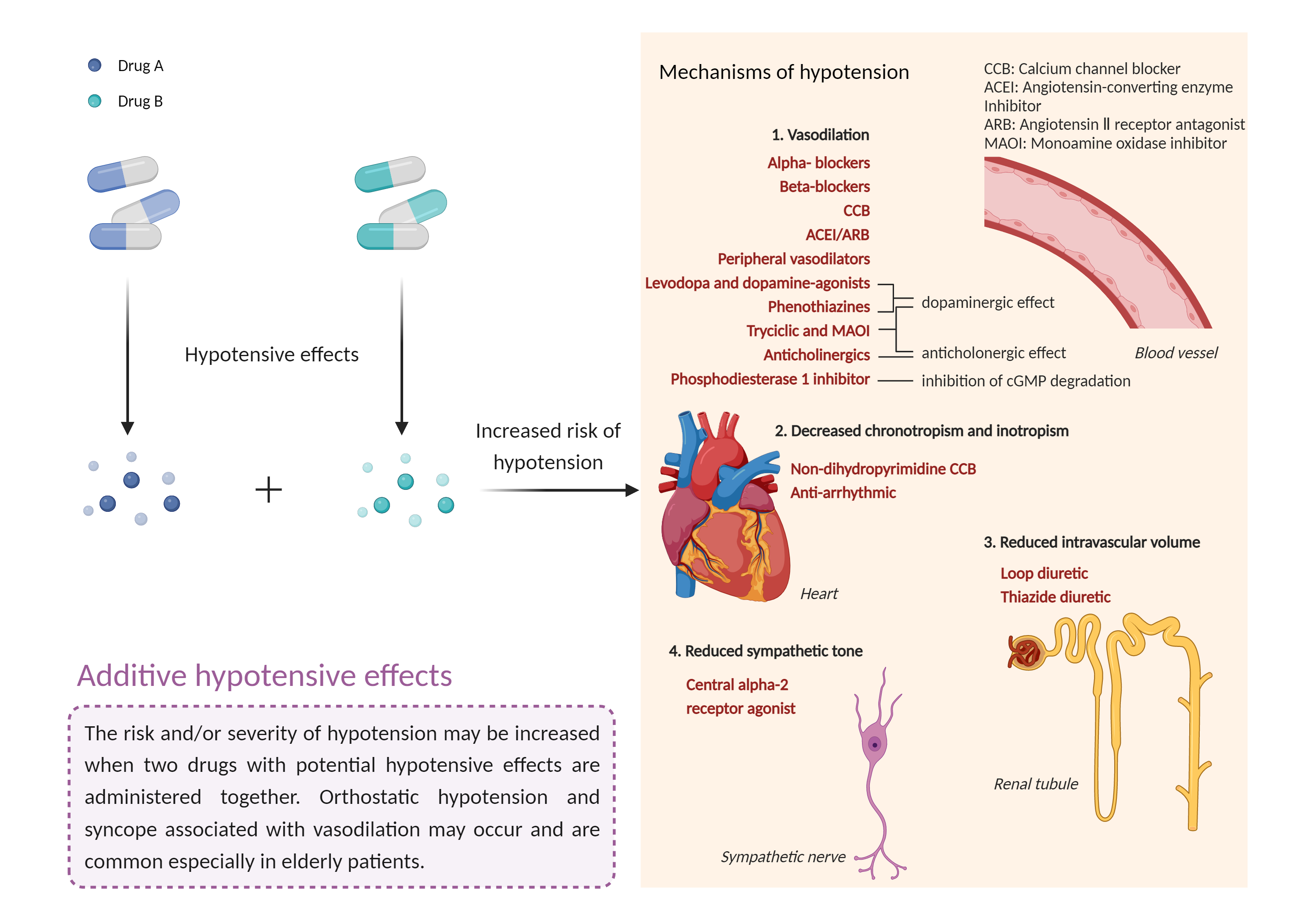
| Additive hypotensive effects Click to Show/Hide Mechanism Graph | |||||||||
 |
|||||||||
| Drug Name | Indapamide | Safinamide | |||||||
| Mechanism |
Hypotensive effects Voltage-gated potassium channel Blocker |
Hypotensive effects Monoamine oxidase-B selective Inhibitor |
|||||||
| Key Mechanism Factor 1 | |||||||||
| Factor Name | Voltage-gated potassium channel Kv7.1 |
×
Structure
Sequence
MAAASSPPRAERKRWGWGRLPGARRGSAGLAKKCPFSLELAEGGPAGGALYAPIAPGAPGPAPPASPAAPAAPPVASDLGPRPPVSLDPRVSIYSTRRPVLARTHVQGRVYNFLERPTGWKCFVYHFAVFLIVLVCLIFSVLSTIEQYAALATGTLFWMEIVLVVFFGTEYVVRLWSAGCRSKYVGLWGRLRFARKPISIIDLIVVVASMVVLCVGSKGQVFATSAIRGIRFLQILRMLHVDRQGGTWRLLGSVVFIHRQELITTLYIGFLGLIFSSYFVYLAEKDAVNESGRVEFGSYADALWWGVVTVTTIGYGDKVPQTWVGKTIASCFSVFAISFFALPAGILGSGFALKVQQKQRQKHFNRQIPAAASLIQTAWRCYAAENPDSSTWKIYIRKAPRSHTLLSPSPKPKKSVVVKKKKFKLDKDNGVTPGEKMLTVPHITCDPPEERRLDHFSVDGYDSSVRKSPTLLEVSMPHFMRTNSFAEDLDLEGETLLTPITHISQLREHHRATIKVIRRMQYFVAKKKFQQARKPYDVRDVIEQYSQGHLNLMVRIKELQRRLDQSIGKPSLFISVSEKSKDRGSNTIGARLNRVEDKVTQLDQRLALITDMLHQLLSLHGGSTPGSGGPPREGGAHITQPCGSGGSVDPELFLPSNTLPTYEQLTVPRRGPDEGS
|
|||||||
| Gene Name | KCNQ1 | ||||||||
| Uniprot ID | KCNQ1_HUMAN | ||||||||
| KEGG Pathway | hsa:3784 | ||||||||
| Protein Family | Potassium channel family | ||||||||
| Protein Function |
Potassium channel that plays an important role in a number of tissues, including heart, inner ear, stomach and colon (PubMed:10646604, PubMed:25441029). Associates with KCNE beta subunits that modulates current kinetics (PubMed:9312006, PubMed:9108097, PubMed:8900283, PubMed:10646604, PubMed:11101505, PubMed:19687231). Induces a voltage-dependent current by rapidly activating and slowly deactivating potassium-selective outward current (PubMed:9312006, PubMed:9108097, PubMed:8900283, PubMed:10646604, PubMed:11101505, PubMed:25441029). Promotes also a delayed voltage activated potassium current showing outward rectification characteristic (By similarity). During beta-adrenergic receptor stimulation participates in cardiac repolarization by associating with KCNE1 to form the I(Ks) cardiac potassium current that increases the amplitude and slows down the activation kinetics of outward potassium current I(Ks) (By similarity) (PubMed:9312006, PubMed:9108097, PubMed:8900283, PubMed:10646604, PubMed:11101505). Muscarinic agonist oxotremorine-M strongly suppresses KCNQ1/KCNE1 current (PubMed:10713961). When associated with KCNE3, forms the potassium channel that is important for cyclic AMP-stimulated intestinal secretion of chloride ions (PubMed:10646604). This interaction with KCNE3 is reduced by 17beta-estradiol, resulting in the reduction of currents (By similarity). During conditions of increased substrate load, maintains the driving force for proximal tubular and intestinal sodium ions absorption, gastric acid secretion, and cAMP-induced jejunal chloride ions secretion (By similarity). Allows the provision of potassium ions to the luminal membrane of the secretory canaliculus in the resting state as well as during stimulated acid secretion (By similarity). When associated with KCNE2, forms a heterooligomer complex leading to currents with an apparently instantaneous activation, a rapid deactivation process and a linear current-voltage relationship and decreases the amplitude of the outward current (PubMed:11101505). When associated with KCNE4, inhibits voltage-gated potassium channel activity (PubMed:19687231). When associated with KCNE5, this complex only conducts current upon strong and continued depolarization (PubMed:12324418). Also forms a heterotetramer with KCNQ5; has a voltage-gated potassium channel activity (PubMed:24855057). Binds with phosphatidylinositol 4,5-bisphosphate (PubMed:25037568).
Click to Show/Hide
|
||||||||
| Key Mechanism Factor 2 | |||||||||
| Factor Name | Monoamine oxidase type B |
×
Structure
Sequence
MSNKCDVVVVGGGISGMAAAKLLHDSGLNVVVLEARDRVGGRTYTLRNQKVKYVDLGGSYVGPTQNRILRLAKELGLETYKVNEVERLIHHVKGKSYPFRGPFPPVWNPITYLDHNNFWRTMDDMGREIPSDAPWKAPLAEEWDNMTMKELLDKLCWTESAKQLATLFVNLCVTAETHEVSALWFLWYVKQCGGTTRIISTTNGGQERKFVGGSGQVSERIMDLLGDRVKLERPVIYIDQTRENVLVETLNHEMYEAKYVISAIPPTLGMKIHFNPPLPMMRNQMITRVPLGSVIKCIVYYKEPFWRKKDYCGTMIIDGEEAPVAYTLDDTKPEGNYAAIMGFILAHKARKLARLTKEERLKKLCELYAKVLGSLEALEPVHYEEKNWCEEQYSGGCYTTYFPPGILTQYGRVLRQPVDRIYFAGTETATHWSGYMEGAVEAGERAAREILHAMGKIPEDEIWQSEPESVDVPAQPITTTFLERHLPSVPGLLRLIGLTTIFSATALGFLAHKRGLLVRV
|
|||||||
| Gene Name | MAOB | ||||||||
| Uniprot ID | AOFB_HUMAN | ||||||||
| KEGG Pathway | hsa:4129 | ||||||||
| Protein Family | Flavin monoamine oxidase family | ||||||||
| Protein Function |
Catalyzes the oxidative deamination of primary and some secondary amines such as neurotransmitters, and exogenous amines including the tertiary amine, neurotoxin 1-methyl-4-phenyl-1,2,3,6-tetrahydropyridine (MPTP), with concomitant reduction of oxygen to hydrogen peroxide and participates in the metabolism of neuroactive and vasoactive amines in the central nervous system and peripheral tissues (PubMed:11134050, PubMed:8665924, PubMed:8316221, PubMed:11049757, PubMed:20493079). Preferentially degrades benzylamine and phenylethylamine (PubMed:11134050, PubMed:8665924, PubMed:8316221, PubMed:11049757, PubMed:20493079).
Click to Show/Hide
|
||||||||
| Mechanism Description |
|
||||||||
| Recommended Action | |||||||||
|---|---|---|---|---|---|---|---|---|---|
| Management | Caution is advised during coadministration of MAOIs and other medications with hypotensive effects, especially during the first few weeks of treatment. Close monitoring for development of hypotension is recommended. Ambulatory patients should be advised to avoid rising abruptly from a sitting or recumbent position and to notify their physician if they experience dizziness, lightheadedness, syncope, orthostasis, or tachycardia. | ||||||||