
Details of Drug-Drug Interaction
| Drug General Information (ID: DDIEULI6G2) | |||||||||
|---|---|---|---|---|---|---|---|---|---|
| Drug Name | Brimonidine (topical) | Drug Info | Hydralazine | Drug Info | |||||
| Drug Type | Small molecule | Small molecule | |||||||
| Therapeutic Class | Ophthalmic Glaucoma Agents | Antihypertensive Agents | |||||||
| Structure | |||||||||
| Mechanism of Brimonidine (topical)-Hydralazine Interaction (Severity Level: Moderate) | |||||||||
|---|---|---|---|---|---|---|---|---|---|
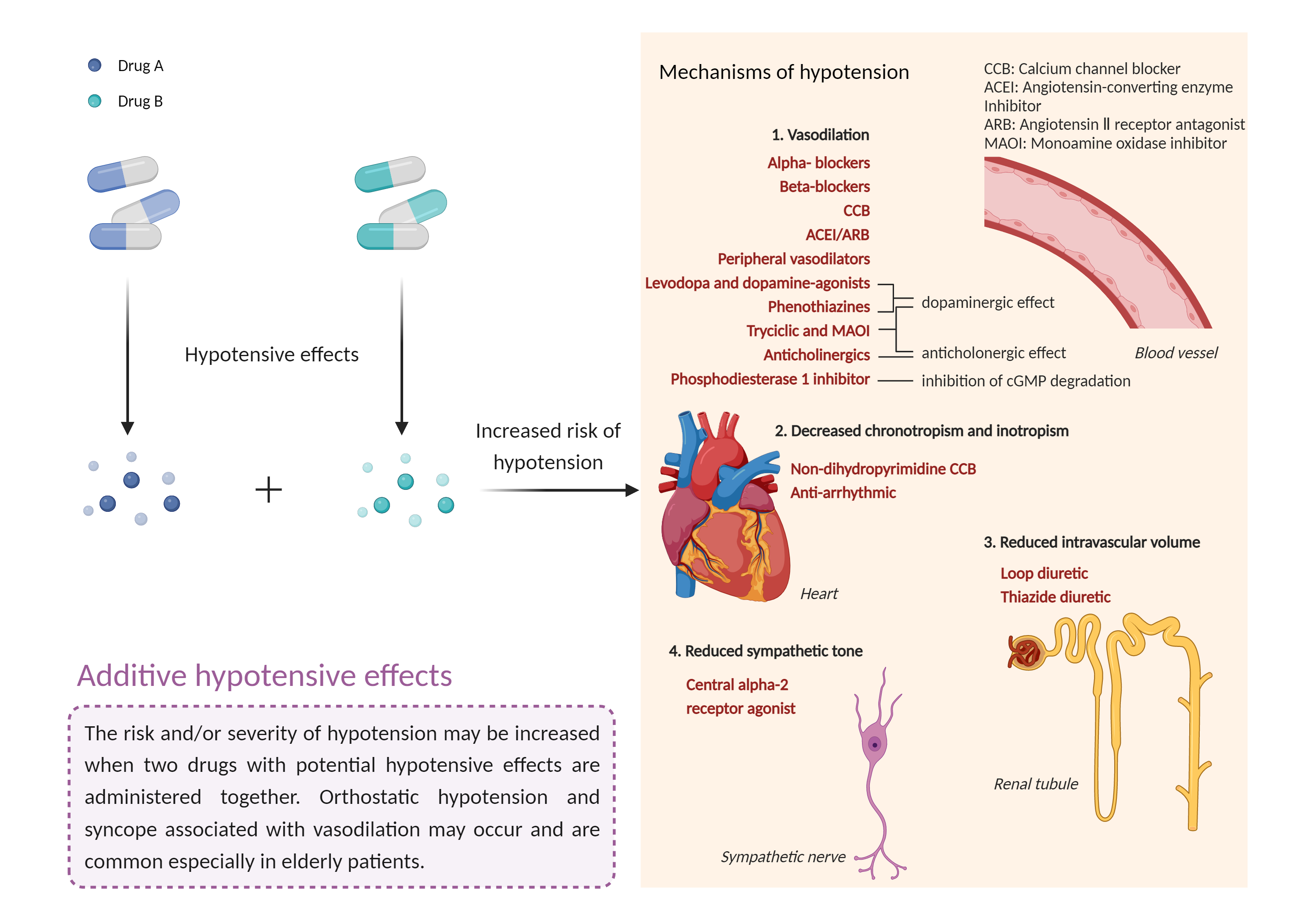
| Additive hypotensive effects Click to Show/Hide Mechanism Graph | |||||||||
 |
|||||||||
| Drug Name | Brimonidine (topical) | Hydralazine | |||||||
| Mechanism |
Hypotensive effects Alpha-2 adrenergic receptor Agonist |
Antihypertensive agent Membrane copper amine oxidase Inhibitor |
|||||||
| Key Mechanism Factor 1 | |||||||||
| Factor Name | Adrenergic receptor alpha-2 | Structure Sequence | |||||||
| Protein Family | G-protein coupled receptor 1 family | ||||||||
| Protein Function |
Alpha-2 adrenergic receptors mediate the catecholamine-induced inhibition of adenylate cyclase through the action of G proteins. The rank order of potency for agonists of this receptor is oxymetazoline > clonidine > epinephrine > norepinephrine > phenylephrine > dopamine > p-synephrine > p-tyramine > serotonin = p-octopamine. For antagonists, the rank order is yohimbine > phentolamine = mianserine > chlorpromazine = spiperone = prazosin > propanolol > alprenolol = pindolol.
Click to Show/Hide
|
||||||||
| Key Mechanism Factor 2 | |||||||||
| Factor Name | Membrane copper amine oxidase |
×
Structure
Sequence
MNQKTILVLLILAVITIFALVCVLLVGRGGDGGEPSQLPHCPSVSPSAQPWTHPGQSQLFADLSREELTAVMRFLTQRLGPGLVDAAQARPSDNCVFSVELQLPPKAAALAHLDRGSPPPAREALAIVFFGRQPQPNVSELVVGPLPHPSYMRDVTVERHGGPLPYHRRPVLFQEYLDIDQMIFNRELPQASGLLHHCCFYKHRGRNLVTMTTAPRGLQSGDRATWFGLYYNISGAGFFLHHVGLELLVNHKALDPARWTIQKVFYQGRYYDSLAQLEAQFEAGLVNVVLIPDNGTGGSWSLKSPVPPGPAPPLQFYPQGPRFSVQGSRVASSLWTFSFGLGAFSGPRIFDVRFQGERLVYEISLQEALAIYGGNSPAAMTTRYVDGGFGMGKYTTPLTRGVDCPYLATYVDWHFLLESQAPKTIRDAFCVFEQNQGLPLRRHHSDLYSHYFGGLAETVLVVRSMSTLLNYDYVWDTVFHPSGAIEIRFYATGYISSAFLFGATGKYGNQVSEHTLGTVHTHSAHFKVDLDVAGLENWVWAEDMVFVPMAVPWSPEHQLQRLQVTRKLLEMEEQAAFLVGSATPRYLYLASNHSNKWGHPRGYRIQMLSFAGEPLPQNSSMARGFSWERYQLAVTQRKEEEPSSSSVFNQNDPWAPTVDFSDFINNETIAGKDLVAWVTAGFLHIPHAEDIPNTVTVGNGVGFFLRPYNFFDEDPSFYSADSIYFRGDQDAGACEVNPLACLPQAAACAPDLPAFSHGGFSHN
|
|||||||
| Gene Name | AOC3 | ||||||||
| Uniprot ID | AOC3_HUMAN | ||||||||
| KEGG Pathway | hsa:8639 | ||||||||
| Protein Family | Copper/topaquinone oxidase family | ||||||||
| Protein Function |
Cell adhesion protein that participates in lymphocyte extravasation and recirculation by mediating the binding of lymphocytes to peripheral lymph node vascular endothelial cells in an L-selectin-independent fashion. Has semicarbazide-sensitive (SSAO) monoamine oxidase activity. May play a role in adipogenesis.
Click to Show/Hide
|
||||||||
| Mechanism Description |
|
||||||||
| Recommended Action | |||||||||
|---|---|---|---|---|---|---|---|---|---|
| Management | Blood pressure and pulse rate should be monitored regularly when topical alpha-2 adrenergic receptor agonists are prescribed in combination with cardiovascular drugs. Patients should be advised to notify their physician if they experience slow pulse, irregular heartbeat, dizziness, lightheadedness, or syncope. | ||||||||