
Details of Drug-Drug Interaction
| Drug General Information (ID: DDID69GQ3A) | |||||||||
|---|---|---|---|---|---|---|---|---|---|
| Drug Name | Treprostinil | Drug Info | Licorice | Drug Info | |||||
| Drug Type | Small molecule | Natural product | |||||||
| Therapeutic Class | Antihypertensive Agents | Herbal Products | |||||||
| Structure | |||||||||
| Mechanism of Treprostinil-Licorice Interaction (Severity Level: Moderate) | |||||||||
|---|---|---|---|---|---|---|---|---|---|
| Antagonize the effect of antihypertensive agents Click to Show/Hide Mechanism Graph | |||||||||
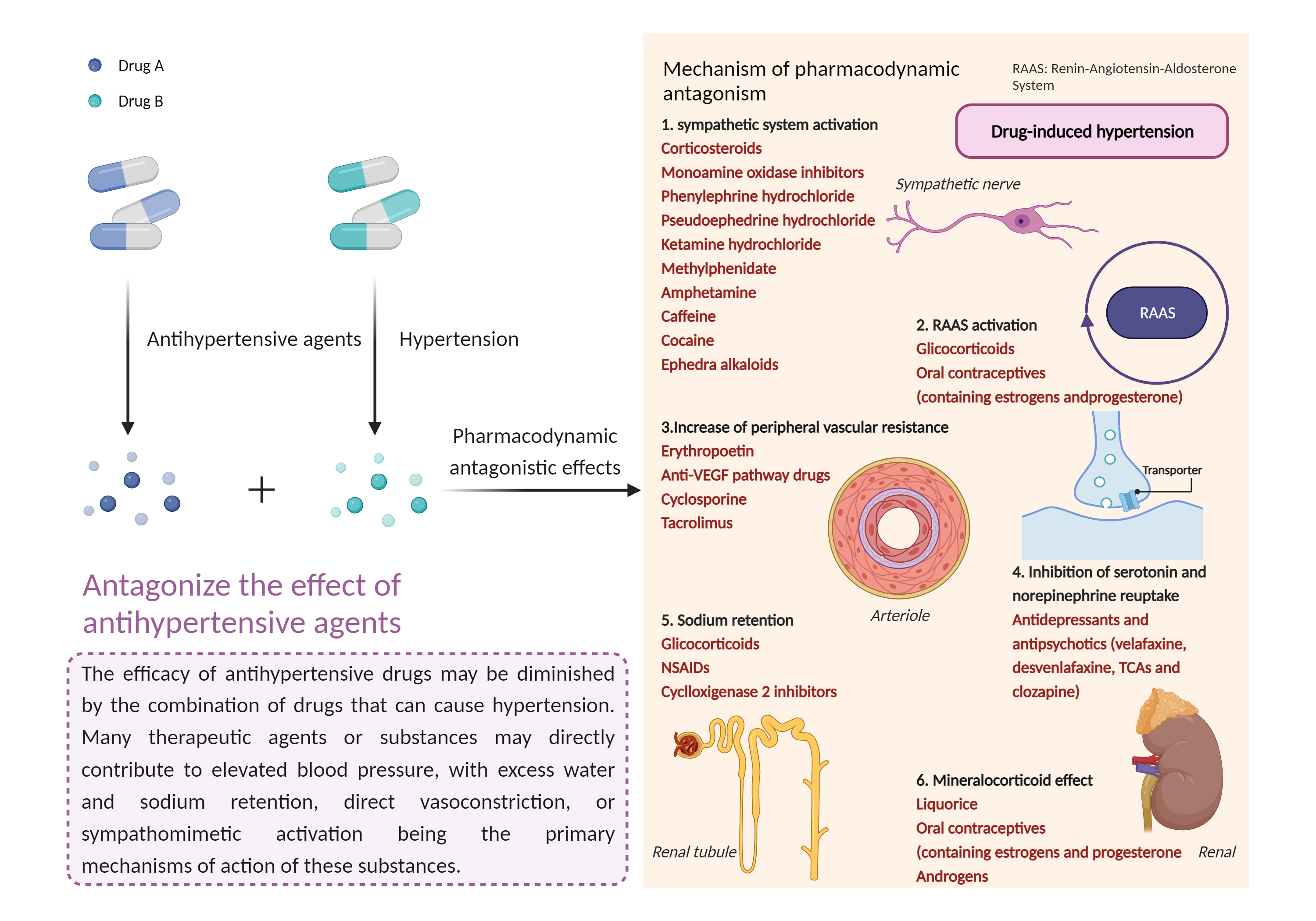 |
|||||||||
| Drug Name | Treprostinil | Licorice | |||||||
| Mechanism |
Antihypertensive agent Prostaglandin receptor Agonist |
Hypertensive effects Mineralocorticoid and renin-suppressing effects |
|||||||
| Key Mechanism Factor 1 | |||||||||
| Factor Name | Prostaglandin D2 receptor |
×
Structure
Sequence
MKSPFYRCQNTTSVEKGNSAVMGGVLFSTGLLGNLLALGLLARSGLGWCSRRPLRPLPSVFYMLVCGLTVTDLLGKCLLSPVVLAAYAQNRSLRVLAPALDNSLCQAFAFFMSFFGLSSTLQLLAMALECWLSLGHPFFYRRHITLRLGALVAPVVSAFSLAFCALPFMGFGKFVQYCPGTWCFIQMVHEEGSLSVLGYSVLYSSLMALLVLATVLCNLGAMRNLYAMHRRLQRHPRSCTRDCAEPRADGREASPQPLEELDHLLLLALMTVLFTMCSLPVIYRAYYGAFKDVKEKNRTSEEAEDLRALRFLSVISIVDPWIFIIFRSPVFRIFFHKIFIRPLRYRSRCSNSTNMESSL
|
|||||||
| Gene Name | PTGDR | ||||||||
| Uniprot ID | PD2R_HUMAN | ||||||||
| KEGG Pathway | hsa:5729 | ||||||||
| Protein Family | G-protein coupled receptor 1 family | ||||||||
| Protein Function |
Receptor for prostaglandin D2 (PGD2). The activity of this receptor is mainly mediated by G(s) proteins that stimulate adenylate cyclase, resulting in an elevation of intracellular cAMP. A mobilization of calcium is also observed, but without formation of inositol 1,4,5-trisphosphate (By similarity). Involved in PLA2G3-dependent maturation of mast cells. PLA2G3 is secreted by immature mast cells and acts on nearby fibroblasts upstream to PTDGS to synthesize PGD2, which in turn promotes mast cell maturation and degranulation via PTGDR (By similarity).
Click to Show/Hide
|
||||||||
| Mechanism Description |
|
||||||||
| Recommended Action | |||||||||
|---|---|---|---|---|---|---|---|---|---|
| Management | Patients receiving antihypertensive therapy should avoid or limit the consumption of licorice-containing products. Even relatively moderate doses of licorice may be problematic in susceptible patients when ingested regularly for prolonged periods. | ||||||||