
Details of Drug-Drug Interaction
| Drug General Information (ID: DDID34BWIJ) | |||||||||
|---|---|---|---|---|---|---|---|---|---|
| Drug Name | Dicoumarol | Drug Info | Ginkgo biloba | Drug Info | |||||
| Drug Type | Small molecule | Natural product | |||||||
| Therapeutic Class | Anticoagulants | Herbal Products | |||||||
| Mechanism of Dicoumarol-Ginkgo biloba Interaction (Severity Level: Moderate) | |||||||||
|---|---|---|---|---|---|---|---|---|---|
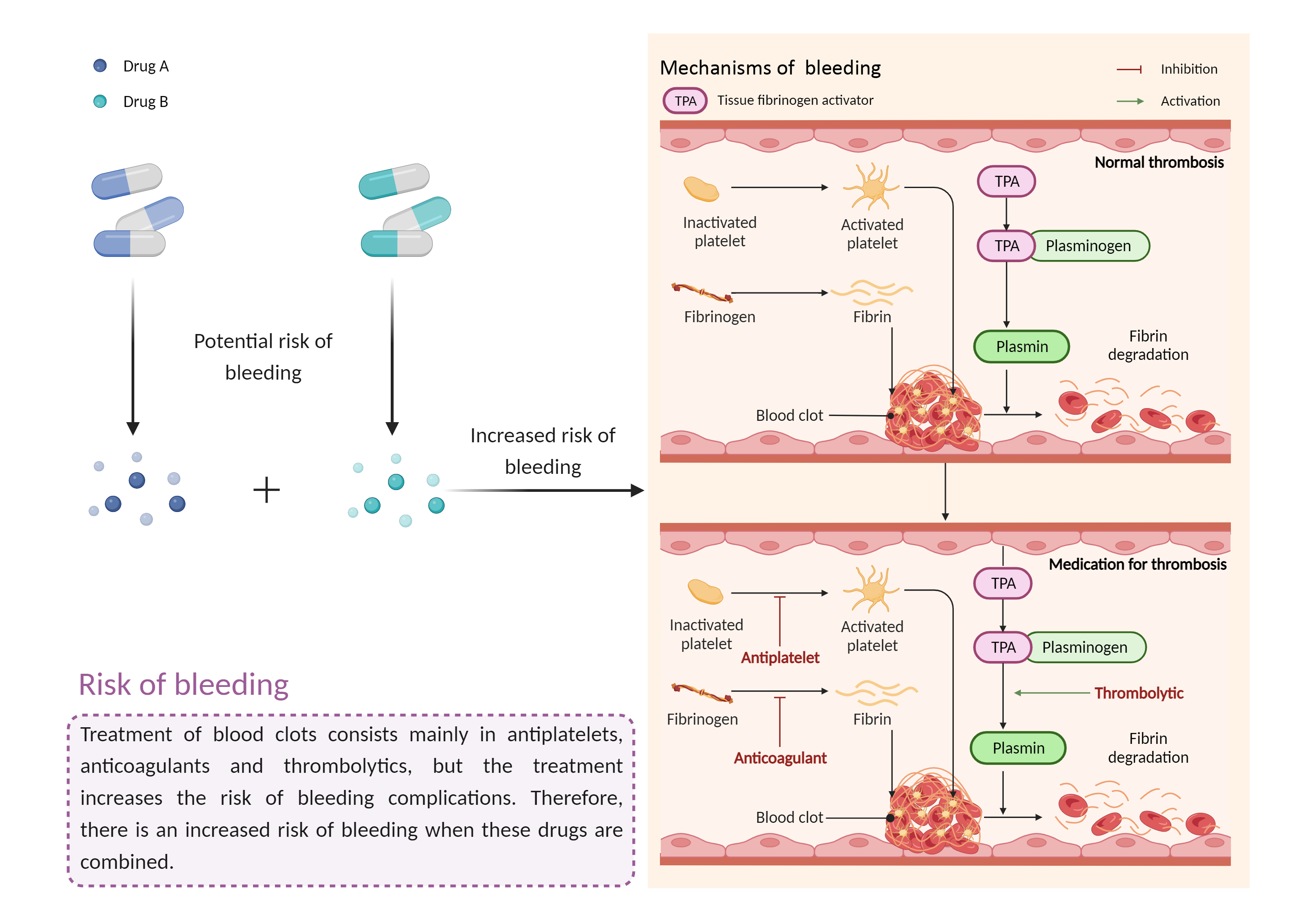
| Increased risk of bleeding Click to Show/Hide Mechanism Graph | |||||||||
 |
|||||||||
| Drug Name | Dicoumarol | Ginkgo biloba | |||||||
| Mechanism |
Risk of bleeding Anticoagulant |
Risk of bleeding Antiplatelet effects |
|||||||
| Key Mechanism Factor 1 | |||||||||
| Factor Name | Bleeding | ||||||||
| Factor Description | Patients may be at risk for bleeding when the outcome of a disease or disease treatment confounds the standard mechanisms for maintaining hemostasis. Signs or symptoms of abnormal bleeding include: bleeding that takes a long time to stop (including nosebleeds, bleeding gums, bleeding from cuts and abrasions, and menstrual bleeding); severe unexplained bruising, or bruising that becomes larger; blood in the urine or stool, etc. | ||||||||
| Mechanism Description |
|
||||||||
| Recommended Action | |||||||||
|---|---|---|---|---|---|---|---|---|---|
| Management | Patients should consult a healthcare provider before taking any herbal or alternative medicine. In general, consumption of ginkgo should be avoided during use of coagulation-modifying agents and at least two weeks prior to surgery. In patients who have used this herb extensively prior to receiving anticoagulation, antiplatelet or thrombolytic therapy, the potential for an interaction should be considered. Close clinical and laboratory observation for hematologic complications is recommended. Patients should be advised to promptly report any signs of bleeding to their physician, including pain, swelling, headache, dizziness, weakness, prolonged bleeding from cuts, increased menstrual flow, vaginal bleeding, nosebleeds, bleeding of gums from brushing, unusual bleeding or bruising, red or brown urine, or red or black stools. | ||||||||