
Details of Drug-Drug Interaction
| Drug General Information (ID: DDICOA3ME9) | |||||||||
|---|---|---|---|---|---|---|---|---|---|
| Drug Name | Brentuximab vedotin | Drug Info | Benznidazole | Drug Info | |||||
| Drug Type | Monoclonal antibody | Small molecule | |||||||
| Therapeutic Class | Antineoplastics | Trypanocidal Agents | |||||||
| Mechanism of Brentuximab vedotin-Benznidazole Interaction (Severity Level: Moderate) | |||||||||
|---|---|---|---|---|---|---|---|---|---|
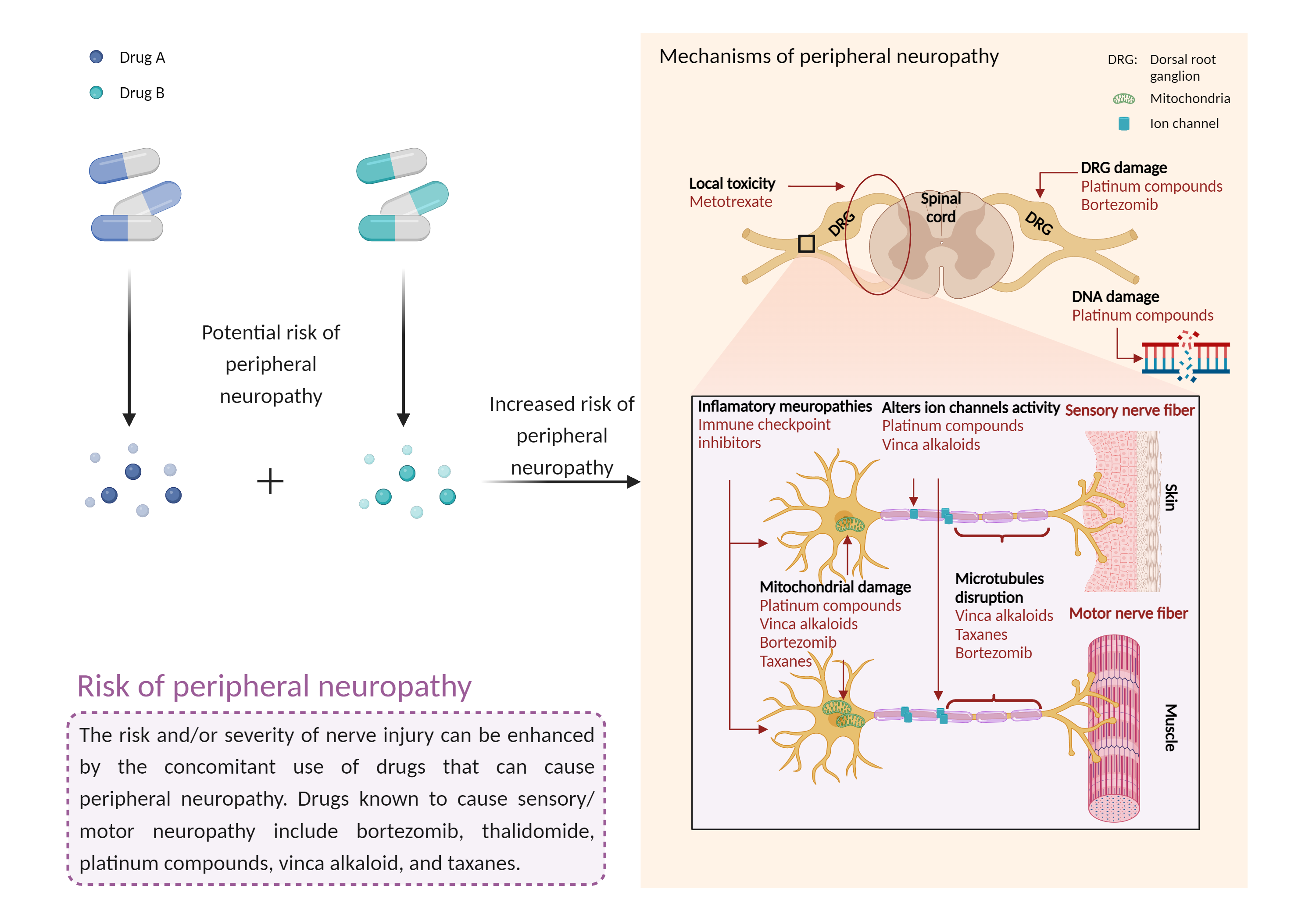
| Increased risk of peripheral neuropathy Click to Show/Hide Mechanism Graph | |||||||||
 |
|||||||||
| Drug Name | Brentuximab vedotin | Benznidazole | |||||||
| Mechanism | Peripheral neuropathy | Peripheral neuropathy | |||||||
| Key Mechanism Factor 1 | |||||||||
| Factor Name | Peripheral neuropathy | ||||||||
| Factor Description | Peripheral neuropathy is a disorder of the peripheral nerves that can cause sensory and motor symptoms, and even paralysis in severe cases. Signs and symptoms of peripheral neuropathy may include: gradual numbness, tingling or prickling in the feet or hands that can spread up the legs and arms; sharp, stinging, pricking or burning sensations; extreme sensitivity to touch; pain during activities that should not cause pain; lack of coordination and falls; muscle weakness; and paralysis if the motor nerves are affected. | ||||||||
| Mechanism Description |
|
||||||||
| Recommended Action | |||||||||
|---|---|---|---|---|---|---|---|---|---|
| Management | The potential for increased risk and/or severity of peripheral neuropathy should be considered when brentuximab vedotin is used with other drugs that are also associated with peripheral neuropathy. Patients should be closely monitored for symptoms of neuropathy such as burning, tingling, pain, numbness, or weakness. Patients experiencing new, worsening, or recurrent neuropathy may require a delay, change in dosage, or discontinuation of brentuximab vedotin in accordance with the product labeling. | ||||||||