
Details of Drug-Drug Interaction
| Drug General Information (ID: DDICMOA053) | |||||||||
|---|---|---|---|---|---|---|---|---|---|
| Drug Name | Ceritinib | Drug Info | Levobetaxolol (ophthalmic) | Drug Info | |||||
| Drug Type | Small molecule | Small molecule | |||||||
| Therapeutic Class | Multikinase Inhibitors | Cardiotonic Agents | |||||||
| Structure | |||||||||
| Mechanism of Ceritinib-Levobetaxolol (ophthalmic) Interaction (Severity Level: Major) | |||||||||
|---|---|---|---|---|---|---|---|---|---|
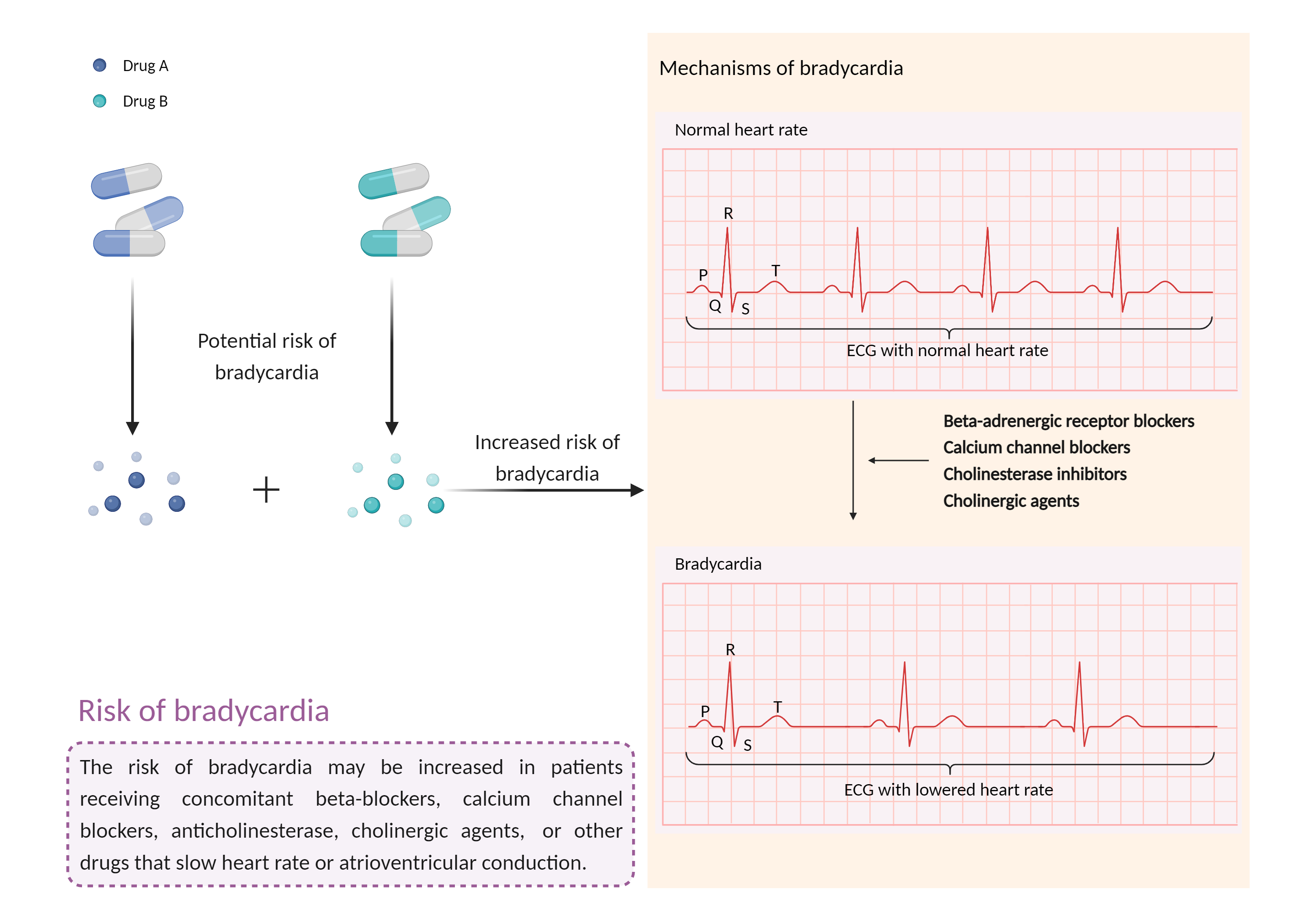
| Increased risk of bradycardia Click to Show/Hide Mechanism Graph | |||||||||
 |
|||||||||
| Drug Name | Ceritinib | Levobetaxolol (ophthalmic) | |||||||
| Mechanism | Bradycardia | Bradycardia | |||||||
| Key Mechanism Factor 1 | |||||||||
| Factor Name | Bradycardia | ||||||||
| Factor Description | Bradycardia is a slow heart rate in which the heart beats less than 60 times per minute. If the heart rate is very slow and the heart is not pumping enough oxygen-rich blood to the body, and you may feel dizzy, very tired or weak, and short of breath. | ||||||||
| Mechanism Description |
|
||||||||
| Recommended Action | |||||||||
|---|---|---|---|---|---|---|---|---|---|
| Management | Concomitant use of ceritinib with other agents known to cause bradycardia should be avoided if possible. All patients treated with ceritinib should have their heart rate and blood pressure monitored regularly. Consult the product labeling for dosage adjustment and management recommendations if symptomatic or life-threatening bradycardia occurs. Patients should be advised to notify their doctor if they experience irregular heartbeat, slow pulse, dizziness, or syncope. | ||||||||