Drug General Information (ID: DDIC4QAPBU)
  Drug Name Metformin Drug Info Methazolamide Drug Info
  Drug Type Small molecule Small molecule
  Therapeutic Class Antidiabetic Agents Carbonic Anhydrase Inhibitors
  Structure

 Mechanism of Metformin-Methazolamide Interaction (Severity Level: Major)
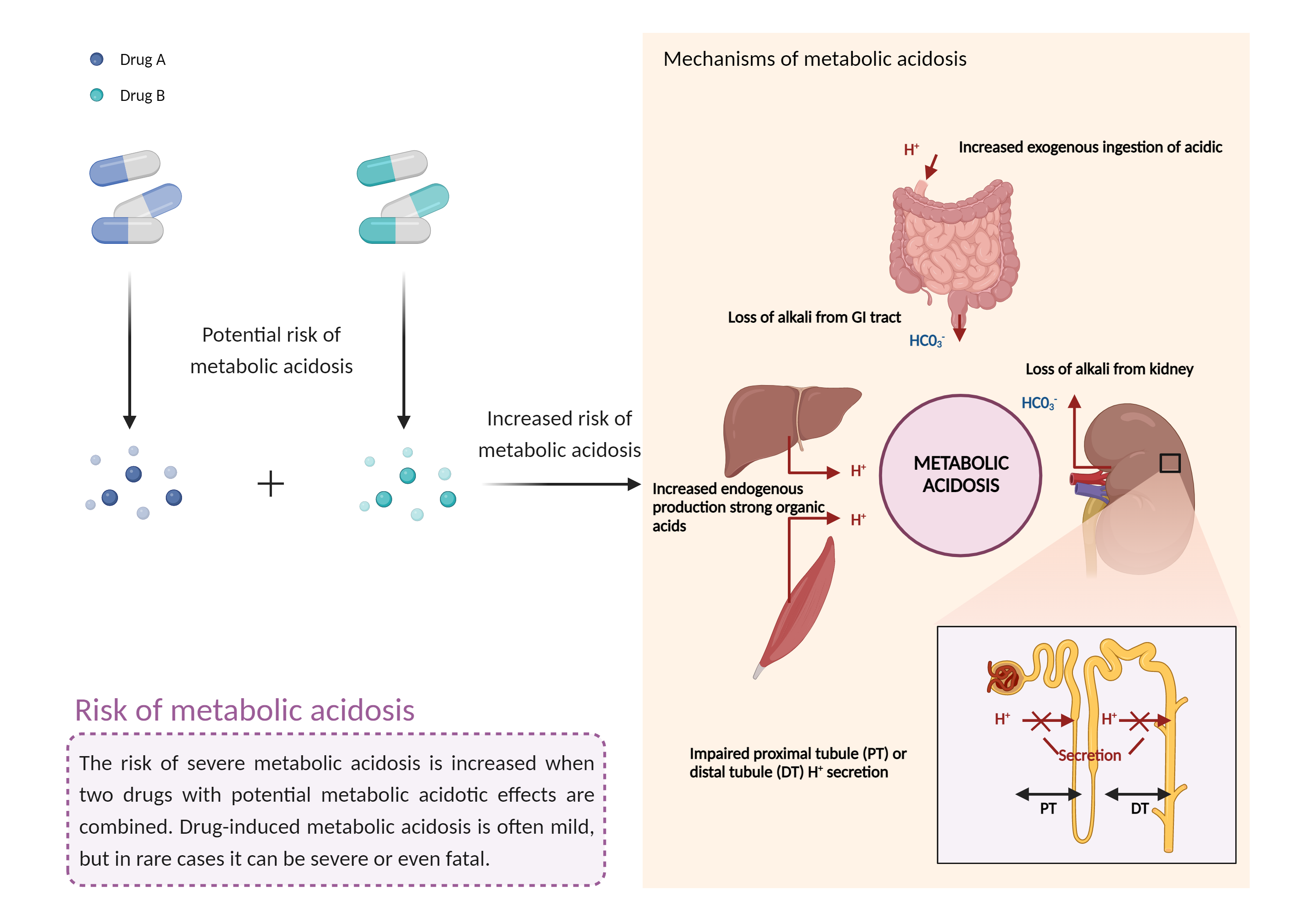
     Increased risk of metabolic acidosis Click to Show/Hide Mechanism Graph
Could Not Find 2D Structure
      Drug Name Metformin Methazolamide
      Mechanism Metabolic acidosis Metabolic acidosis
      Key Mechanism Factor 1
Factor Name Metabolic acidosis
Factor Description Metabolic acidosis is a clinical disorder defined as a pH below 7.35 and low HCO3 levels. Metabolic acidosis occurs when the body produces too much acid or the kidneys are unable to remove enough acid from the body. Symptoms vary depending on the underlying cause, but some common symptoms are as follows: shortness of breath, confusion, fatigue, shock, fruity taste of the patient's breath (diabetic ketoacidosis), rapid heartbeat, headache, weakness, and nausea.
      Mechanism Description
  • Increased risk of metabolic acidosis by the combination of Metformin and Methazolamide 

Recommended Action
      Management Caution is advised if metformin is used concomitantly with carbonic anhydrase inhibitors. Close monitoring for the development of lactic acidosis is recommended, particularly in the elderly and patients with other risk factors such as unstable or acute congestive heart failure or other conditions that can lead to hypoperfusion and hypoxemia. Patients should contact their physician immediately if they experience potential signs and symptoms of lactic acidosis such as malaise, myalgia, respiratory distress, increasing somnolence, and nonspecific abdominal distress (especially after stabilization of metformin therapy, when gastrointestinal symptoms are uncommon). With more marked acidosis, there may also be associated hypothermia, hypotension, and resistant bradyarrhythmias. Metformin should be withdrawn promptly if lactic acidosis is suspected. Serum electrolytes, ketones, blood glucose, blood pH, lactate levels, and blood metformin levels may be useful in establishing a diagnosis. Lactic acidosis should be suspected in any diabetic patient with metabolic acidosis lacking evidence of ketoacidosis (ketonuria and ketonemia).

References
1 Rosenstock J, Hollander P, Gadde KM, Sun X, Strauss R, Leung A "A randomized, double-blind, placebo-controlled, multicenter study to assess the efficacy and safety of topiramate controlled-release in the treatment of obese, type 2 diabetic patients." Diabetes Care 30 (2007): 1480-6.[PMID: 17363756]
2 Product Information. Janumet XR (metFORMIN-sitaGLIPtin). Merck &amp Company Inc, Whitehouse Station, NJ.
3 Toplak H, Hamann A, Moore T, et al "Efficacy and safety of topiramate in combination with metformin in the treatment of obese subjects with type 2 diabetes: a randomized, double-blind, placebo-controlled study." Int J Obes (Lond) 31 (2007): 138-46.[PMID: 16703004]