| Management |
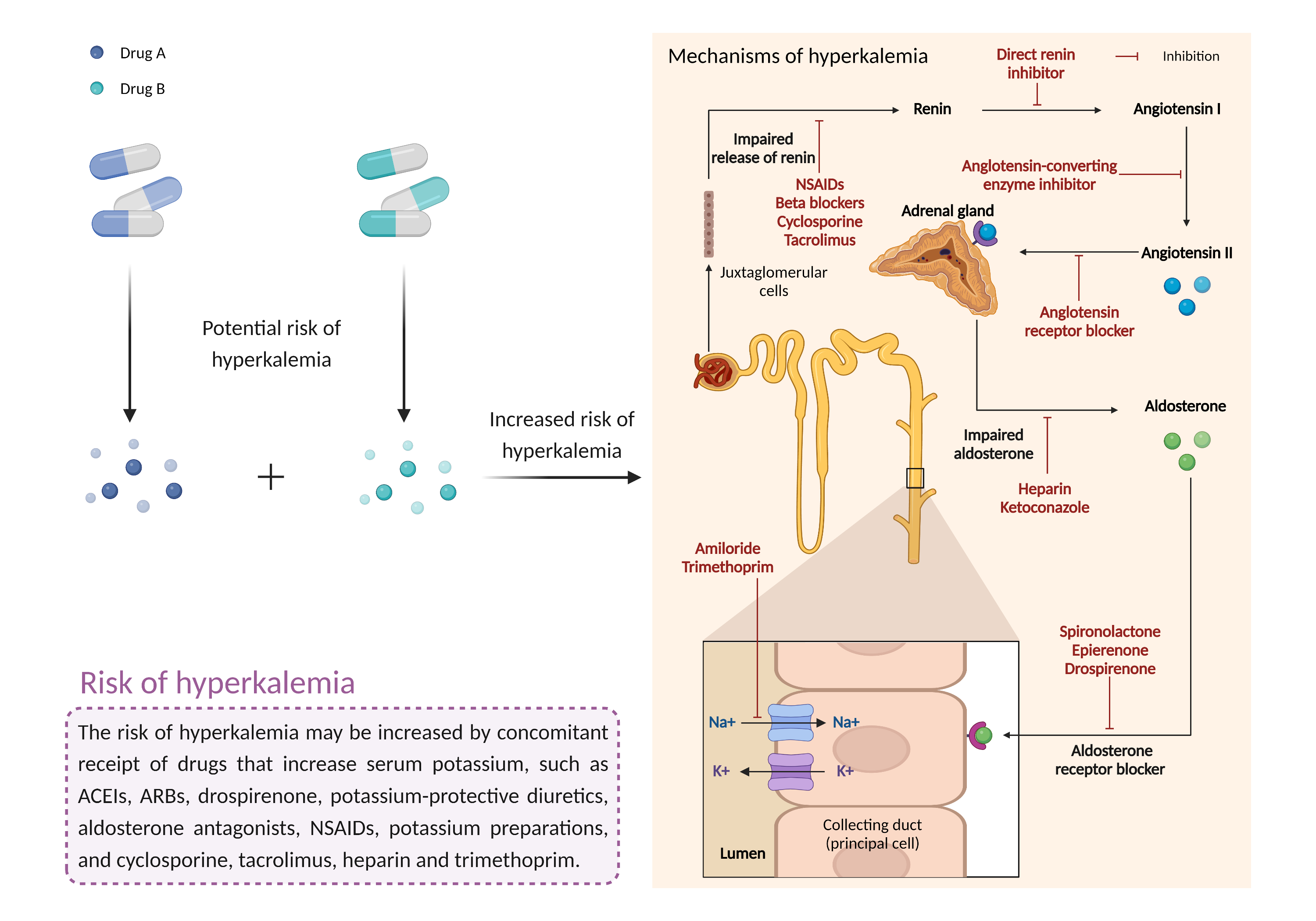
Serum potassium and sodium levels as well as renal function should be closely monitored during coadministration of trimethoprim with other potassium-sparing drugs or potassium salts, particularly in patients receiving high-dose or long-term trimethoprim treatment and in patients with renal impairment, diabetes, old age, severe or worsening heart failure, or dehydration. A dosage reduction of trimethoprim is recommended in renal dysfunction (50% reduction for CrCl between 15 and 30 mL/min). Patients should be given dietary counseling to avoid excessive intake of potassium-rich foods and salt substitutes, and advised to seek medical attention if they experience signs and symptoms of hyperkalemia such as nausea, vomiting, weakness, listlessness, tingling of the extremities, paralysis, confusion, weak pulse, and a slow or irregular heartbeat. Trimethoprim should be discontinued if hyperkalemia occurs. |