
Details of Drug-Drug Interaction
| Drug General Information (ID: DDIBDJG72S) | |||||||||
|---|---|---|---|---|---|---|---|---|---|
| Drug Name | Amphotericin B | Drug Info | Etidronic acid | Drug Info | |||||
| Drug Type | Small molecule | Small molecule | |||||||
| Therapeutic Class | Antifungal Agents | Bone Density Conservation Agents | |||||||
| Structure | |||||||||
| Mechanism of Amphotericin B-Etidronic acid Interaction (Severity Level: Moderate) | |||||||||
|---|---|---|---|---|---|---|---|---|---|
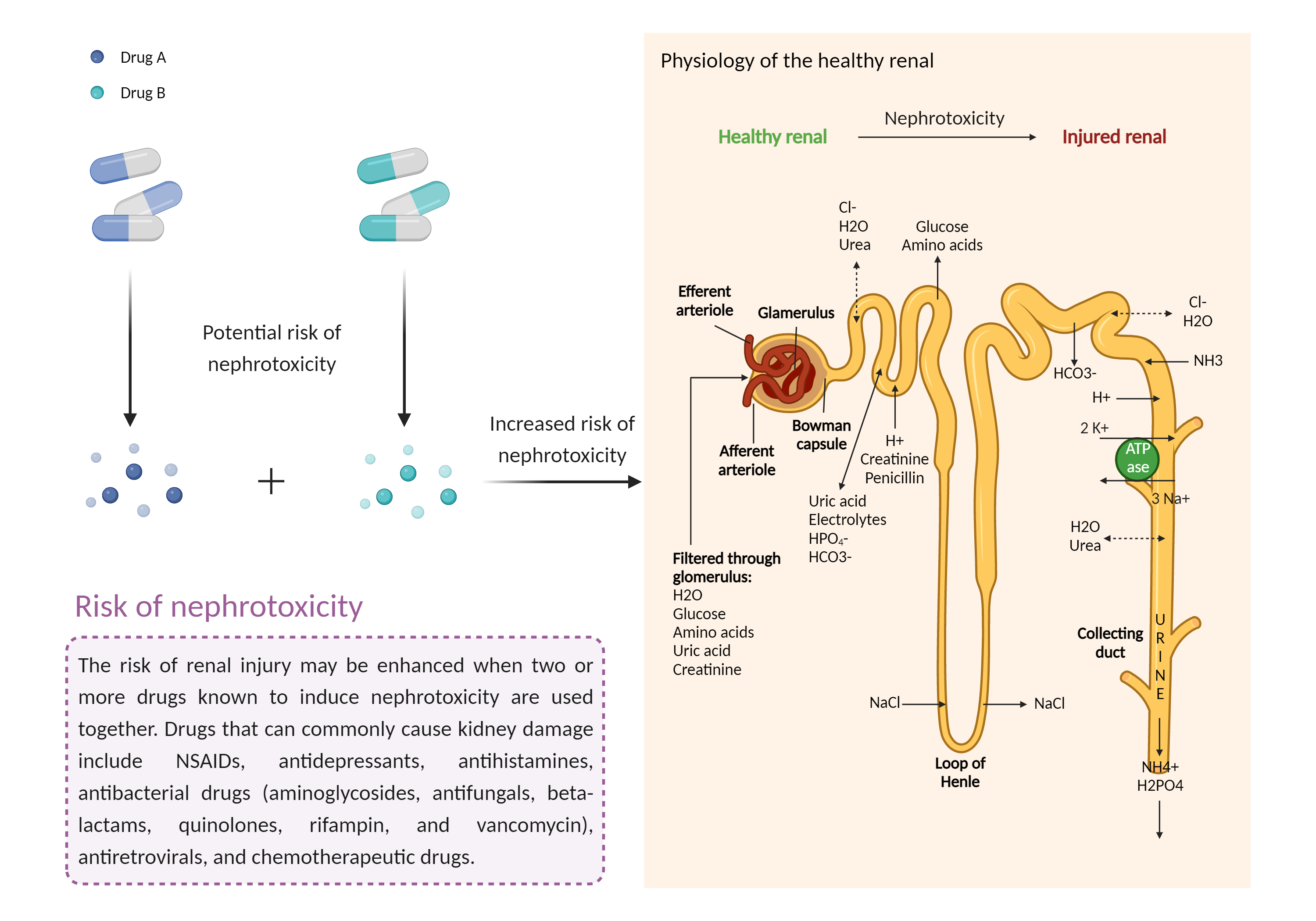
| Increased risk of nephrotoxicity Click to Show/Hide Mechanism Graph | |||||||||
 |
|||||||||
| Drug Name | Amphotericin B | Etidronic acid | |||||||
| Mechanism | Nephrotoxicity | Nephrotoxicity | |||||||
| Key Mechanism Factor 1 | |||||||||
| Factor Name | Nephrotoxicity | ||||||||
| Factor Description | The combination of drugs that can induce nephrotoxicity may increase the risk of kidney injury. When kidney injury occurs, the inability to remove excess urine and waste from the body can lead to high levels of urea nitrogen, creatinine, and electrolytes (such as potassium and magnesium) in the blood. | ||||||||
| Mechanism Description |
|
||||||||
| Recommended Action | |||||||||
|---|---|---|---|---|---|---|---|---|---|
| Management | Caution is advised if pamidronate, zoledronic acid, or other intravenous formulations of bisphosphonates must be used in patients who have recently received or are receiving treatment with other potentially nephrotoxic agents (e.g., aminoglycosides, polypeptide and polymyxin antibiotics, vancomycin, amphotericin B, adefovir, cidofovir, tenofovir, foscarnet, cisplatin, gallium nitrate, lithium, mesalamine, certain immunosuppressants, intravenous pentamidine, high intravenous dosages of methotrexate, high dosages of nonsteroidal anti-inflammatory agents). Renal function and serum electrolytes should be monitored. Patients should have serum creatinine assessed prior to each treatment, and treatment should be withheld for renal deterioration. | ||||||||