
Details of Drug-Drug Interaction
| Drug General Information (ID: DDIAWZRBDY) | |||||||||
|---|---|---|---|---|---|---|---|---|---|
| Drug Name | Drotrecogin alfa | Drug Info | Choline salicylate | Drug Info | |||||
| Drug Type | Protein/peptide | Small molecule | |||||||
| Therapeutic Class | Coagulation Modifiers | Salicylates | |||||||
| Mechanism of Drotrecogin alfa-Choline salicylate Interaction (Severity Level: Moderate) | |||||||||
|---|---|---|---|---|---|---|---|---|---|
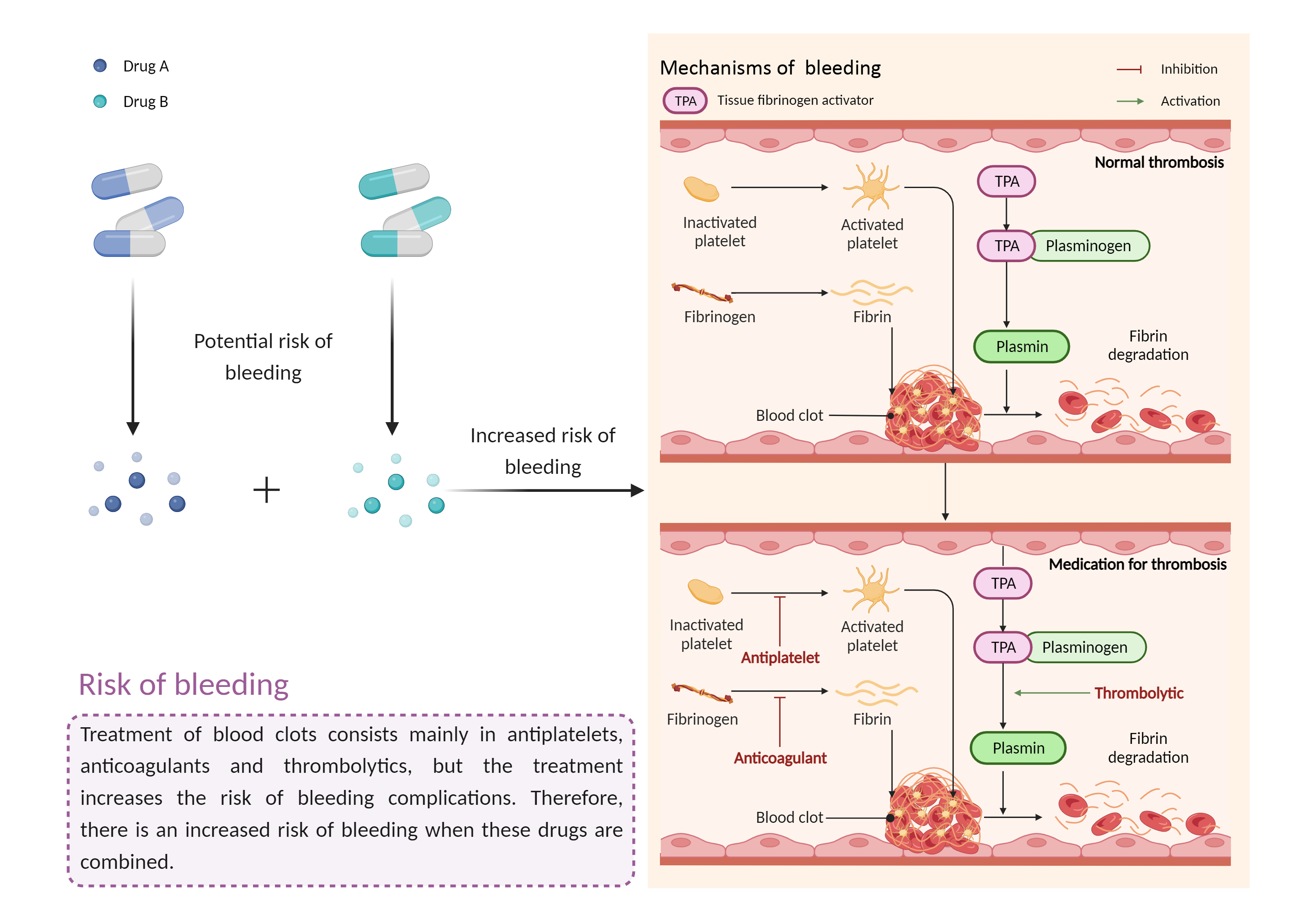
| Increased risk of bleeding Click to Show/Hide Mechanism Graph | |||||||||
 |
|||||||||
| Drug Name | Drotrecogin alfa | Choline salicylate | |||||||
| Mechanism |
Risk of bleeding Anticoagulant effects |
Risk of bleeding Antiplatelet effects |
|||||||
| Key Mechanism Factor 1 | |||||||||
| Factor Name | Bleeding | ||||||||
| Factor Description | Patients may be at risk for bleeding when the outcome of a disease or disease treatment confounds the standard mechanisms for maintaining hemostasis. Signs or symptoms of abnormal bleeding include: bleeding that takes a long time to stop (including nosebleeds, bleeding gums, bleeding from cuts and abrasions, and menstrual bleeding); severe unexplained bruising, or bruising that becomes larger; blood in the urine or stool, etc. | ||||||||
| Mechanism Description |
|
||||||||
| Recommended Action | |||||||||
|---|---|---|---|---|---|---|---|---|---|
| Management | Until further data are available, products containing salicylates, especially if given chronically or in high dosages, should preferably be avoided in patients receiving anticoagulants. Close clinical and laboratory observation for bleeding complications is recommended if concurrent therapy is necessary. The same precaution should be observed with the use of salicylate-related agents such as salicylamide because of their structural and pharmacological similarities. | ||||||||