
Details of Drug-Drug Interaction
| Drug General Information (ID: DDIAET1SU8) | |||||||||
|---|---|---|---|---|---|---|---|---|---|
| Drug Name | Linezolid | Drug Info | Epinephrine | Drug Info | |||||
| Drug Type | Small molecule | Small molecule | |||||||
| Therapeutic Class | Antibiotics | Vasoconstrictor Agents | |||||||
| Structure | |||||||||
| Mechanism of Linezolid-Epinephrine Interaction (Severity Level: Major) | |||||||||
|---|---|---|---|---|---|---|---|---|---|
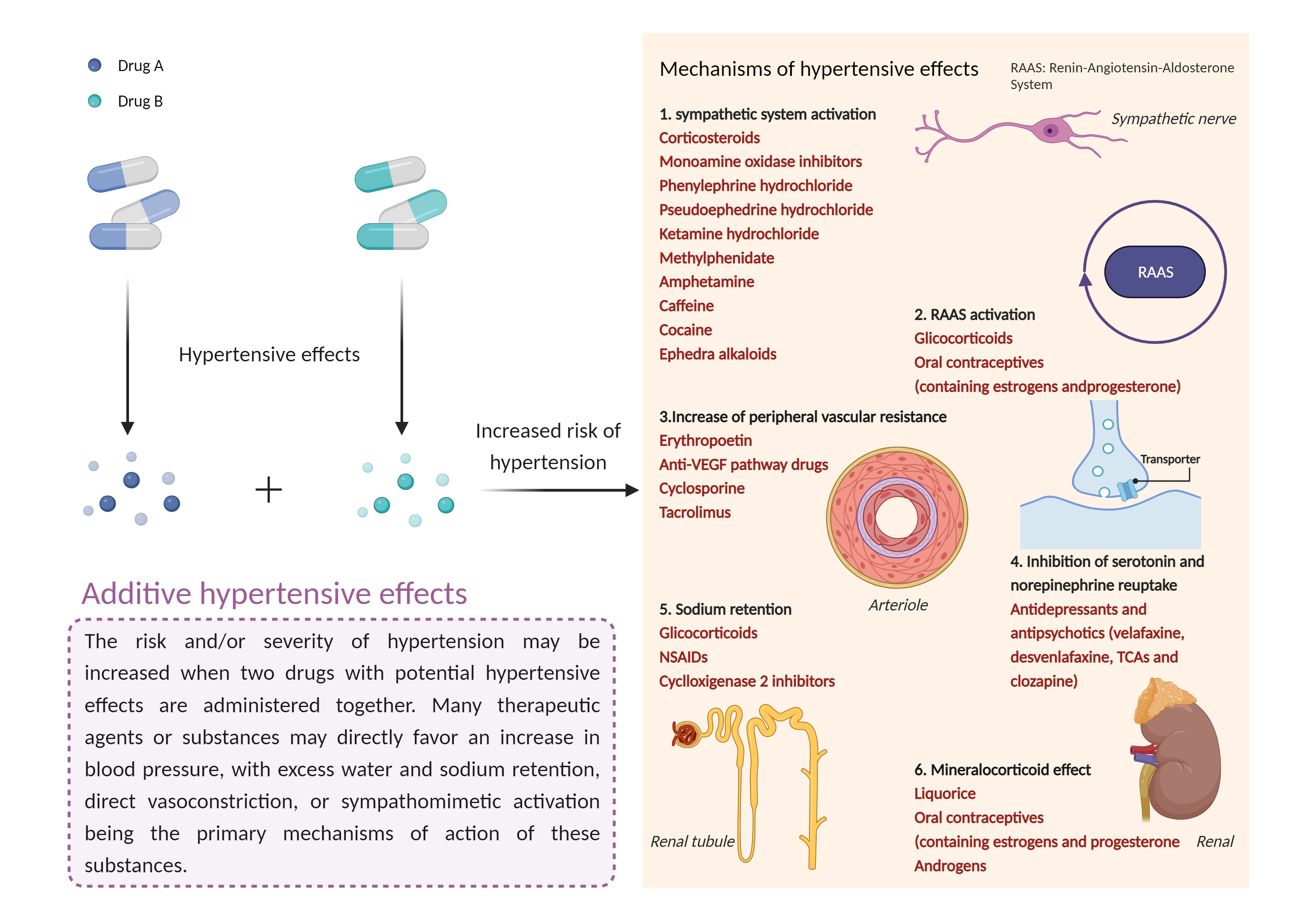
| Additive hypertensive effects Click to Show/Hide Mechanism Graph | |||||||||
 |
|||||||||
| Drug Name | Linezolid | Epinephrine | |||||||
| Mechanism 1 | Hypertensive effects | Hypertensive effects | |||||||
| Key Mechanism Factor 1 | |||||||||
| Factor Name | Hypertensive effects | ||||||||
| Factor Description | Hypertension is defined as a blood pressure reading above a prescribed limit (130/90 mmHg). Most people with hypertension have no signs or symptoms; others may experience: severe headache, shortness of breath, nosebleeds, severe anxiety, and feeling a tingling sensation in the neck or head. | ||||||||
| Mechanism Description |
|
||||||||
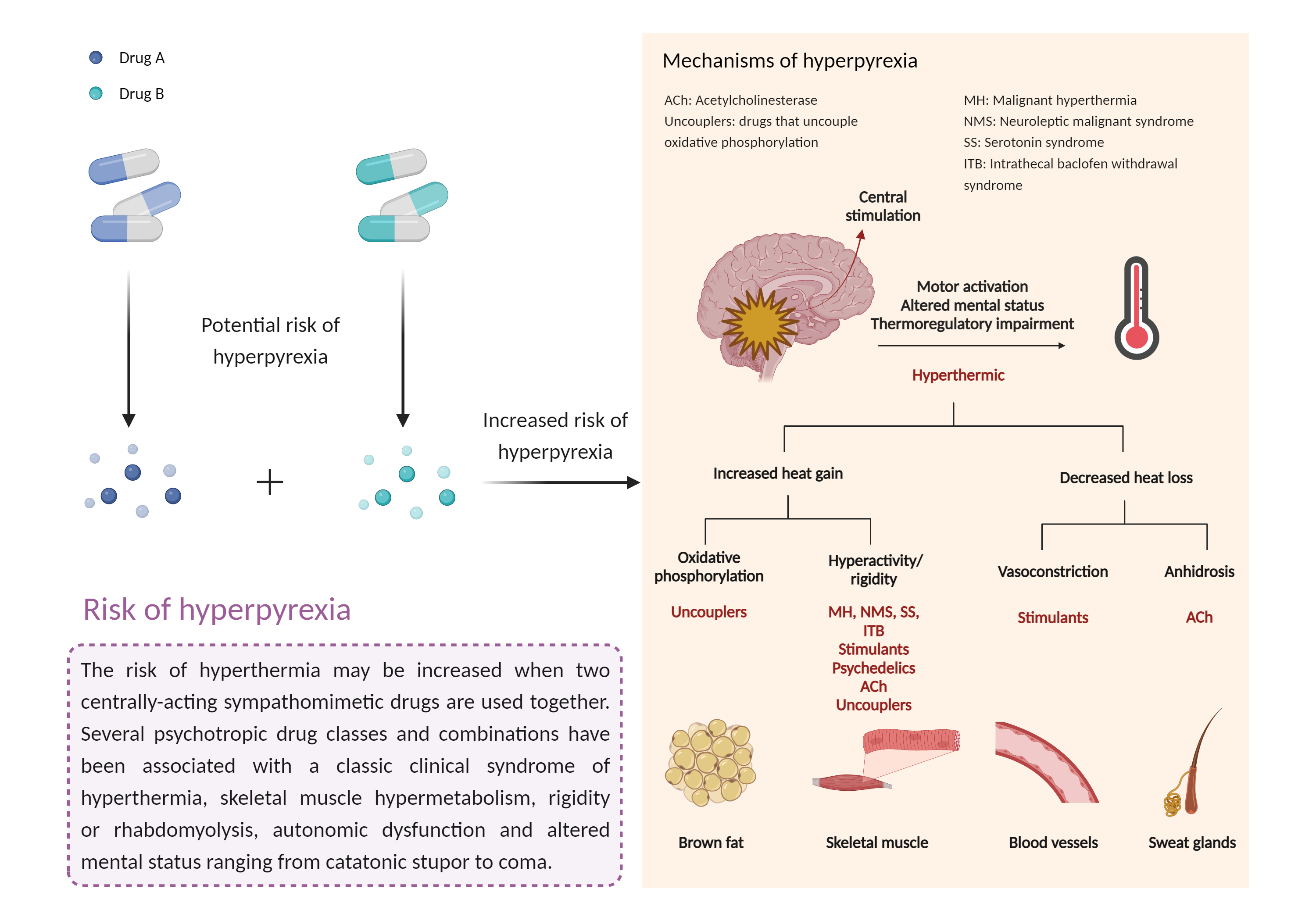
| Increased risk of hyperpyrexia Click to Show/Hide Mechanism Graph | |||||||||
 |
|||||||||
| Drug Name | Linezolid | Epinephrine | |||||||
| Mechanism 2 | Hyperpyrexia | Hyperpyrexia | |||||||
| Key Mechanism Factor 2 | |||||||||
| Factor Name | Hyperpyrexia | ||||||||
| Factor Description | Hyperthermia is an extreme, life-threatening increase in core body temperature. If hyperthermia persists for a long time or worsens, more serious symptoms may occur, such as confusion, headache, constricted pupils, vomiting, diarrhea, and decreased urine output. | ||||||||
| Mechanism Description |
|
||||||||
| Recommended Action | |||||||||
|---|---|---|---|---|---|---|---|---|---|
| Management | Unless blood pressure and clinical status can be closely monitored, linezolid should not be administered in combination with direct- or indirect-acting sympathomimetic agents (e.g., pseudoephedrine, phenylpropanolamine), vasopressive agents (e.g., epinephrine, norepinephrine), or dopaminergic agents (e.g., dopamine, dobutamine). If the combination is used, lower initial dosages of adrenergic agents such as dopamine or epinephrine are recommended, with careful titration to the desired response. | ||||||||