
Details of Drug-Drug Interaction
| Drug General Information (ID: DDIACWY9ON) | |||||||||
|---|---|---|---|---|---|---|---|---|---|
| Drug Name | Cefixime | Drug Info | Etacrynic acid | Drug Info | |||||
| Drug Type | Small molecule | Small molecule | |||||||
| Therapeutic Class | Antibiotics | Diuretics | |||||||
| Structure | |||||||||
| Mechanism of Cefixime-Etacrynic acid Interaction (Severity Level: Moderate) | |||||||||
|---|---|---|---|---|---|---|---|---|---|
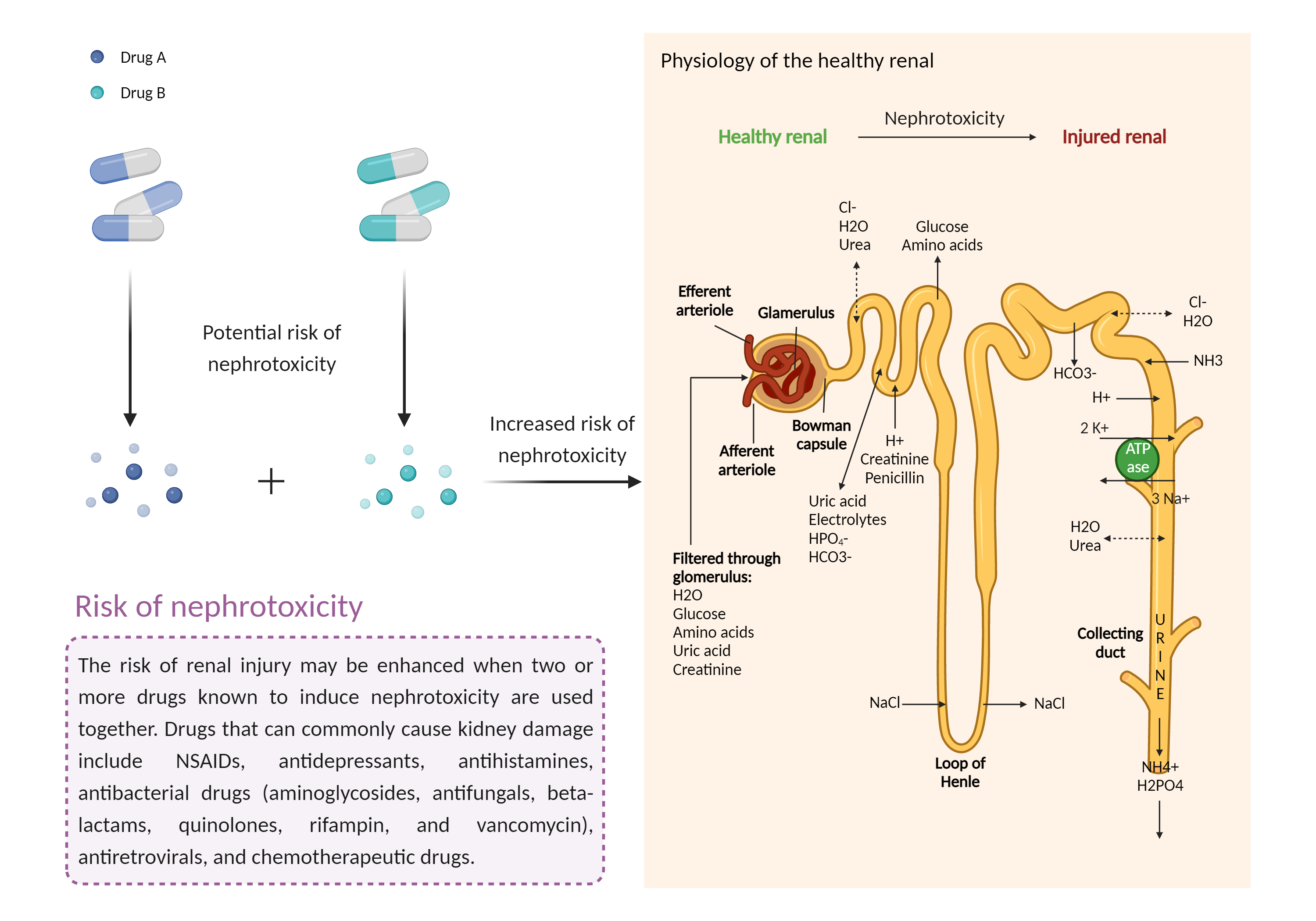
| Increased risk of nephrotoxicity Click to Show/Hide Mechanism Graph | |||||||||
 |
|||||||||
| Drug Name | Cefixime | Etacrynic acid | |||||||
| Mechanism | Cephalosporins | Increase the risk of cephalosporins-induced nephrotoxicity | |||||||
| Key Mechanism Factor 1 | |||||||||
| Factor Name | Nephrotoxicity | ||||||||
| Factor Description | The combination of drugs that can induce nephrotoxicity may increase the risk of kidney injury. When kidney injury occurs, the inability to remove excess urine and waste from the body can lead to high levels of urea nitrogen, creatinine, and electrolytes (such as potassium and magnesium) in the blood. | ||||||||
| Mechanism Description |
|
||||||||
| Recommended Action | |||||||||
|---|---|---|---|---|---|---|---|---|---|
| Management | Although data are primarily limited to cephaloridine, which is no longer commercially marketed, caution may be advisable in patients receiving a loop diuretic in combination with other cephalosporins. Renal function should be monitored, particularly when high dosages are used or when these medications are administered in the elderly or patients with preexisting renal impairment. | ||||||||