
Details of Drug-Drug Interaction
| Drug General Information (ID: DDI9WO4Q6Y) | |||||||||
|---|---|---|---|---|---|---|---|---|---|
| Drug Name | Diazoxide | Drug Info | Amisulpride | Drug Info | |||||
| Drug Type | Small molecule | Small molecule | |||||||
| Therapeutic Class | Antihypertensive Agents | Antipsychotic Agents | |||||||
| Structure | |||||||||
| Mechanism of Diazoxide-Amisulpride Interaction (Severity Level: Moderate) | |||||||||
|---|---|---|---|---|---|---|---|---|---|
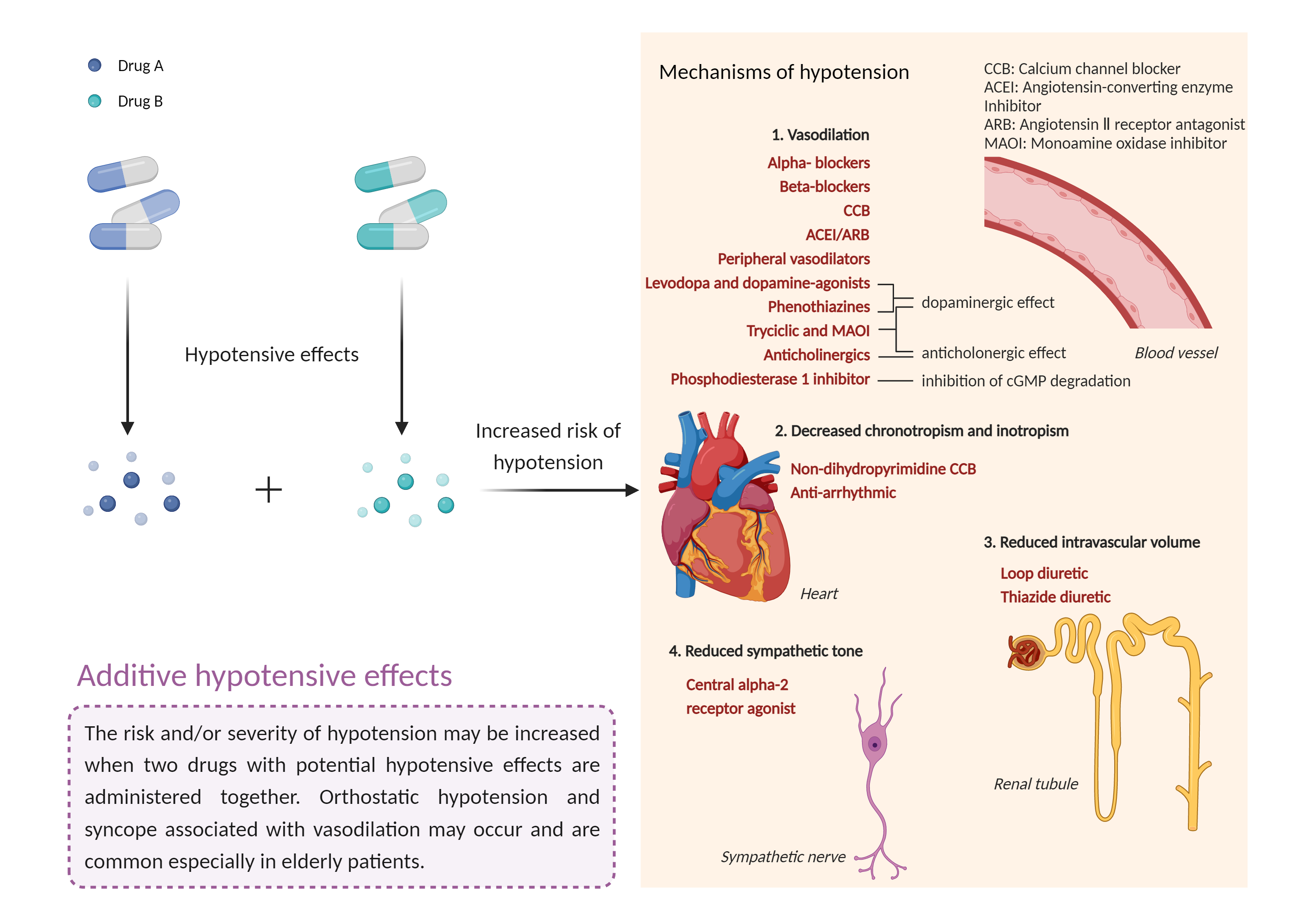
| Additive hypotensive effects Click to Show/Hide Mechanism Graph | |||||||||
 |
|||||||||
| Drug Name | Diazoxide | Amisulpride | |||||||
| Mechanism |
Hypotensive effects ATP-sensitive inward rectifier potassium channel Inducer |
Hypotensive effects Alpha-1 adrenergic receptor Antagonist |
|||||||
| Key Mechanism Factor 1 | |||||||||
| Factor Name | Inward rectifier potassium channel | Structure Sequence | |||||||
| Protein Family | Inward rectifier-type potassium channel (TC 1.A.2.1) family | ||||||||
| Protein Function |
This receptor is controlled by G proteins. Inward rectifier potassium channels are characterized by a greater tendency to allow potassium to flow into the cell rather than out of it. Their voltage dependence is regulated by the concentration of extracellular potassium; as external potassium is raised, the voltage range of the channel opening shifts to more positive voltages. The inward rectification is mainly due to the blockage of outward current by internal magnesium. Can be blocked by extracellular barium (By similarity). Subunit of ATP-sensitive potassium channels (KATP). Can form cardiac and smooth muscle-type KATP channels with ABCC9. KCNJ11 forms the channel pore while ABCC9 is required for activation and regulation.
Click to Show/Hide
|
||||||||
| Key Mechanism Factor 2 | |||||||||
| Factor Name | Adrenergic receptor alpha-1 | Structure Sequence | |||||||
| Protein Family | G-protein coupled receptor 1 family | ||||||||
| Protein Function |
This alpha-adrenergic receptor mediates its action by association with G proteins that activate a phosphatidylinositol-calcium second messenger system. Its effect is mediated by G(q) and G(11) proteins. Nuclear ADRA1A-ADRA1B heterooligomers regulate phenylephrine(PE)-stimulated ERK signaling in cardiac myocytes.
Click to Show/Hide
|
||||||||
| Mechanism Description |
|
||||||||
| Recommended Action | |||||||||
|---|---|---|---|---|---|---|---|---|---|
| Management | Close clinical monitoring for development of hypotension is recommended if phenothiazines or neuroleptic agents are used in patients receiving antihypertensive medications or vasodilators. A lower starting dosage and slower titration of the phenothiazine or neuroleptic may be appropriate, especially in the elderly. Patients should be advised to avoid rising abruptly from a sitting or recumbent position and to notify their physician if they experience dizziness, lightheadedness, syncope, orthostasis, or tachycardia. Patients should also avoid driving or operating hazardous machinery. | ||||||||