
Details of Drug-Drug Interaction
| Drug General Information (ID: DDI9TP4FMY) | |||||||||
|---|---|---|---|---|---|---|---|---|---|
| Drug Name | Tamoxifen | Drug Info | Anisindione | Drug Info | |||||
| Drug Type | Small molecule | Small molecule | |||||||
| Therapeutic Class | Antineoplastics | Anticoagulants | |||||||
| Structure | |||||||||
| Mechanism of Tamoxifen-Anisindione Interaction (Severity Level: Major) | |||||||||
|---|---|---|---|---|---|---|---|---|---|
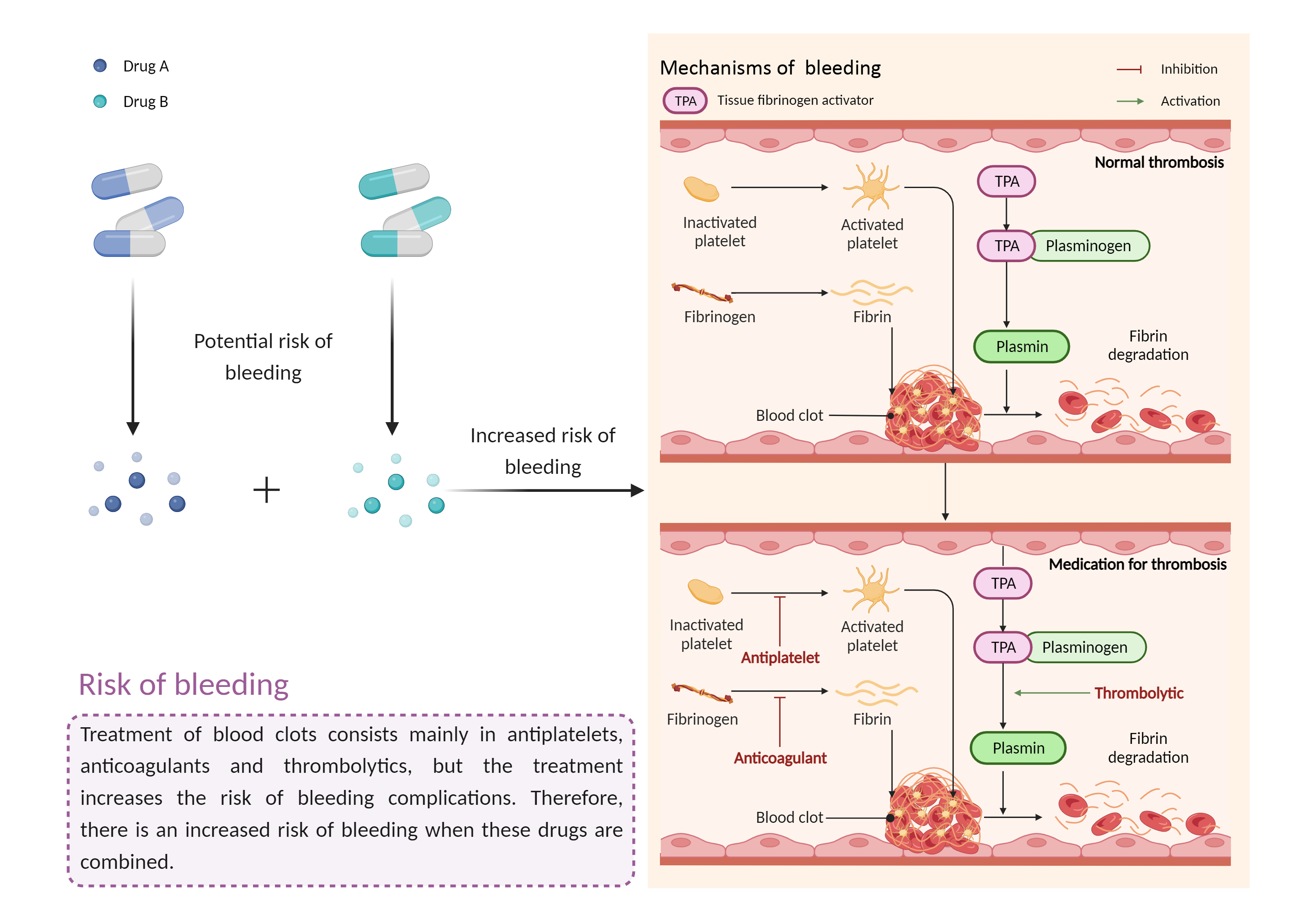
| Increased risk of bleeding Click to Show/Hide Mechanism Graph | |||||||||
 |
|||||||||
| Drug Name | Tamoxifen | Anisindione | |||||||
| Mechanism | Potentiate the hypoprothrombinemic effect of vitamin K antagonist | Vitamin K antagonist | |||||||
| Key Mechanism Factor 1 | |||||||||
| Factor Name | Bleeding | ||||||||
| Factor Description | Patients may be at risk for bleeding when the outcome of a disease or disease treatment confounds the standard mechanisms for maintaining hemostasis. Signs or symptoms of abnormal bleeding include: bleeding that takes a long time to stop (including nosebleeds, bleeding gums, bleeding from cuts and abrasions, and menstrual bleeding); severe unexplained bruising, or bruising that becomes larger; blood in the urine or stool, etc. | ||||||||
| Mechanism Description |
|
||||||||
| Recommended Action | |||||||||
|---|---|---|---|---|---|---|---|---|---|
| Management | The use of tamoxifen is considered contraindicated in women who require concomitant coumarin-type anticoagulants or in women with a history of deep vein thrombosis or pulmonary embolus. Where such coadministration exists, careful monitoring of the INR is recommended. | ||||||||