Drug General Information (ID: DDI9EH0UTY)
  Drug Name Zoledronic acid Drug Info Diflunisal Drug Info
  Drug Type Small molecule Small molecule
  Therapeutic Class Bone Density Conservation Agents Analgesics
  Structure

 Mechanism of Zoledronic acid-Diflunisal Interaction (Severity Level: Moderate)
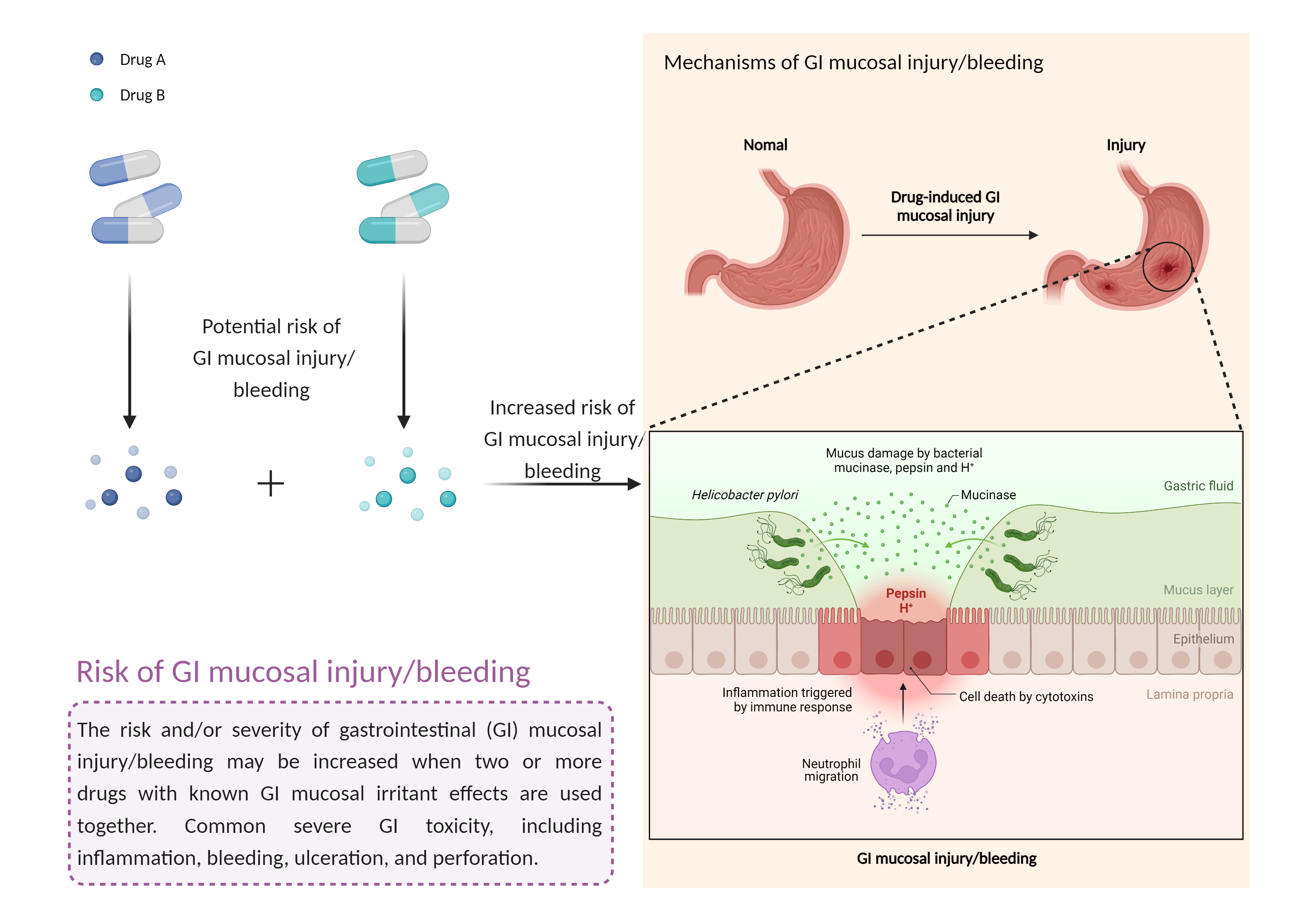
     Increased risk of GI mucosal injury/bleeding risk Click to Show/Hide Mechanism Graph
Could Not Find 2D Structure
      Drug Name Zoledronic acid Diflunisal
      Mechanism 1 GI mucosal injury/bleeding risk GI mucosal injury/bleeding risk
      Key Mechanism Factor 1
Factor Name Gastrointestinal toxicity
Factor Description The risk and severity of gastrointestinal toxicity, including inflammation, bleeding, ulceration, and perforation, increases when drugs with gastrointestinal mucosal irritant effects are combined.
      Mechanism Description
  • Increased risk of GI mucosal injury/bleeding risk by the combination of Zoledronic acid and Diflunisal 
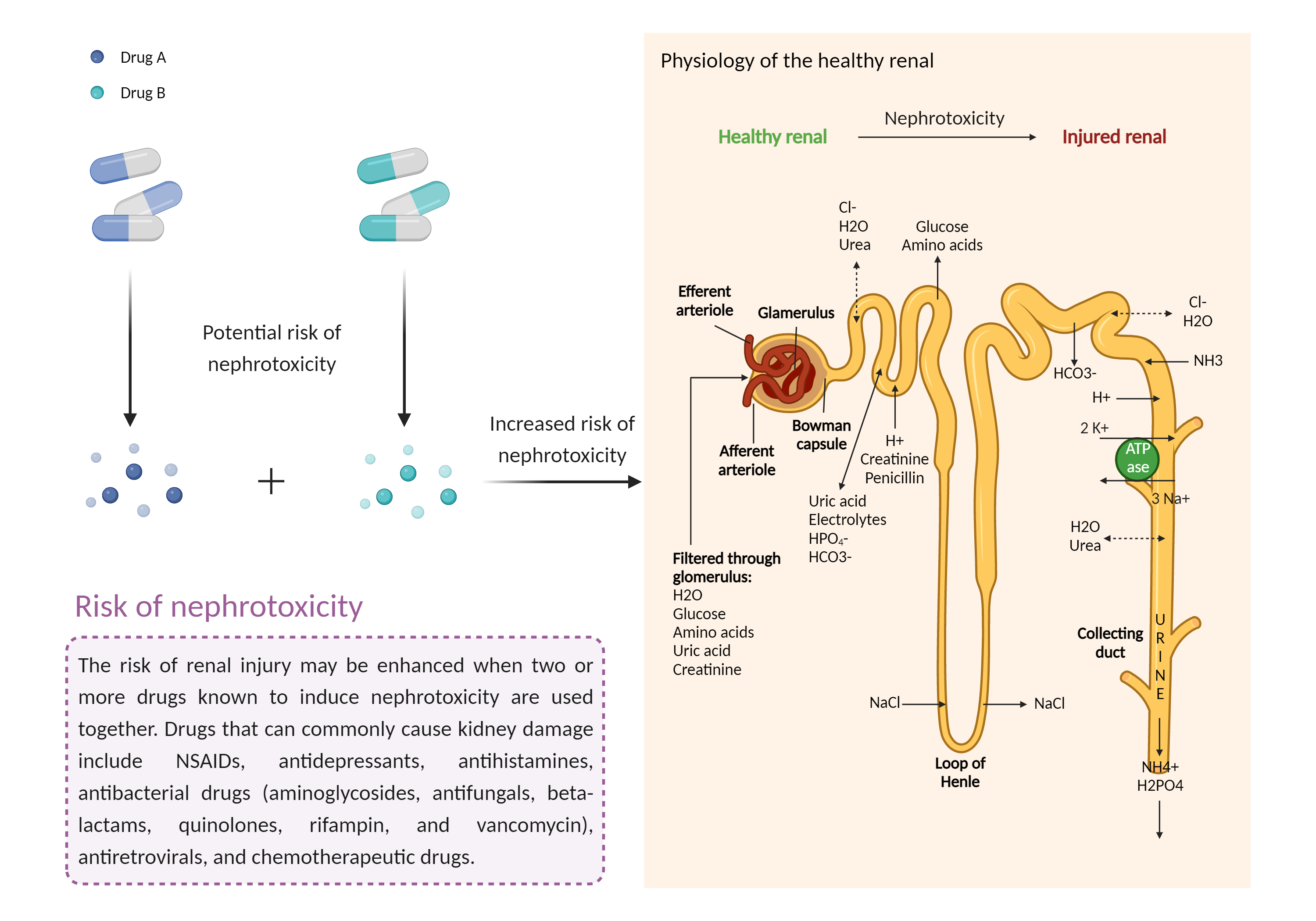
     Increased risk of nephrotoxicity Click to Show/Hide Mechanism Graph
Could Not Find 2D Structure
      Drug Name Zoledronic acid Diflunisal
      Mechanism 2 Nephrotoxicity Nephrotoxicity
      Key Mechanism Factor 2
Factor Name Nephrotoxicity
Factor Description The combination of drugs that can induce nephrotoxicity may increase the risk of kidney injury. When kidney injury occurs, the inability to remove excess urine and waste from the body can lead to high levels of urea nitrogen, creatinine, and electrolytes (such as potassium and magnesium) in the blood.
      Mechanism Description
  • Increased risk of nephrotoxicity by the combination of Zoledronic acid and Diflunisal 

Recommended Action
      Management Caution is advised if bisphosphonates are prescribed in combination with NSAIDs. Patients receiving oral bisphosphonates should be closely monitored for the development of gastrointestinal toxicity and advised to immediately report potential signs and symptoms such as severe abdominal pain, nausea, vomiting, diarrhea, loss of appetite, dizziness, lightheadedness, and/or black, tarry stools. Patients receiving intravenous formulations of bisphosphonates should have renal function and serum electrolytes closely monitored.

References
1 Cerner Multum, Inc. "UK Summary of Product Characteristics.".
2 Graham DY, Malaty HM "Alendronate and naproxen are synergistic for development of gastric ulcers." Arch Intern Med 161 (2001): 107-10. [PMID: 11146706]
3 Graham, Malaty "Alendronate and naproxen are synergistic for development of gastric ulcers (Vol 161, pg 107, 1921)." Arch Intern Med 161 (2001): 1862. [PMID: 11146706]
4 Product Information. Actonel (risedronate). Procter and Gamble Pharmaceuticals, Cincinnati, OH.
5 Product Information. Aredia (pamidronate). Novartis Pharmaceuticals, East Hanover, NJ.
6 Product Information. Bonefos (clodronate). Rhone-Poulenc Rorer Canada Inc, Laval, QC.
7 Product Information. Boniva (ibandronate). Roche Laboratories, Nutley, NJ.
8 Product Information. Didronel I.V. Infusion (etidronate). MGI Pharma Inc, Minnetonka, MN.
9 Product Information. Didronel Tablets (etidronate). Procter and Gamble Pharmaceuticals, Cincinnati, OH.
10 Product Information. Fosamax (alendronate). Merck & Co, Inc, West Point, PA.
11 Product Information. Zometa (zoledronic acid). Novartis Pharmaceuticals, East Hanover, NJ.