
Details of Drug-Drug Interaction
| Drug General Information (ID: DDI93SMOIN) | |||||||||
|---|---|---|---|---|---|---|---|---|---|
| Drug Name | Trifluoperazine | Drug Info | Etacrynic acid | Drug Info | |||||
| Drug Type | Small molecule | Small molecule | |||||||
| Therapeutic Class | Antipsychotic Agents | Diuretics | |||||||
| Structure | |||||||||
| Mechanism of Trifluoperazine-Etacrynic acid Interaction (Severity Level: Moderate) | |||||||||
|---|---|---|---|---|---|---|---|---|---|
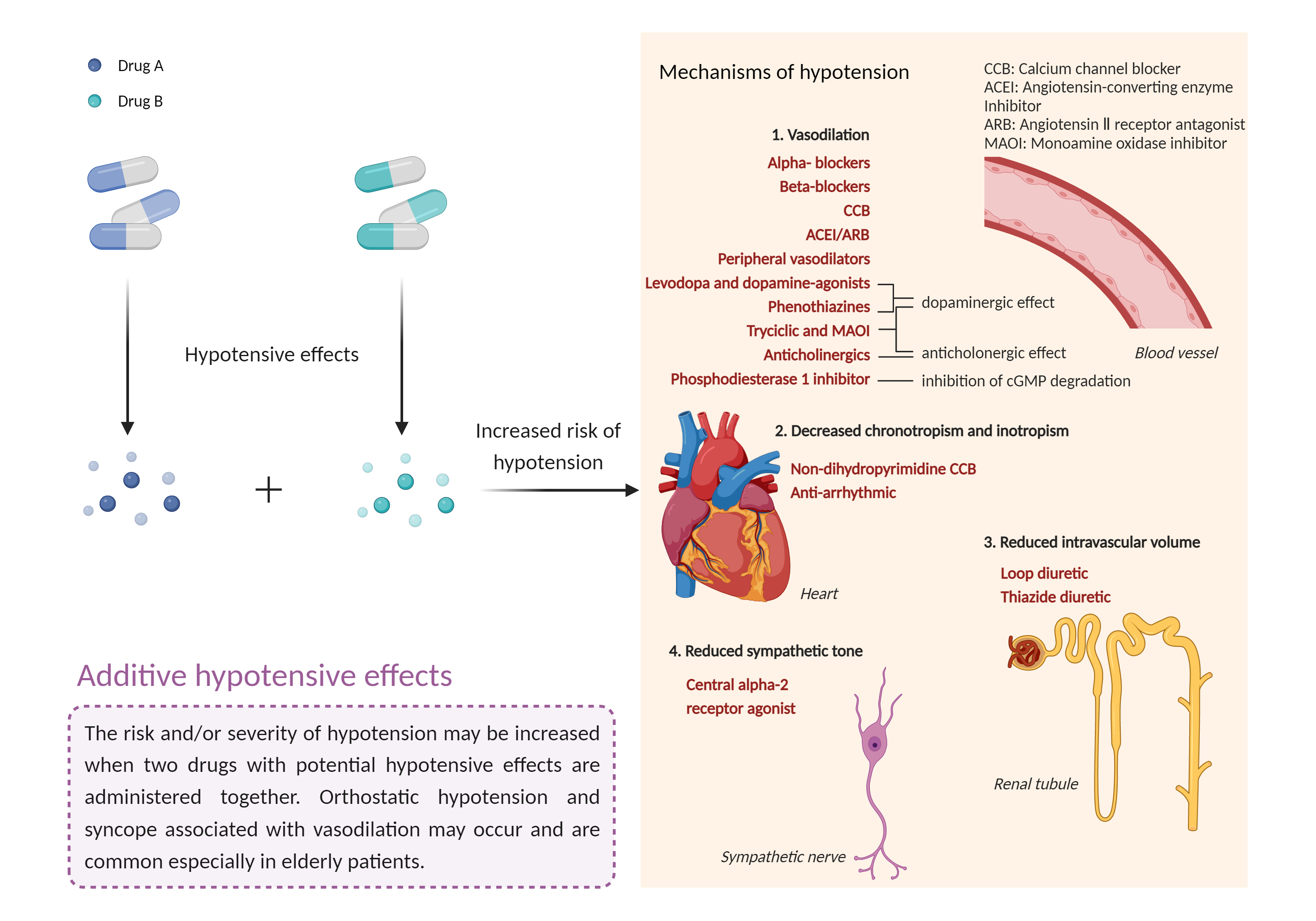
| Additive hypotensive effects Click to Show/Hide Mechanism Graph | |||||||||
 |
|||||||||
| Drug Name | Trifluoperazine | Etacrynic acid | |||||||
| Mechanism |
Hypotensive effects Calmodulin Inhibitor |
Hypotensive effects Solute carrier family 12 member 1 Blocker |
|||||||
| Key Mechanism Factor 1 | |||||||||
| Factor Name | Calmodulin-1 |
×
Structure
Sequence
MADQLTEEQIAEFKEAFSLFDKDGDGTITTKELGTVMRSLGQNPTEAELQDMINEVDADGNGTIDFPEFLTMMARKMKDTDSEEEIREAFRVFDKDGNGYISAAELRHVMTNLGEKLTDEEVDEMIREADIDGDGQVNYEEFVQMMTAK
|
|||||||
| Gene Name | CALM1 | ||||||||
| Uniprot ID | CALM1_HUMAN | ||||||||
| KEGG Pathway | hsa:801 | ||||||||
| Protein Family | Calmodulin family | ||||||||
| Protein Function |
Calmodulin mediates the control of a large number of enzymes, ion channels, aquaporins and other proteins through calcium-binding. Among the enzymes to be stimulated by the calmodulin-calcium complex are a number of protein kinases and phosphatases. Together with CCP110 and centrin, is involved in a genetic pathway that regulates the centrosome cycle and progression through cytokinesis (PubMed:16760425). Is a regulator of voltage-dependent L-type calcium channels (PubMed:31454269). Mediates calcium-dependent inactivation of CACNA1C (PubMed:26969752). Positively regulates calcium-activated potassium channel activity of KCNN2 (PubMed:27165696). Forms a potassium channel complex with KCNQ1 and regulates electrophysiological activity of the channel via calcium-binding (PubMed:25441029). Acts as a sensor to modulate the endoplasmic reticulum contacts with other organelles mediated by VMP1:ATP2A2 (PubMed:28890335).
Click to Show/Hide
|
||||||||
| Key Mechanism Factor 2 | |||||||||
| Factor Name | Solute carrier family 12 member 1 |
×
Structure
Sequence
MSLNNSSNVFLDSVPSNTNRFQVSVINENHESSAAADDNTDPPHYEETSFGDEAQKRLRISFRPGNQECYDNFLQSGETAKTDASFHAYDSHTNTYYLQTFGHNTMDAVPKIEYYRNTGSISGPKVNRPSLLEIHEQLAKNVAVTPSSADRVANGDGIPGDEQAENKEDDQAGVVKFGWVKGVLVRCMLNIWGVMLFIRLSWIVGEAGIGLGVLIILLSTMVTSITGLSTSAIATNGFVRGGGAYYLISRSLGPEFGGSIGLIFAFANAVAVAMYVVGFAETVVDLLKESDSMMVDPTNDIRIIGSITVVILLGISVAGMEWEAKAQVILLVILLIAIANFFIGTVIPSNNEKKSRGFFNYQASIFAENFGPRFTKGEGFFSVFAIFFPAATGILAGANISGDLEDPQDAIPRGTMLAIFITTVAYLGVAICVGACVVRDATGNMNDTIISGMNCNGSAACGLGYDFSRCRHEPCQYGLMNNFQVMSMVSGFGPLITAGIFSATLSSALASLVSAPKVFQALCKDNIYKALQFFAKGYGKNNEPLRGYILTFLIAMAFILIAELNTIAPIISNFFLASYALINFSCFHASYAKSPGWRPAYGIYNMWVSLFGAVLCCAVMFVINWWAAVITYVIEFFLYVYVTCKKPDVNWGSSTQALSYVSALDNALELTTVEDHVKNFRPQCIVLTGGPMTRPALLDITHAFTKNSGLCICCEVFVGPRKLCVKEMNSGMAKKQAWLIKNKIKAFYAAVAADCFRDGVRSLLQASGLGRMKPNTLVIGYKKNWRKAPLTEIENYVGIIHDAFDFEIGVVIVRISQGFDISQVLQVQEELERLEQERLALEATIKDNECEEESGGIRGLFKKAGKLNITKTTPKKDGSINTSQSMHVGEFNQKLVEASTQFKKKQEKGTIDVWWLFDDGGLTLLIPYILTLRKKWKDCKLRIYVGGKINRIEEEKIVMASLLSKFRIKFADIHIIGDINIRPNKESWKVFEEMIEPYRLHESCKDLTTAEKLKRETPWKITDAELEAVKEKSYRQVRLNELLQEHSRAANLIVLSLPVARKGSISDLLYMAWLEILTKNLPPVLLVRGNHKNVLTFYS
|
|||||||
| Gene Name | SLC12A1 | ||||||||
| Uniprot ID | S12A1_HUMAN | ||||||||
| KEGG Pathway | hsa:6557 | ||||||||
| Protein Family | SLC12A transporter family | ||||||||
| Protein Function |
Renal sodium, potassium and chloride ion cotransporter that mediates the transepithelial NaCl reabsorption in the thick ascending limb and plays an essential role in the urinary concentration and volume regulation. Electrically silent transporter system.
Click to Show/Hide
|
||||||||
| Mechanism Description |
|
||||||||
| Recommended Action | |||||||||
|---|---|---|---|---|---|---|---|---|---|
| Management | Close clinical monitoring for development of hypotension is recommended if phenothiazines or neuroleptic agents are used in patients receiving antihypertensive medications or vasodilators. A lower starting dosage and slower titration of the phenothiazine or neuroleptic may be appropriate, especially in the elderly. Patients should be advised to avoid rising abruptly from a sitting or recumbent position and to notify their physician if they experience dizziness, lightheadedness, syncope, orthostasis, or tachycardia. Patients should also avoid driving or operating hazardous machinery. | ||||||||