
Details of Drug-Drug Interaction
| Drug General Information (ID: DDI8JVW72T) | |||||||||
|---|---|---|---|---|---|---|---|---|---|
| Drug Name | Guanfacine | Drug Info | Penbutolol | Drug Info | |||||
| Drug Type | Small molecule | Small molecule | |||||||
| Therapeutic Class | Antiadrenergic Agents | Antihypertensive Agents | |||||||
| Structure | |||||||||
| Mechanism of Guanfacine-Penbutolol Interaction (Severity Level: Moderate) | |||||||||
|---|---|---|---|---|---|---|---|---|---|
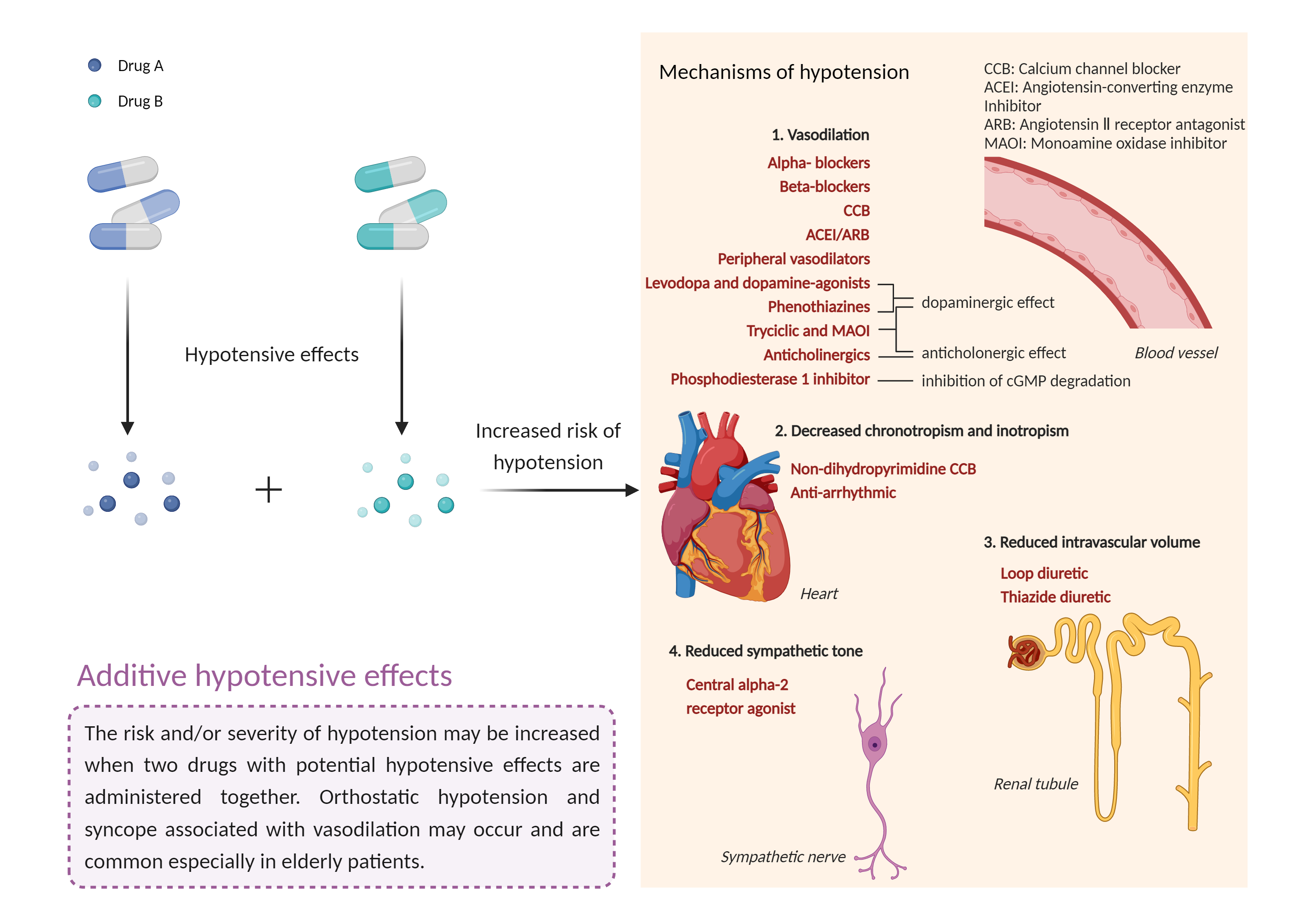
| Additive hypotensive effects Click to Show/Hide Mechanism Graph | |||||||||
 |
|||||||||
| Drug Name | Guanfacine | Penbutolol | |||||||
| Mechanism 1 |
Antihypertensive agent Alpha-2 adrenergic receptor Agonist |
Antihypertensive agent Beta-1 adrenergic receptor Antagonist |
|||||||
| Key Mechanism Factor 1 | |||||||||
| Factor Name | Adrenergic receptor alpha-2 | Structure Sequence | |||||||
| Protein Family | G-protein coupled receptor 1 family | ||||||||
| Protein Function |
Alpha-2 adrenergic receptors mediate the catecholamine-induced inhibition of adenylate cyclase through the action of G proteins. The rank order of potency for agonists of this receptor is oxymetazoline > clonidine > epinephrine > norepinephrine > phenylephrine > dopamine > p-synephrine > p-tyramine > serotonin = p-octopamine. For antagonists, the rank order is yohimbine > phentolamine = mianserine > chlorpromazine = spiperone = prazosin > propanolol > alprenolol = pindolol.
Click to Show/Hide
|
||||||||
| Key Mechanism Factor 2 | |||||||||
| Factor Name | Adrenergic receptor beta-1 |
×
Structure
Sequence
MGAGVLVLGASEPGNLSSAAPLPDGAATAARLLVPASPPASLLPPASESPEPLSQQWTAGMGLLMALIVLLIVAGNVLVIVAIAKTPRLQTLTNLFIMSLASADLVMGLLVVPFGATIVVWGRWEYGSFFCELWTSVDVLCVTASIETLCVIALDRYLAITSPFRYQSLLTRARARGLVCTVWAISALVSFLPILMHWWRAESDEARRCYNDPKCCDFVTNRAYAIASSVVSFYVPLCIMAFVYLRVFREAQKQVKKIDSCERRFLGGPARPPSPSPSPVPAPAPPPGPPRPAAAAATAPLANGRAGKRRPSRLVALREQKALKTLGIIMGVFTLCWLPFFLANVVKAFHRELVPDRLFVFFNWLGYANSAFNPIIYCRSPDFRKAFQRLLCCARRAARRRHATHGDRPRASGCLARPGPPPSPGAASDDDDDDVVGATPPARLLEPWAGCNGGAAADSDSSLDEPCRPGFASESKV
|
|||||||
| Gene Name | ADRB1 | ||||||||
| Uniprot ID | ADRB1_HUMAN | ||||||||
| KEGG Pathway | hsa:153 | ||||||||
| Protein Family | G-protein coupled receptor 1 family | ||||||||
| Protein Function |
Beta-adrenergic receptors mediate the catecholamine-induced activation of adenylate cyclase through the action of G proteins. This receptor binds epinephrine and norepinephrine with approximately equal affinity. Mediates Ras activation through G(s)-alpha- and cAMP-mediated signaling. Involved in the regulation of sleep/wake behaviors (PubMed:31473062).
Click to Show/Hide
|
||||||||
| Mechanism Description |
|
||||||||
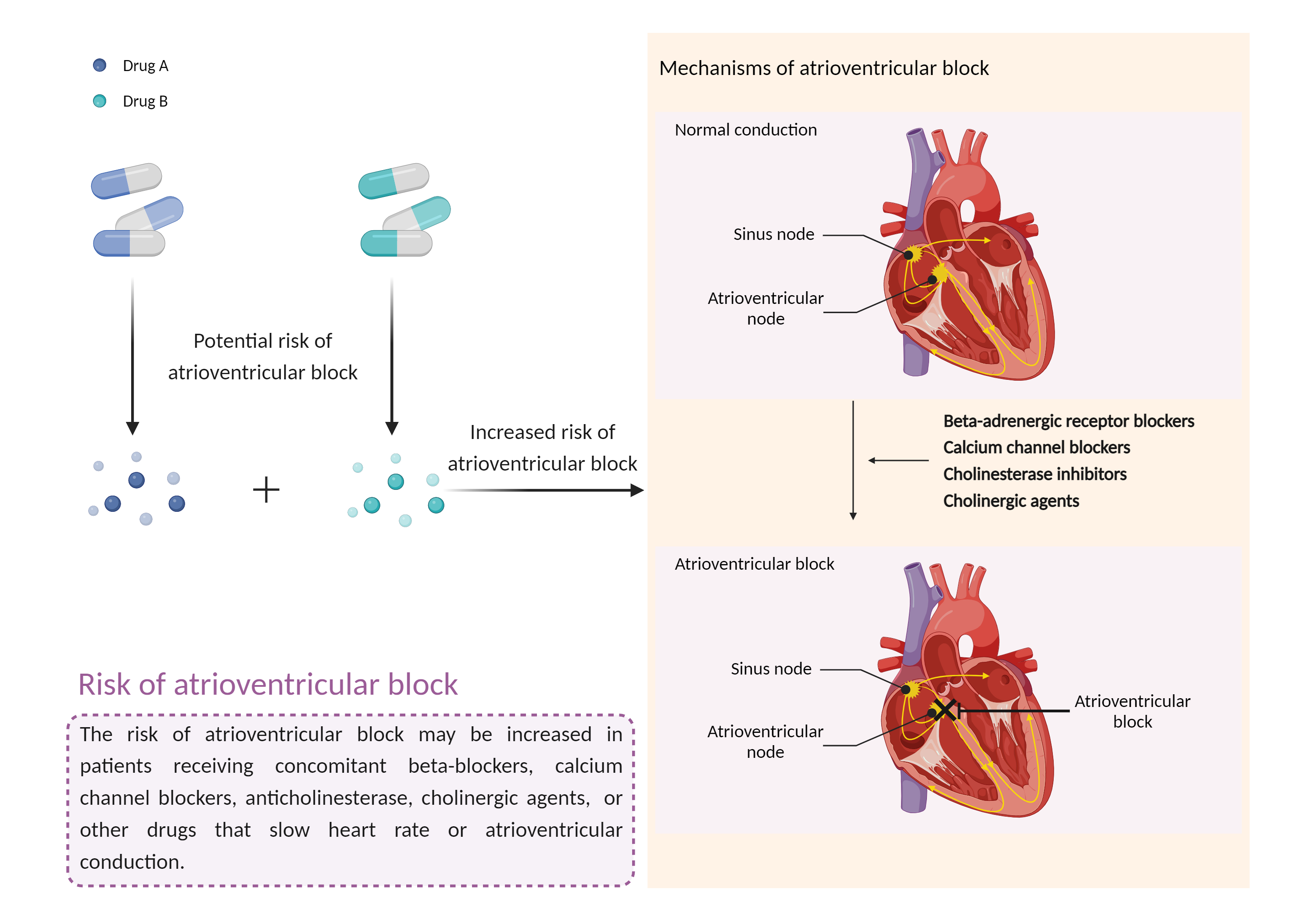
| Increased risk of atrioventricular block Click to Show/Hide Mechanism Graph | |||||||||
 |
|||||||||
| Drug Name | Guanfacine | Penbutolol | |||||||
| Mechanism 2 | Delay atrioventricular conduction | Delay atrioventricular conduction | |||||||
| Key Mechanism Factor 3 | |||||||||
| Factor Name | Atrioventricular block | ||||||||
| Factor Description | Atrioventricular block is a type of cardiac conduction block that occurs when the electrical signal from the atria to the ventricles is impaired. In an Atrioventricular block, this electrical signal is either delayed or completely blocked. When the signal is completely blocked, the ventricles produce their own electrical signal to control the heart rate. The heart rate produced by the ventricles is much slower than that produced by the sinus node. | ||||||||
| Mechanism Description |
|
||||||||
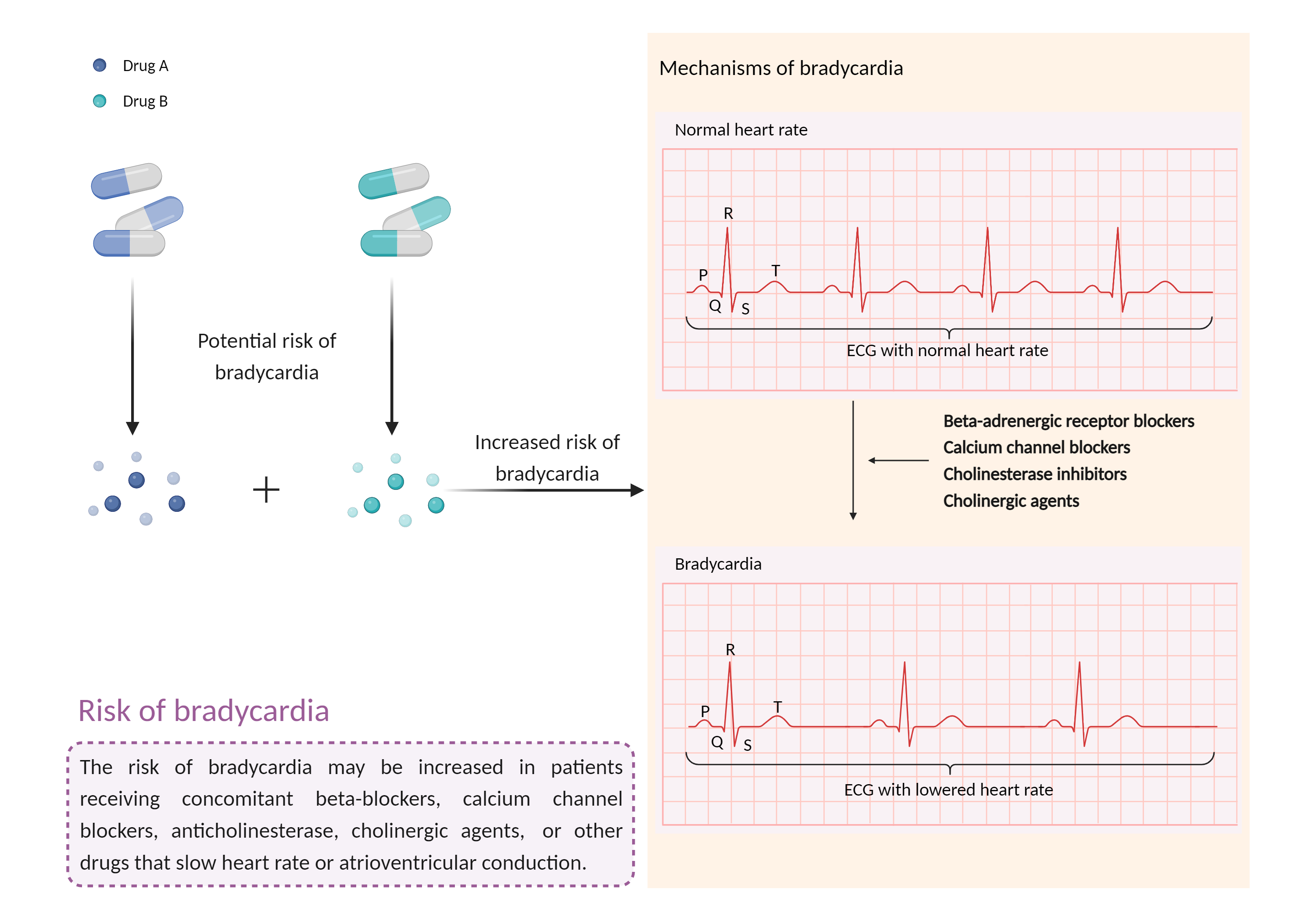
| Increased risk of bradycardia Click to Show/Hide Mechanism Graph | |||||||||
 |
|||||||||
| Drug Name | Guanfacine | Penbutolol | |||||||
| Mechanism 3 | Bradycardia | Bradycardia | |||||||
| Key Mechanism Factor 4 | |||||||||
| Factor Name | Bradycardia | ||||||||
| Factor Description | Bradycardia is a slow heart rate in which the heart beats less than 60 times per minute. If the heart rate is very slow and the heart is not pumping enough oxygen-rich blood to the body, and you may feel dizzy, very tired or weak, and short of breath. | ||||||||
| Mechanism Description |
|
||||||||
| Recommended Action | |||||||||
|---|---|---|---|---|---|---|---|---|---|
| Management | Until more information is available, caution and close monitoring of blood pressure are recommended for patients receiving guanfacine with a beta-blocker. Dosage adjustments as well as clinical and laboratory monitoring may be appropriate for some patients. Patients should be advised to avoid rising abruptly from a sitting or recumbent position and to notify their physician if they experience dizziness, lightheadedness, syncope, headaches, or reduced or irregular heart rate. | ||||||||