
Details of Drug-Drug Interaction
| Drug General Information (ID: DDI8CFWLD9) | |||||||||
|---|---|---|---|---|---|---|---|---|---|
| Drug Name | Buspirone | Drug Info | Ondansetron | Drug Info | |||||
| Drug Type | Small molecule | Small molecule | |||||||
| Therapeutic Class | Antianxiety Agents | Antiemetics | |||||||
| Structure | |||||||||
| Mechanism of Buspirone-Ondansetron Interaction (Severity Level: Major) | |||||||||
|---|---|---|---|---|---|---|---|---|---|
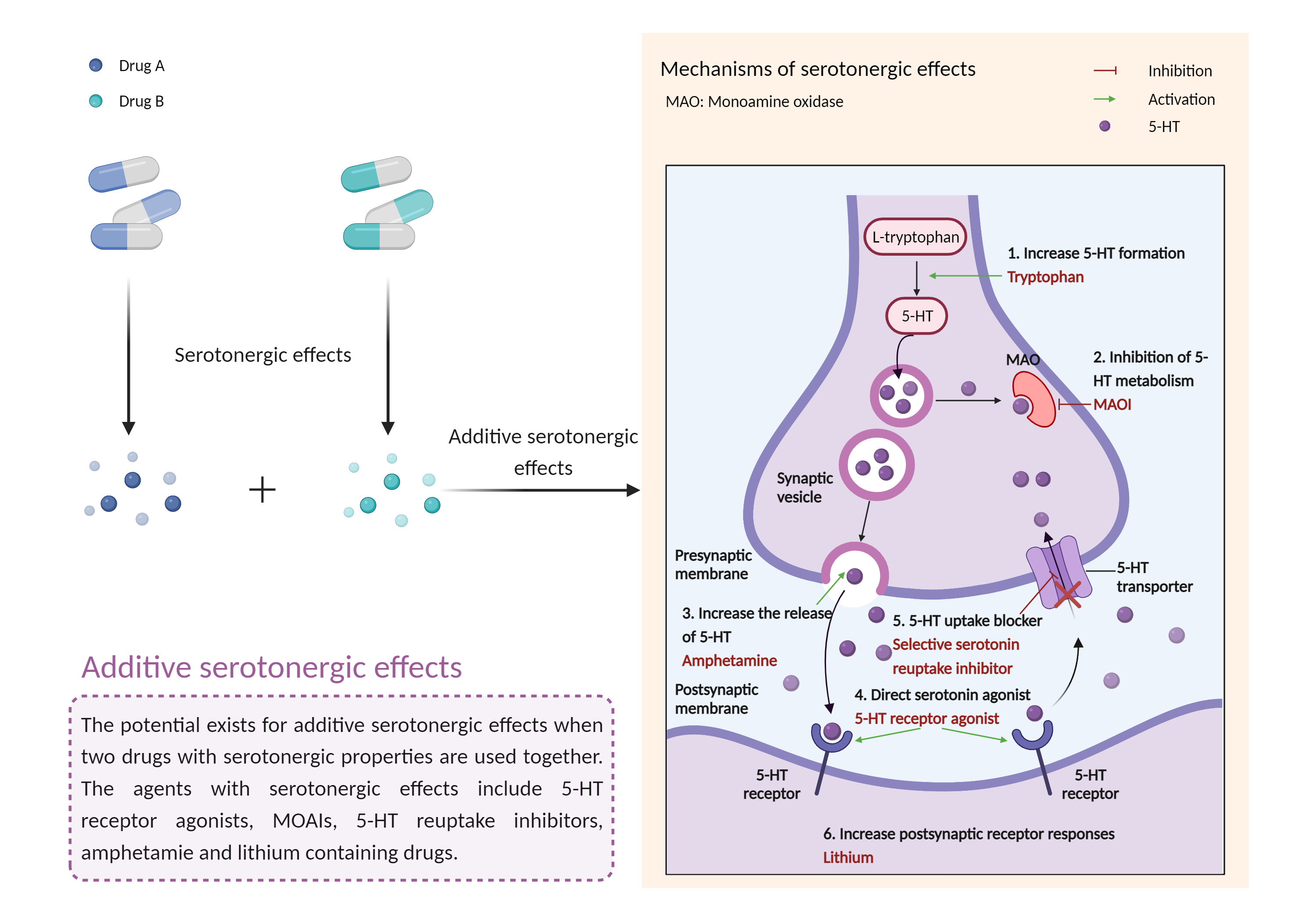
| Additive serotonergic effects Click to Show/Hide Mechanism Graph | |||||||||
 |
|||||||||
| Drug Name | Buspirone | Ondansetron | |||||||
| Mechanism |
Serotonergic effects 5-HT 1 receptor Agonist |
Serotonergic effects 5-HT 3 receptor Antagonist |
|||||||
| Key Mechanism Factor 1 | |||||||||
| Factor Name | 5-HT 1 receptor | Structure Sequence | |||||||
| Protein Family | G-protein coupled receptor 1 family | ||||||||
| Protein Function |
G-protein coupled receptor for 5-hydroxytryptamine (serotonin). Also functions as a receptor for various drugs and psychoactive substances. Ligand binding causes a conformation change that triggers signaling via guanine nucleotide-binding proteins (G proteins) and modulates the activity of down-stream effectors, such as adenylate cyclase. Beta-arrestin family members inhibit signaling via G proteins and mediate activation of alternative signaling pathways. Signaling inhibits adenylate cyclase activity and activates a phosphatidylinositol-calcium second messenger system that regulates the release of Ca(2+) ions from intracellular stores. Plays a role in the regulation of 5-hydroxytryptamine release and in the regulation of dopamine and 5-hydroxytryptamine metabolism. Plays a role in the regulation of dopamine and 5-hydroxytryptamine levels in the brain, and thereby affects neural activity, mood and behavior. Plays a role in the response to anxiogenic stimuli.
Click to Show/Hide
|
||||||||
| Key Mechanism Factor 2 | |||||||||
| Factor Name | 5-HT 3 receptor | Structure Sequence | |||||||
| Protein Family | Ligand-gated ion channel (TC 1.A.9) family | ||||||||
| Protein Function |
This is one of the several different receptors for 5-hydroxytryptamine (serotonin), a biogenic hormone that functions as a neurotransmitter, a hormone, and a mitogen. This receptor is a ligand-gated ion channel, which when activated causes fast, depolarizing responses in neurons. It is a cation-specific, but otherwise relatively nonselective, ion channel.
Click to Show/Hide
|
||||||||
| Mechanism Description |
|
||||||||
| Recommended Action | |||||||||
|---|---|---|---|---|---|---|---|---|---|
| Management | Caution is advised if 5-HT3 receptor antagonists are prescribed with other agents that affect the serotonergic neurotransmitter system. Patients should be closely monitored for symptoms of the serotonin syndrome during treatment. Particular caution is warranted when initiating or increasing the dosages of these agents. The potential risk for serotonin syndrome should be considered even when administering serotonergic agents sequentially, as some agents may demonstrate a prolonged elimination half-life. For example, a 5-week washout period is typically recommended following use of fluoxetine and 2 weeks following use of MAOIs before administering another serotonergic agent. If serotonin syndrome develops or is suspected during the course of therapy, all serotonergic agents should be discontinued immediately and supportive care rendered as necessary. | ||||||||