
Details of Drug-Drug Interaction
| Drug General Information (ID: DDI86BFH1Y) | |||||||||
|---|---|---|---|---|---|---|---|---|---|
| Drug Name | Adenosine | Drug Info | Arbutamine | Drug Info | |||||
| Drug Type | Small molecule | Small molecule | |||||||
| Therapeutic Class | Antiarrhythmic Agents | Cardiotonic Agents | |||||||
| Structure | |||||||||
| Mechanism of Adenosine-Arbutamine Interaction (Severity Level: Major) | |||||||||
|---|---|---|---|---|---|---|---|---|---|
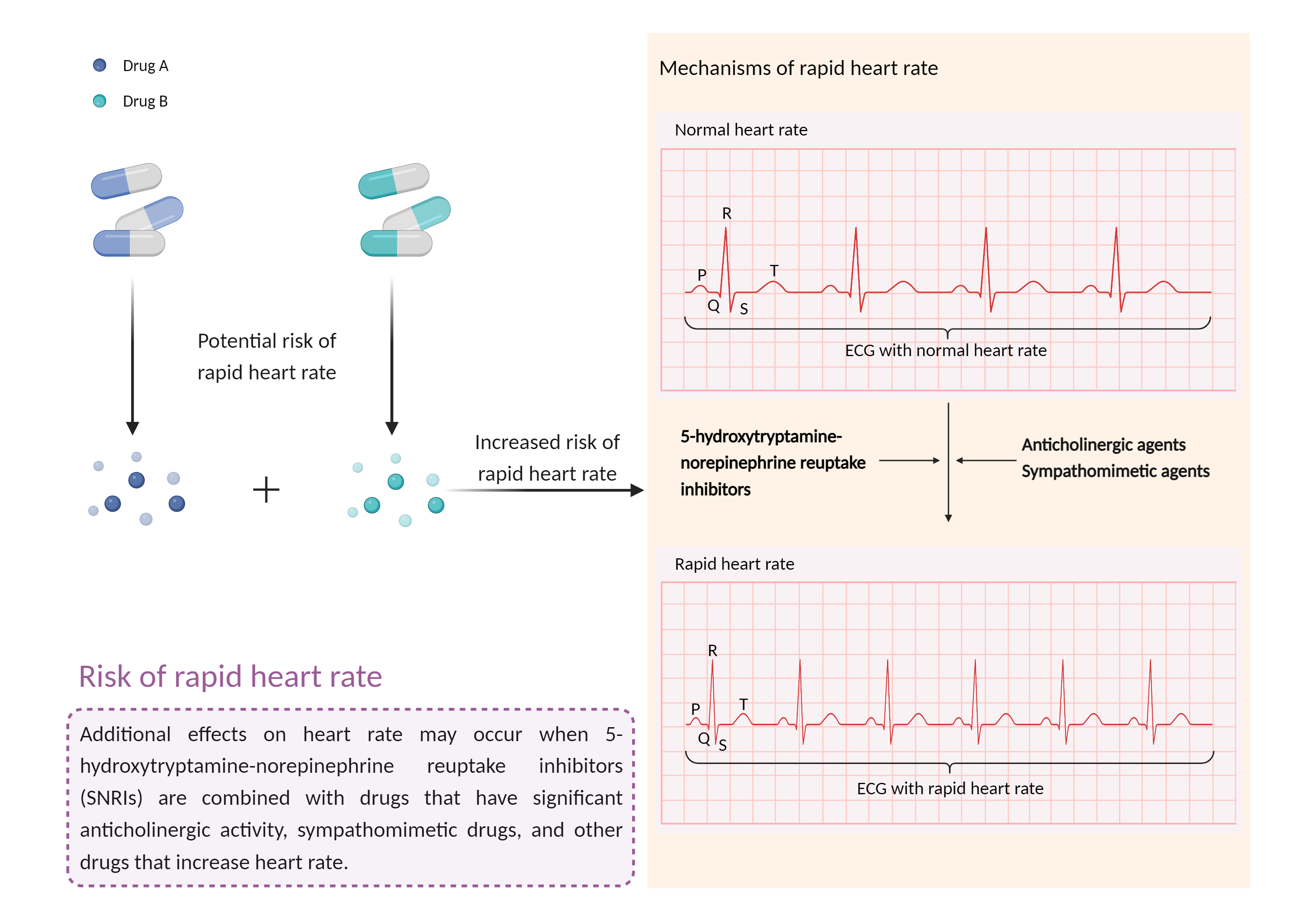
| Increased risk of rapid heart rate Click to Show/Hide Mechanism Graph | |||||||||
 |
|||||||||
| Drug Name | Adenosine | Arbutamine | |||||||
| Mechanism | Increased heart rate | Increased heart rate | |||||||
| Key Mechanism Factor 1 | |||||||||
| Factor Name | Tachycardia | ||||||||
| Factor Description | A faster-than-normal heart rate, but the heart is beating normally. Tachycardia may not cause any symptoms or complications, but if left untreated, some forms of tachycardia can lead to serious health problems, including heart failure, stroke, or sudden cardiac death. | ||||||||
| Mechanism Description |
|
||||||||
| Recommended Action | |||||||||
|---|---|---|---|---|---|---|---|---|---|
| Management | The manufacturer recommends that arbutamine not be given concurrently with proarrhythmic drugs. | ||||||||