| Management |
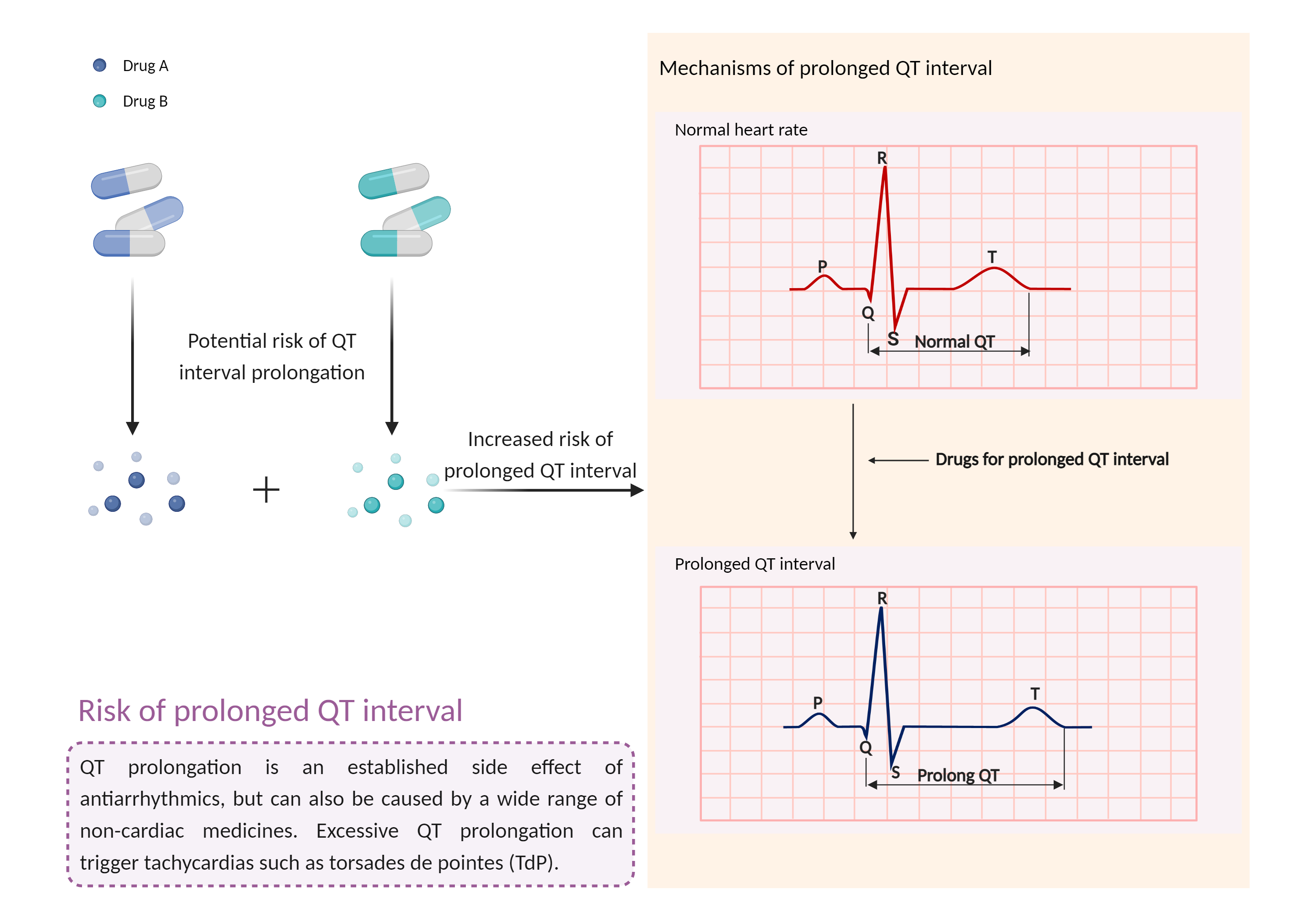
The use of vandetanib in combination with other medications that can prolong the QT interval should generally be avoided. Should treatment with other QT-prolonging drugs be required, the manufacturer recommends more frequent monitoring of the ECG as well as serum potassium, magnesium, and calcium levels. Given vandetanib's half-life of 19 days, ECGs and serum electrolytes should typically be obtained at baseline, at 2 to 4 weeks and 8 to 12 weeks after starting treatment, and every 3 months thereafter. Vandetanib should not be started if baseline QTcF is greater than 450 ms, and treatment should be interrupted if QTcF is greater than 500 ms. Treatment may resume when QTcF returns to less than 450 ms, but at a reduced dosage. In addition, hypokalemia, hypomagnesemia, and/or hypocalcemia must be corrected prior to vandetanib administration. Since diarrhea is a common side effect of vandetanib and may cause electrolyte imbalances, ECG and electrolyte levels should also be monitored more frequently when diarrhea develops. Vandetanib treatment should be stopped in the presence of severe diarrhea. Treatment may resume when diarrhea improves, but at a reduced dosage. Following any dosage reduction, or any interruption of treatment greater than 2 weeks, QT assessment and serum electrolytes should be conducted as described previously. Patients should be advised to seek medical attention if they experience symptoms that could indicate the occurrence of torsade de pointes such as dizziness, lightheadedness, fainting, palpitations, irregular heartbeat, shortness of breath, or syncope. Because of the drug's long half-life, adverse reactions including a prolonged QT interval may not resolve quickly, thus appropriate monitoring is necessary. |