| Mechanism of Oxaprozin-Etidronic acid Interaction
(Severity Level: Moderate)
|
|
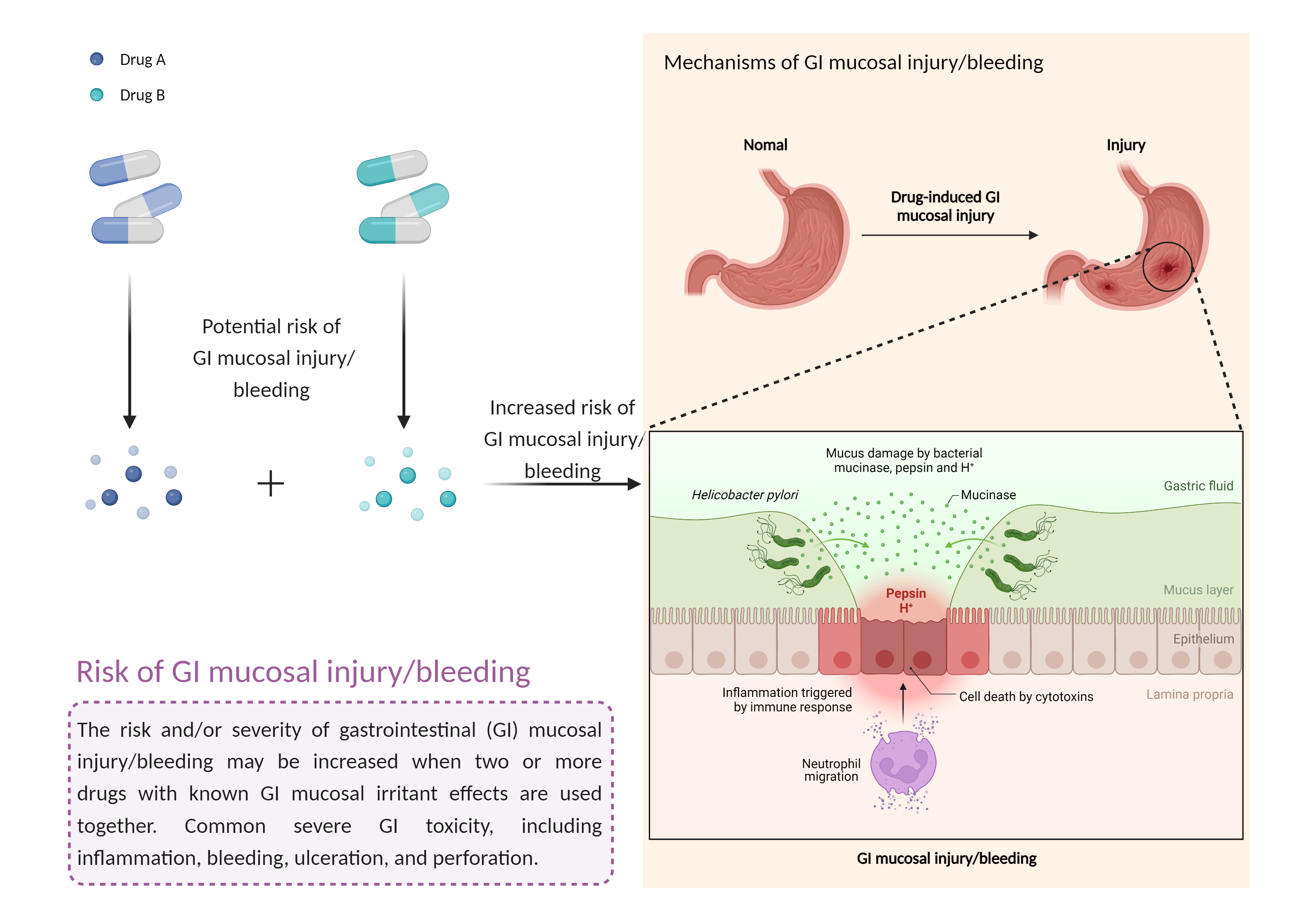
Increased risk of GI mucosal injury/bleeding risk
Click to Show/Hide Mechanism Graph
|
 |
| Drug Name |
Oxaprozin |
Etidronic acid |
|
Mechanism 1
|
GI mucosal injury/bleeding risk |
GI mucosal injury/bleeding risk |
| Key Mechanism Factor 1 |
| Factor Name |
Gastrointestinal toxicity |
| Factor Description |
The risk and severity of gastrointestinal toxicity, including inflammation, bleeding, ulceration, and perforation, increases when drugs with gastrointestinal mucosal irritant effects are combined. |
| Mechanism Description |
- Increased risk of GI mucosal injury/bleeding risk by the combination of Oxaprozin and Etidronic acid
|
|
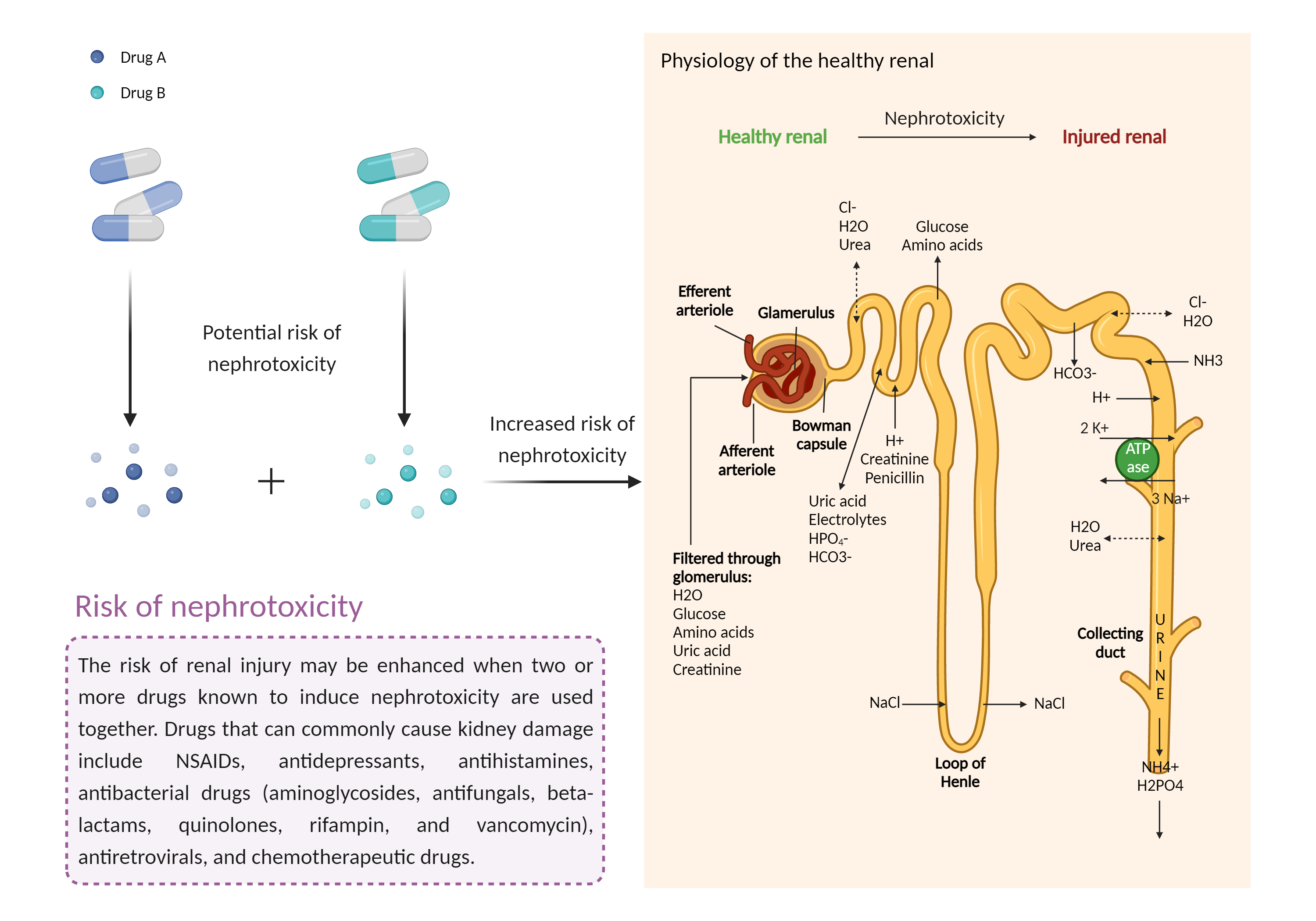
Increased risk of nephrotoxicity
Click to Show/Hide Mechanism Graph
|
 |
| Drug Name |
Oxaprozin |
Etidronic acid |
|
Mechanism 2
|
Nephrotoxicity |
Nephrotoxicity |
| Key Mechanism Factor 2 |
| Factor Name |
Nephrotoxicity |
| Factor Description |
The combination of drugs that can induce nephrotoxicity may increase the risk of kidney injury. When kidney injury occurs, the inability to remove excess urine and waste from the body can lead to high levels of urea nitrogen, creatinine, and electrolytes (such as potassium and magnesium) in the blood. |
| Mechanism Description |
- Increased risk of nephrotoxicity by the combination of Oxaprozin and Etidronic acid
|
