
Details of Drug-Drug Interaction
| Drug General Information (ID: DDI6QMR0P7) | |||||||||
|---|---|---|---|---|---|---|---|---|---|
| Drug Name | Milrinone | Drug Info | Tranylcypromine | Drug Info | |||||
| Drug Type | Small molecule | Small molecule | |||||||
| Therapeutic Class | Cardiotonic Agents | Antidepressants | |||||||
| Structure | |||||||||
| Mechanism of Milrinone-Tranylcypromine Interaction (Severity Level: Moderate) | |||||||||
|---|---|---|---|---|---|---|---|---|---|
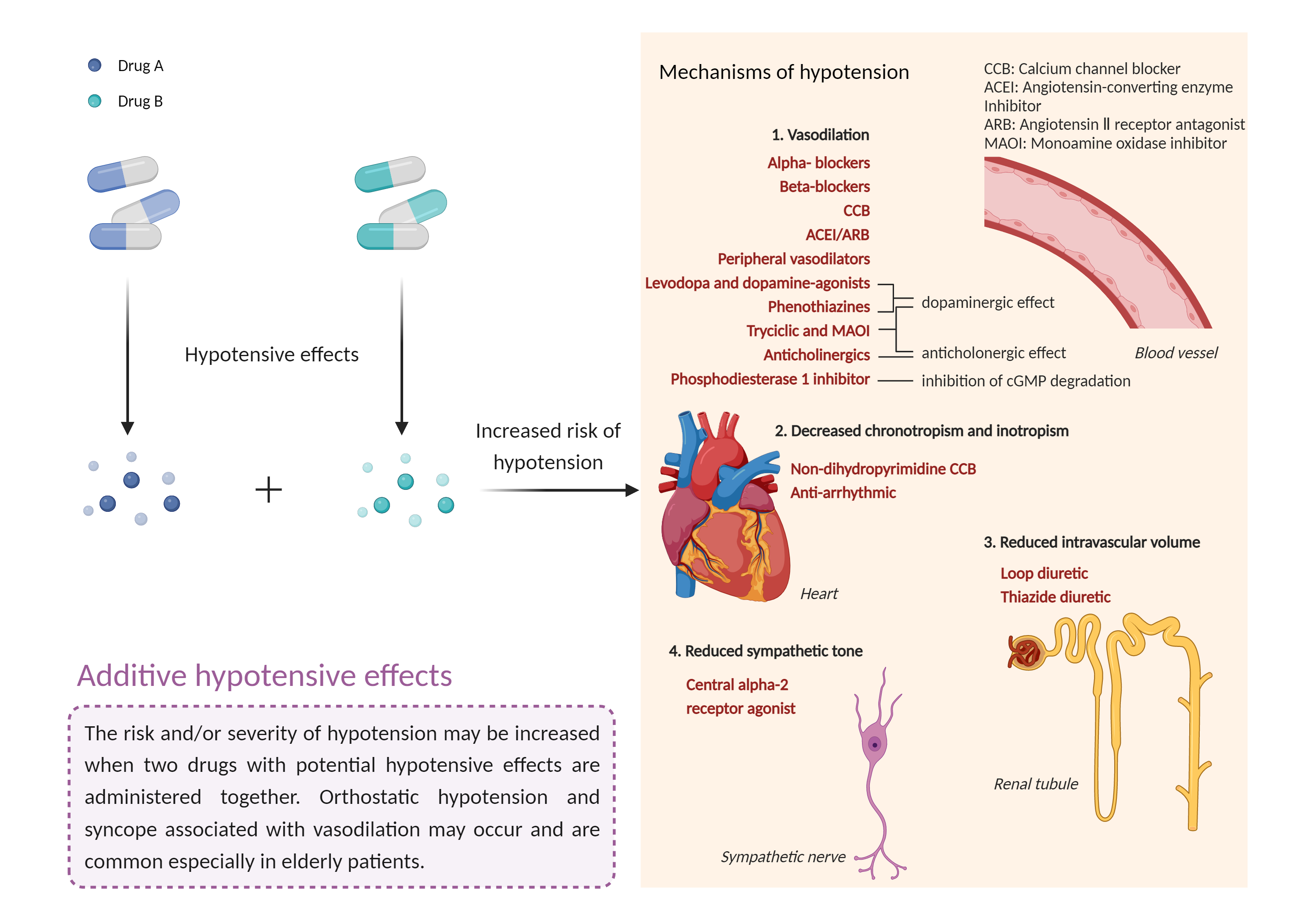
| Additive hypotensive effects Click to Show/Hide Mechanism Graph | |||||||||
 |
|||||||||
| Drug Name | Milrinone | Tranylcypromine | |||||||
| Mechanism |
Hypotensive effects Phosphodiesterase 3 Inhibitor |
Hypotensive effects Monoamine oxidase non-selective Inhibitor |
|||||||
| Key Mechanism Factor 1 | |||||||||
| Factor Name | Phosphodiesterase 3 | Structure Sequence | |||||||
| Protein Family | Cyclic nucleotide phosphodiesterase family | ||||||||
| Protein Function |
Cyclic nucleotide phosphodiesterase with specificity for the second messengers cAMP and cGMP, which are key regulators of many important physiological processes (PubMed:1315035, PubMed:8695850, PubMed:8155697, PubMed:25961942). Has also activity toward cUMP (PubMed:27975297). Independently of its catalytic activity it is part of an E2/17beta-estradiol-induced pro-apoptotic signaling pathway. E2 stabilizes the PDE3A/SLFN12 complex in the cytosol, promoting the dephosphorylation of SLFN12 and activating its pro-apoptotic ribosomal RNA/rRNA ribonuclease activity. This apoptotic pathway might be relevant in tissues with high concentration of E2 and be for instance involved in placenta remodeling (PubMed:31420216, PubMed:34707099).
Click to Show/Hide
|
||||||||
| Key Mechanism Factor 2 | |||||||||
| Factor Name | Monoamine oxidase | Structure Sequence | |||||||
| Protein Family | Flavin monoamine oxidase family | ||||||||
| Protein Function |
Catalyzes the oxidative deamination of primary and some secondary amine such as neurotransmitters, with concomitant reduction of oxygen to hydrogen peroxide and has important functions in the metabolism of neuroactive and vasoactive amines in the central nervous system and peripheral tissues (PubMed:20493079, PubMed:8316221, PubMed:18391214, PubMed:24169519). Preferentially oxidizes serotonin (PubMed:20493079, PubMed:24169519). Also catalyzes the oxidative deamination of kynuramine to 3-(2-aminophenyl)-3-oxopropanal that can spontaneously condense to 4-hydroxyquinoline (By similarity).
Click to Show/Hide
|
||||||||
| Mechanism Description |
|
||||||||
| Recommended Action | |||||||||
|---|---|---|---|---|---|---|---|---|---|
| Management | Caution is advised during coadministration of MAOIs and other medications with hypotensive effects, especially during the first few weeks of treatment. Close monitoring for development of hypotension is recommended. Ambulatory patients should be advised to avoid rising abruptly from a sitting or recumbent position and to notify their physician if they experience dizziness, lightheadedness, syncope, orthostasis, or tachycardia. | ||||||||