
Details of Drug-Drug Interaction
| Drug General Information (ID: DDI6DQHECG) | |||||||||
|---|---|---|---|---|---|---|---|---|---|
| Drug Name | Trihexyphenidyl | Drug Info | Memantine | Drug Info | |||||
| Drug Type | Small molecule | Small molecule | |||||||
| Therapeutic Class | Antiparkinson Agents | Cholinesterase Inhibitors | |||||||
| Structure | |||||||||
| Mechanism of Trihexyphenidyl-Memantine Interaction (Severity Level: Moderate) | |||||||||
|---|---|---|---|---|---|---|---|---|---|
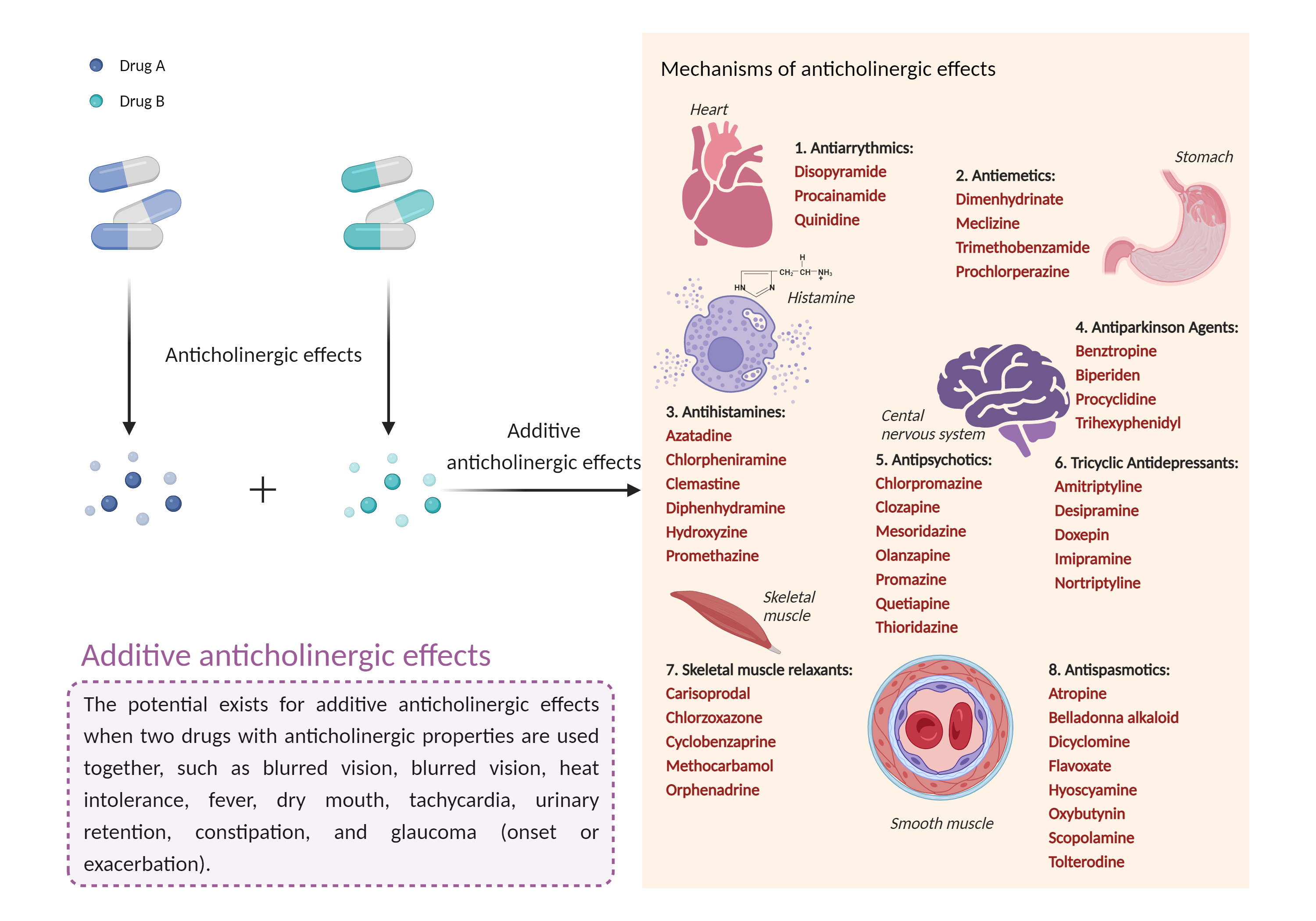
| Additive anticholinergic effects Click to Show/Hide Mechanism Graph | |||||||||
 |
|||||||||
| Drug Name | Trihexyphenidyl | Memantine | |||||||
| Mechanism |
Anticholinergic effects Muscarinic acetylcholine receptor Antagonist |
Potentiate the anticholinergic effects of trihexyphenidyl | |||||||
| Key Mechanism Factor 1 | |||||||||
| Factor Name | Muscarinic acetylcholine receptor M | Structure Sequence | |||||||
| Protein Family | G-protein coupled receptor 1 family | ||||||||
| Protein Function |
The muscarinic acetylcholine receptor mediates various cellular responses, including inhibition of adenylate cyclase, breakdown of phosphoinositides and modulation of potassium channels through the action of G proteins. Primary transducing effect is Pi turnover.
Click to Show/Hide
|
||||||||
| Mechanism Description |
|
||||||||
| Recommended Action | |||||||||
|---|---|---|---|---|---|---|---|---|---|
| Management | Patients should be monitored for adverse effects. Dose adjustments of the anticholinergic agent may be required during coadministration. | ||||||||