
Details of Drug-Drug Interaction
| Drug General Information (ID: DDI4X3FEDI) | |||||||||
|---|---|---|---|---|---|---|---|---|---|
| Drug Name | Methylergometrine | Drug Info | Lorcaserin | Drug Info | |||||
| Drug Type | Small molecule | Small molecule | |||||||
| Therapeutic Class | Oxytocics | Anorexiants | |||||||
| Structure | |||||||||
| Mechanism of Methylergometrine-Lorcaserin Interaction (Severity Level: Major) | |||||||||
|---|---|---|---|---|---|---|---|---|---|
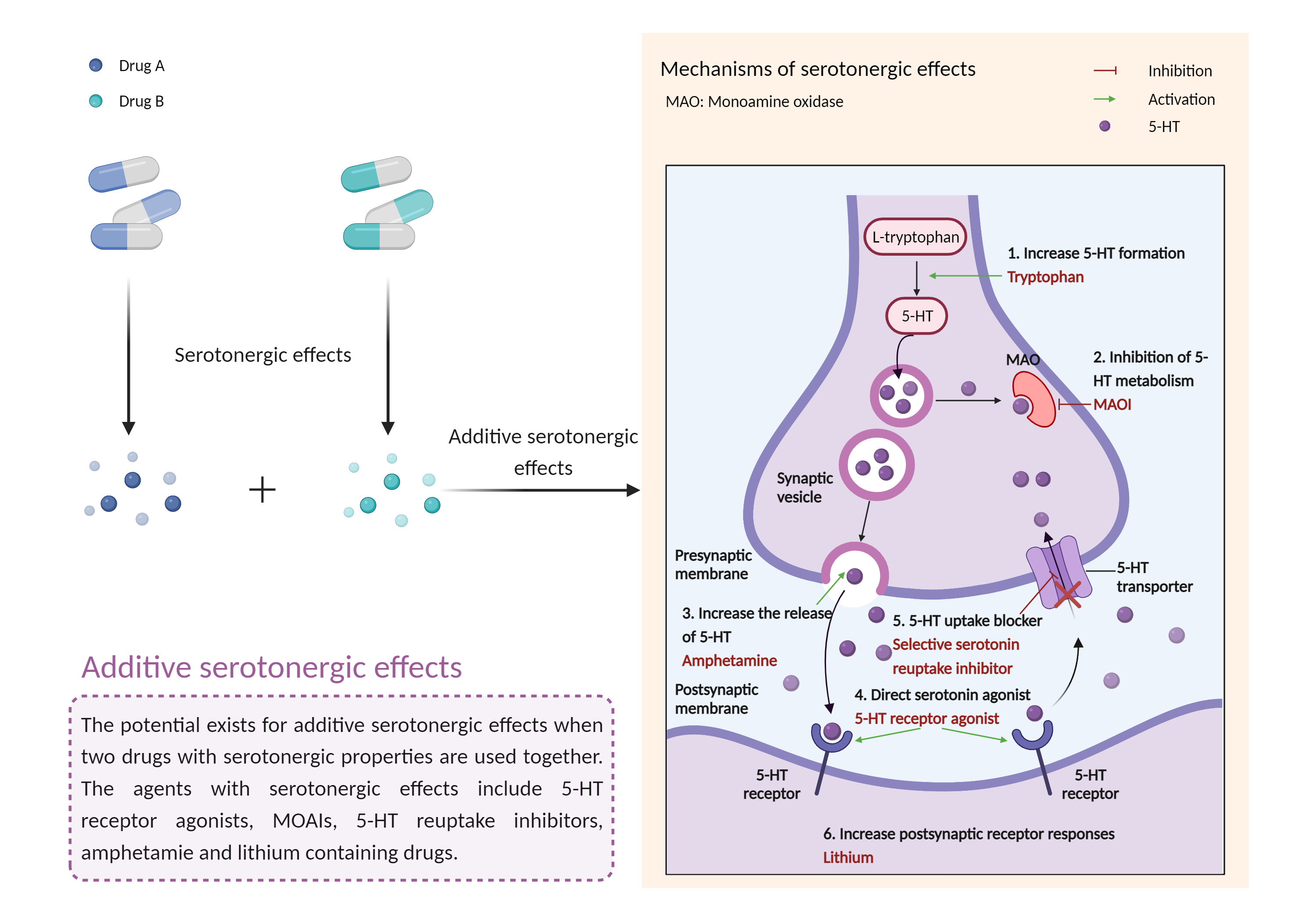
| Additive serotonergic effects Click to Show/Hide Mechanism Graph | |||||||||
 |
|||||||||
| Drug Name | Methylergometrine | Lorcaserin | |||||||
| Mechanism 1 |
Serotonergic effects 5-HT 2B receptor Agonist |
Serotonergic effects 5-HT 2C receptor Agonist |
|||||||
| Key Mechanism Factor 1 | |||||||||
| Factor Name | 5-hydroxytryptamine receptor 2B |
×
Structure
Sequence
MALSYRVSELQSTIPEHILQSTFVHVISSNWSGLQTESIPEEMKQIVEEQGNKLHWAALLILMVIIPTIGGNTLVILAVSLEKKLQYATNYFLMSLAVADLLVGLFVMPIALLTIMFEAMWPLPLVLCPAWLFLDVLFSTASIMHLCAISVDRYIAIKKPIQANQYNSRATAFIKITVVWLISIGIAIPVPIKGIETDVDNPNNITCVLTKERFGDFMLFGSLAAFFTPLAIMIVTYFLTIHALQKKAYLVKNKPPQRLTWLTVSTVFQRDETPCSSPEKVAMLDGSRKDKALPNSGDETLMRRTSTIGKKSVQTISNEQRASKVLGIVFFLFLLMWCPFFITNITLVLCDSCNQTTLQMLLEIFVWIGYVSSGVNPLVYTLFNKTFRDAFGRYITCNYRATKSVKTLRKRSSKIYFRNPMAENSKFFKKHGIRNGINPAMYQSPMRLRSSTIQSSSIILLDTLLLTENEGDKTEEQVSYV
|
|||||||
| Gene Name | HTR2B | ||||||||
| Uniprot ID | 5HT2B_HUMAN | ||||||||
| KEGG Pathway | hsa:3357 | ||||||||
| Protein Family | G-protein coupled receptor 1 family | ||||||||
| Protein Function |
G-protein coupled receptor for 5-hydroxytryptamine (serotonin) (PubMed:8143856, PubMed:7926008, PubMed:8078486, PubMed:8882600, PubMed:18703043, PubMed:23519210). Also functions as a receptor for various ergot alkaloid derivatives and psychoactive substances (PubMed:8143856, PubMed:7926008, PubMed:8078486, PubMed:12970106, PubMed:18703043, PubMed:23519210, PubMed:23519215, PubMed:24357322, PubMed:28129538). Ligand binding causes a conformation change that triggers signaling via guanine nucleotide-binding proteins (G proteins) and modulates the activity of down-stream effectors (PubMed:8143856, PubMed:8078486, PubMed:8882600, PubMed:23519215, PubMed:28129538). Beta-arrestin family members inhibit signaling via G proteins and mediate activation of alternative signaling pathways (PubMed:23519215, PubMed:28129538). Signaling activates a phosphatidylinositol-calcium second messenger system that modulates the activity of phosphatidylinositol 3-kinase and down-stream signaling cascades and promotes the release of Ca(2+) ions from intracellular stores (PubMed:8143856, PubMed:8078486, PubMed:8882600, PubMed:18703043, PubMed:23519215, PubMed:28129538). Plays a role in the regulation of dopamine and 5-hydroxytryptamine release, 5-hydroxytryptamine uptake and in the regulation of extracellular dopamine and 5-hydroxytryptamine levels, and thereby affects neural activity. May play a role in the perception of pain (By similarity). Plays a role in the regulation of behavior, including impulsive behavior (PubMed:21179162). Required for normal proliferation of embryonic cardiac myocytes and normal heart development. Protects cardiomyocytes against apoptosis. Plays a role in the adaptation of pulmonary arteries to chronic hypoxia. Plays a role in vasoconstriction. Required for normal osteoblast function and proliferation, and for maintaining normal bone density. Required for normal proliferation of the interstitial cells of Cajal in the intestine (By similarity).
Click to Show/Hide
|
||||||||
| Key Mechanism Factor 2 | |||||||||
| Factor Name | 5-hydroxytryptamine receptor 2C |
×
Structure
Sequence
MVNLRNAVHSFLVHLIGLLVWQSDISVSPVAAIVTDIFNTSDGGRFKFPDGVQNWPALSIVIIIIMTIGGNILVIMAVSMEKKLHNATNYFLMSLAIADMLVGLLVMPLSLLAILYDYVWPLPRYLCPVWISLDVLFSTASIMHLCAISLDRYVAIRNPIEHSRFNSRTKAIMKIAIVWAISIGVSVPIPVIGLRDEEKVFVNNTTCVLNDPNFVLIGSFVAFFIPLTIMVITYCLTIYVLRRQALMLLHGHTEEPPGLSLDFLKCCKRNTAEEENSANPNQDQNARRRKKKERRPRGTMQAINNERKASKVLGIVFFVFLIMWCPFFITNILSVLCEKSCNQKLMEKLLNVFVWIGYVCSGINPLVYTLFNKIYRRAFSNYLRCNYKVEKKPPVRQIPRVAATALSGRELNVNIYRHTNEPVIEKASDNEPGIEMQVENLELPVNPSSVVSERISSV
|
|||||||
| Gene Name | HTR2C | ||||||||
| Uniprot ID | 5HT2C_HUMAN | ||||||||
| KEGG Pathway | hsa:3358 | ||||||||
| Protein Family | G-protein coupled receptor 1 family | ||||||||
| Protein Function |
G-protein coupled receptor for 5-hydroxytryptamine (serotonin). Also functions as a receptor for various drugs and psychoactive substances, including ergot alkaloid derivatives, 1-2,5,-dimethoxy-4-iodophenyl-2-aminopropane (DOI) and lysergic acid diethylamide (LSD). Ligand binding causes a conformation change that triggers signaling via guanine nucleotide-binding proteins (G proteins) and modulates the activity of down-stream effectors. Beta-arrestin family members inhibit signaling via G proteins and mediate activation of alternative signaling pathways. Signaling activates a phosphatidylinositol-calcium second messenger system that modulates the activity of phosphatidylinositol 3-kinase and down-stream signaling cascades and promotes the release of Ca(2+) ions from intracellular stores. Regulates neuronal activity via the activation of short transient receptor potential calcium channels in the brain, and thereby modulates the activation of pro-opiomelacortin neurons and the release of CRH that then regulates the release of corticosterone. Plays a role in the regulation of appetite and eating behavior, responses to anxiogenic stimuli and stress. Plays a role in insulin sensitivity and glucose homeostasis.
Click to Show/Hide
|
||||||||
| Mechanism Description |
|
||||||||
| Increased risk of other adverse reactions (Unspecific) Click to Show/Hide Mechanism Graph | |||||||||
| Drug Name | Methylergometrine | Lorcaserin | |||||||
| Mechanism 2 | Risk of valvular heart disease | Risk of valvular heart disease | |||||||
| Key Mechanism Factor 3 | |||||||||
| Factor Name | Adverse reactions | ||||||||
| Factor Description | An adverse reaction is an unexpected negative reaction to a medication or treatment that happens even when it's used correctly. | ||||||||
| Mechanism Description |
|
||||||||
| Recommended Action | |||||||||
|---|---|---|---|---|---|---|---|---|---|
| Management | Lorcaserin should not be used in combination with serotonergic and dopaminergic drugs that are potent 5-HT2B receptor agonists and are known to increase the risk of cardiac valvulopathy (e.g., cabergoline, pergolide, ergot alkaloids). Patients who develop signs and symptoms of valvular heart disease such as dizziness, fatigue, weakness, dyspnea, edema, or arrhythmia during treatment with lorcaserin should seek prompt medical attention. Discontinuation of lorcaserin should be considered. | ||||||||