
Details of Drug-Drug Interaction
| Drug General Information (ID: DDI4AQNH1L) | |||||||||
|---|---|---|---|---|---|---|---|---|---|
| Drug Name | Diazoxide | Drug Info | Licorice | Drug Info | |||||
| Drug Type | Small molecule | Natural product | |||||||
| Therapeutic Class | Antihypertensive Agents | Herbal Products | |||||||
| Structure | |||||||||
| Mechanism of Diazoxide-Licorice Interaction (Severity Level: Moderate) | |||||||||
|---|---|---|---|---|---|---|---|---|---|
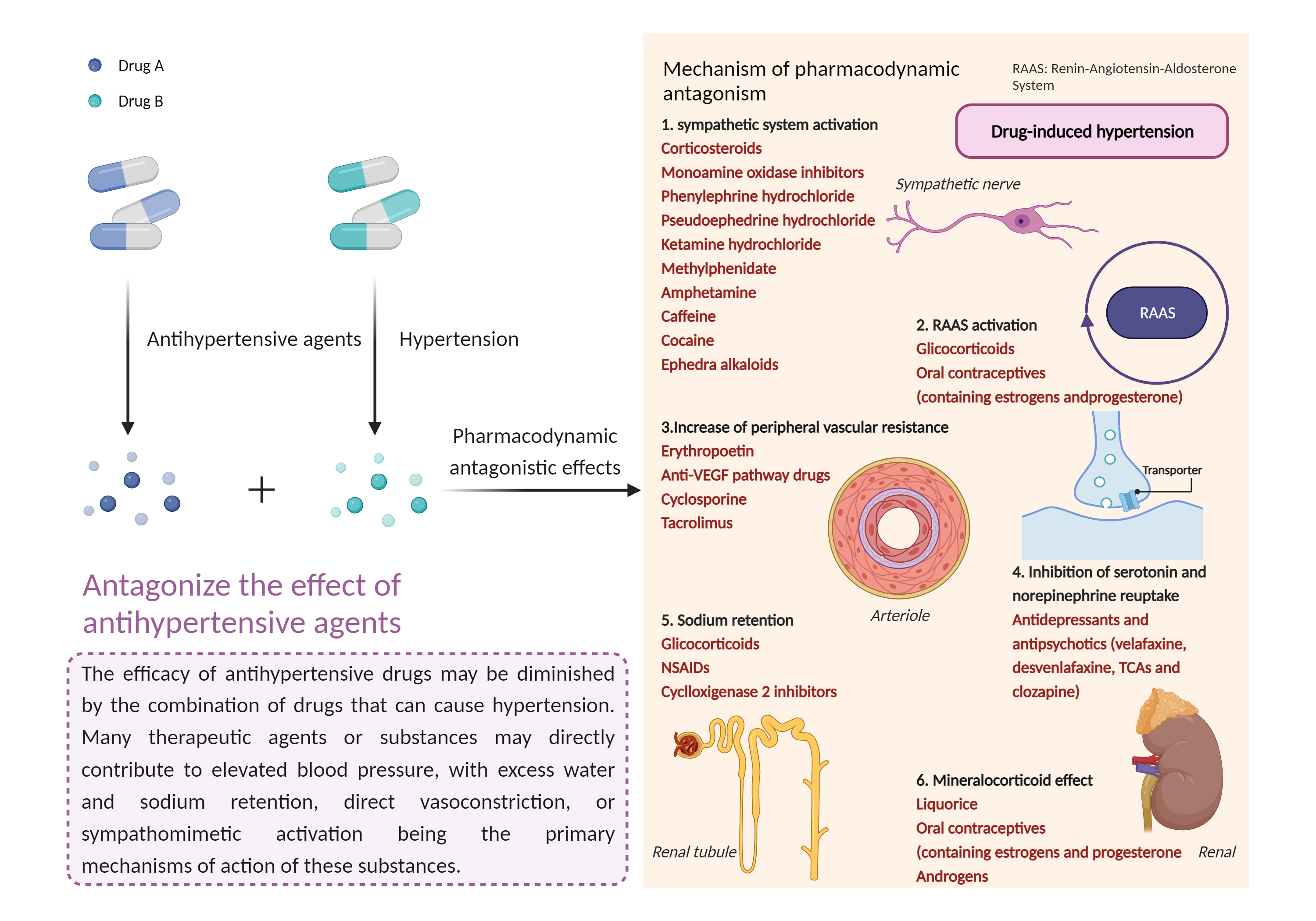
| Antagonize the effect of antihypertensive agents Click to Show/Hide Mechanism Graph | |||||||||
 |
|||||||||
| Drug Name | Diazoxide | Licorice | |||||||
| Mechanism |
Hypotensive effects ATP-sensitive inward rectifier potassium channel Inducer |
Hypertensive effects Mineralocorticoid and renin-suppressing effects |
|||||||
| Key Mechanism Factor 1 | |||||||||
| Factor Name | Inward rectifier potassium channel | Structure Sequence | |||||||
| Protein Family | Inward rectifier-type potassium channel (TC 1.A.2.1) family | ||||||||
| Protein Function |
This receptor is controlled by G proteins. Inward rectifier potassium channels are characterized by a greater tendency to allow potassium to flow into the cell rather than out of it. Their voltage dependence is regulated by the concentration of extracellular potassium; as external potassium is raised, the voltage range of the channel opening shifts to more positive voltages. The inward rectification is mainly due to the blockage of outward current by internal magnesium. Can be blocked by extracellular barium (By similarity). Subunit of ATP-sensitive potassium channels (KATP). Can form cardiac and smooth muscle-type KATP channels with ABCC9. KCNJ11 forms the channel pore while ABCC9 is required for activation and regulation.
Click to Show/Hide
|
||||||||
| Mechanism Description |
|
||||||||
| Recommended Action | |||||||||
|---|---|---|---|---|---|---|---|---|---|
| Management | Patients receiving antihypertensive therapy should avoid or limit the consumption of licorice-containing products. Even relatively moderate doses of licorice may be problematic in susceptible patients when ingested regularly for prolonged periods. | ||||||||