
Details of Drug-Drug Interaction
| Drug General Information (ID: DDI38KP69B) | |||||||||
|---|---|---|---|---|---|---|---|---|---|
| Drug Name | Erlotinib | Drug Info | Nizatidine | Drug Info | |||||
| Drug Type | Small molecule | Small molecule | |||||||
| Therapeutic Class | Antineoplastics | Antiulcer Agents | |||||||
| Structure | |||||||||
| Mechanism of Erlotinib-Nizatidine Interaction (Severity Level: Moderate) | |||||||||
|---|---|---|---|---|---|---|---|---|---|
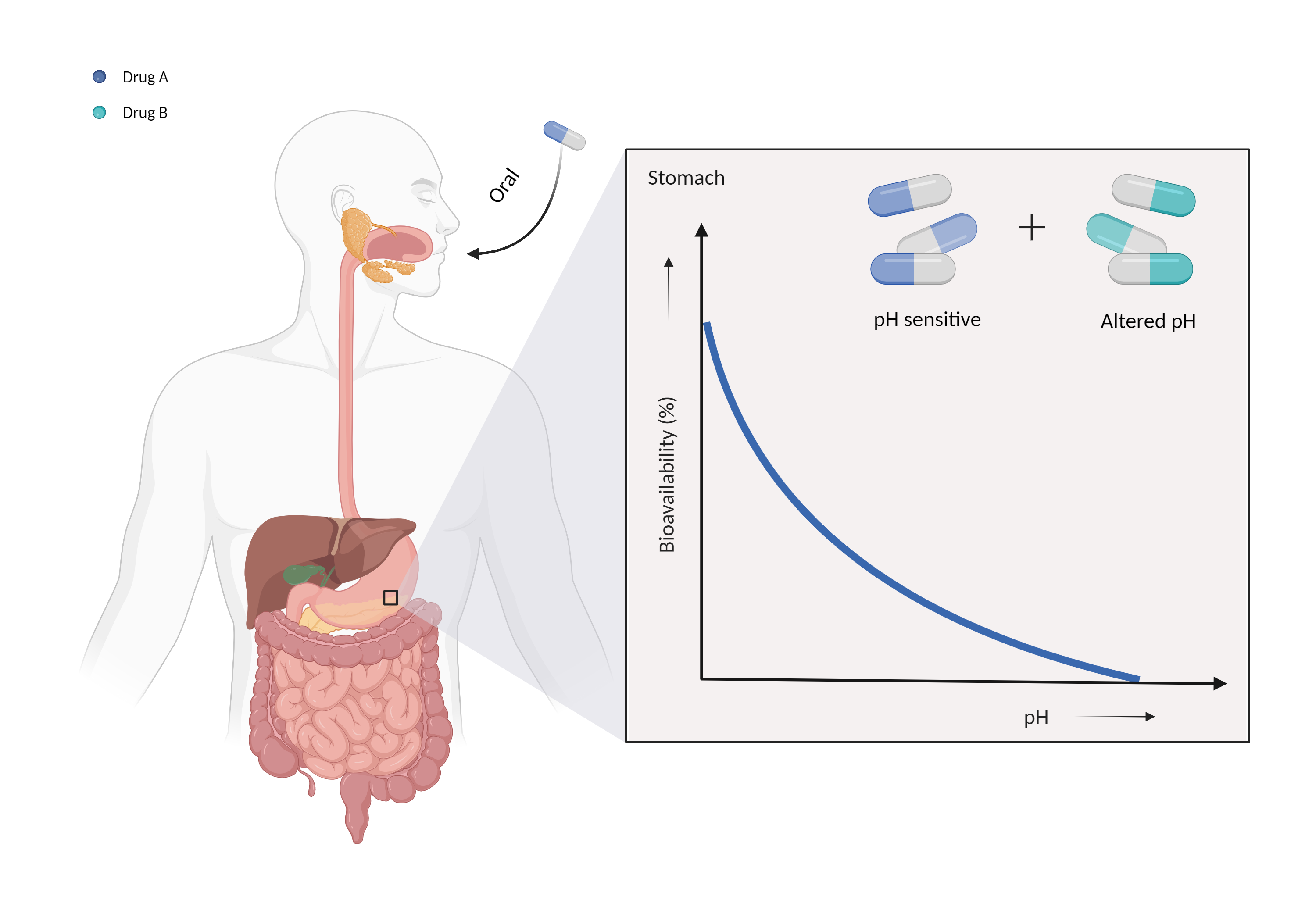
| Altered gastric pH Click to Show/Hide Mechanism Graph | |||||||||
 |
|||||||||
| Drug Name | Erlotinib | Nizatidine | |||||||
| Mechanism | Gastric pH sensitive | Gastric alkalinizer | |||||||
| Key Mechanism Factor 1 | |||||||||
| Factor Name | Gastric pH | ||||||||
| Factor Description | The normal pH range of gastric acid is between 1.5 and 3.5 and is highly acidic, consisting mainly of hydrochloric acid. Changes in the pH of the stomach can alter the absorption of drugs. | ||||||||
| Mechanism Description |
|
||||||||
| Recommended Action | |||||||||
|---|---|---|---|---|---|---|---|---|---|
| Management | In general, the concomitant use of erlotinib with agents that increase gastric pH should be avoided whenever possible. If acid-suppression therapy is required during erlotinib treatment, an H2-receptor antagonist such as ranitidine may be considered. Available pharmacokinetic data suggest that erlotinib should be administered once a day, at least 2 hours before or 10 hours after dosing of the H2-receptor antagonist. Additionally, the lowest effective dosage of the H2-receptor antagonist should be prescribed. It may be appropriate to avoid using cimetidine for long-term acid suppression, as it may inhibit the CYP450 3A4-mediated metabolism of erlotinib and increase the risk of toxicity. | ||||||||