| Mechanism of Ropivacaine-Levobupivacaine Interaction
(Severity Level: Moderate)
|
|
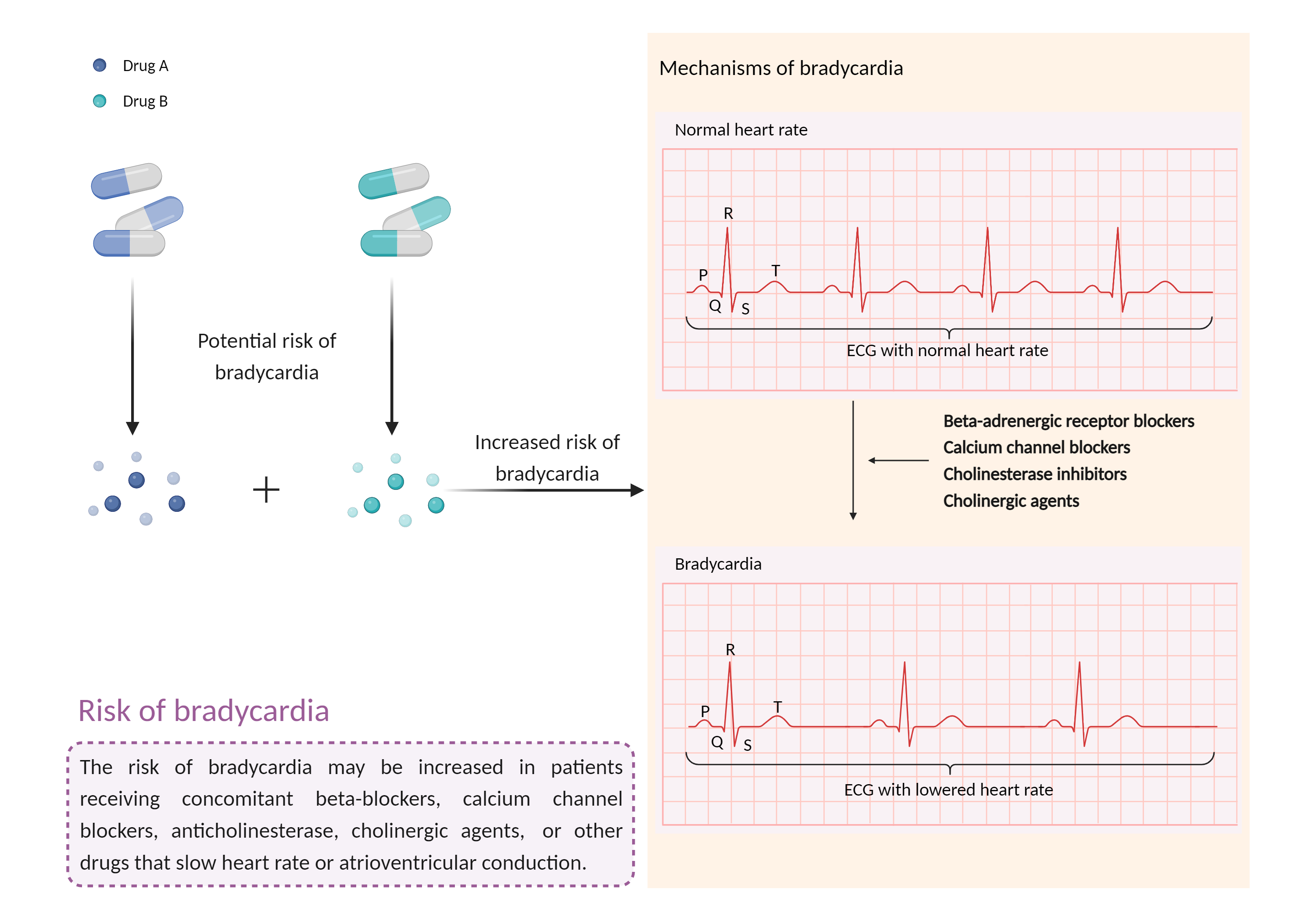
Increased risk of bradycardia
Click to Show/Hide Mechanism Graph
|
 |
| Drug Name |
Ropivacaine |
Levobupivacaine |
|
Mechanism 1
|
Bradycardia |
Bradycardia |
| Key Mechanism Factor 1 |
| Factor Name |
Bradycardia |
| Factor Description |
Bradycardia is a slow heart rate in which the heart beats less than 60 times per minute. If the heart rate is very slow and the heart is not pumping enough oxygen-rich blood to the body, and you may feel dizzy, very tired or weak, and short of breath. |
| Mechanism Description |
- Increased risk of bradycardia by the combination of Ropivacaine and Levobupivacaine
|
|
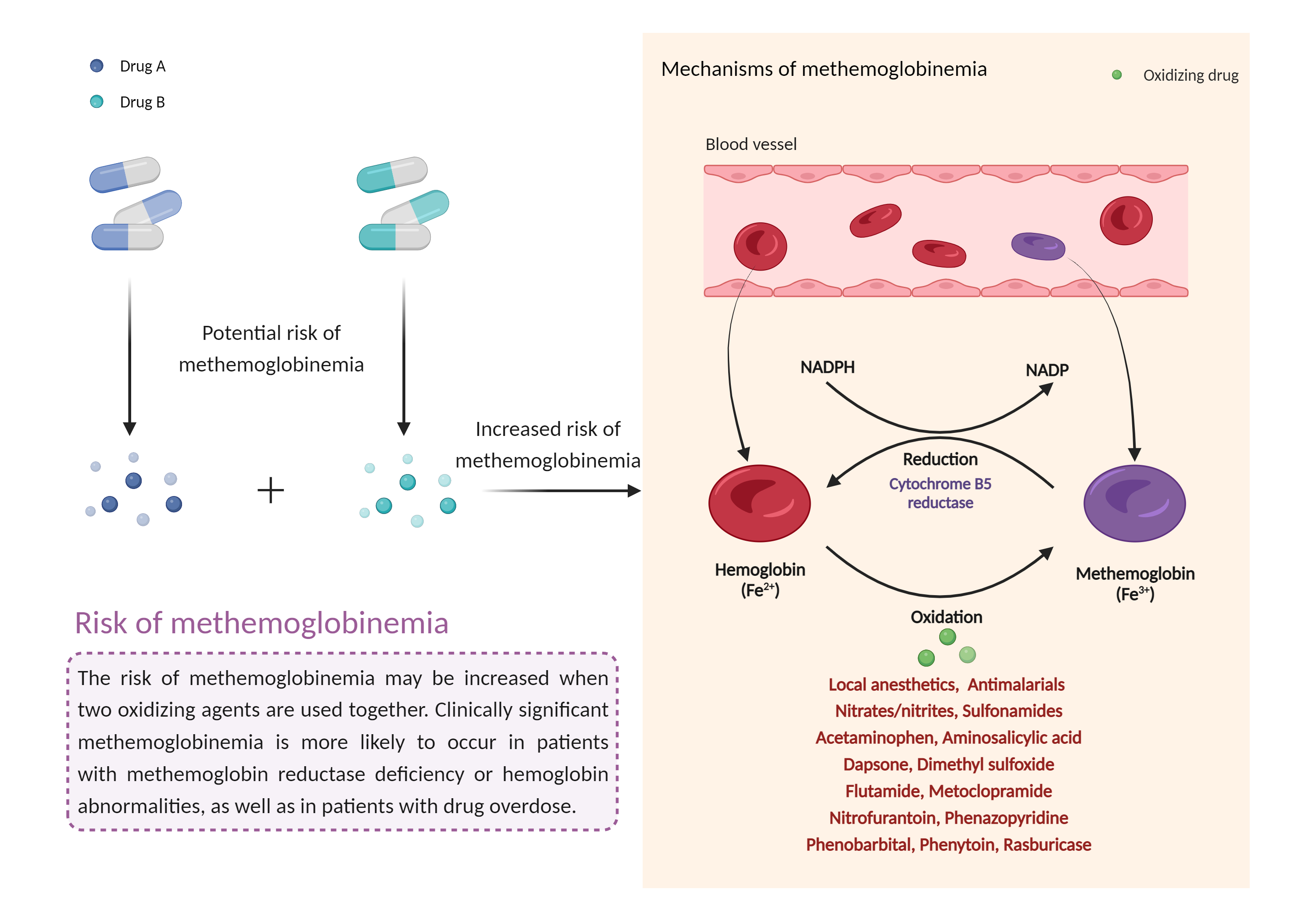
Increased risk of methemoglobinemia
Click to Show/Hide Mechanism Graph
|
 |
| Drug Name |
Ropivacaine |
Levobupivacaine |
|
Mechanism 2
|
Methemoglobinemia |
Methemoglobinemia |
| Key Mechanism Factor 2 |
| Factor Name |
Methemoglobinemia |
| Factor Description |
Methemoglobinemia is a condition in which higher than normal levels of methemoglobin are found in the blood. Methemoglobinemia is a potentially life-threatening condition in which the oxygen-carrying capacity of circulating hemoglobin is reduced due to the conversion of some or all of the four iron species from the reduced ferrous (Fe2+) state to the oxidized iron (Fe3+) state. |
| Mechanism Description |
- Increased risk of methemoglobinemia by the combination of Ropivacaine and Levobupivacaine
|
