
Details of Drug-Drug Interaction
| Drug General Information (ID: DDI2NL5KX3) | |||||||||
|---|---|---|---|---|---|---|---|---|---|
| Drug Name | Inotuzumab ozogamicin | Drug Info | Siponimod | Drug Info | |||||
| Drug Type | Monoclonal antibody | Small molecule | |||||||
| Therapeutic Class | Antineoplastics | Selective Immunosuppressants | |||||||
| Mechanism of Inotuzumab ozogamicin-Siponimod Interaction (Severity Level: Major) | |||||||||
|---|---|---|---|---|---|---|---|---|---|
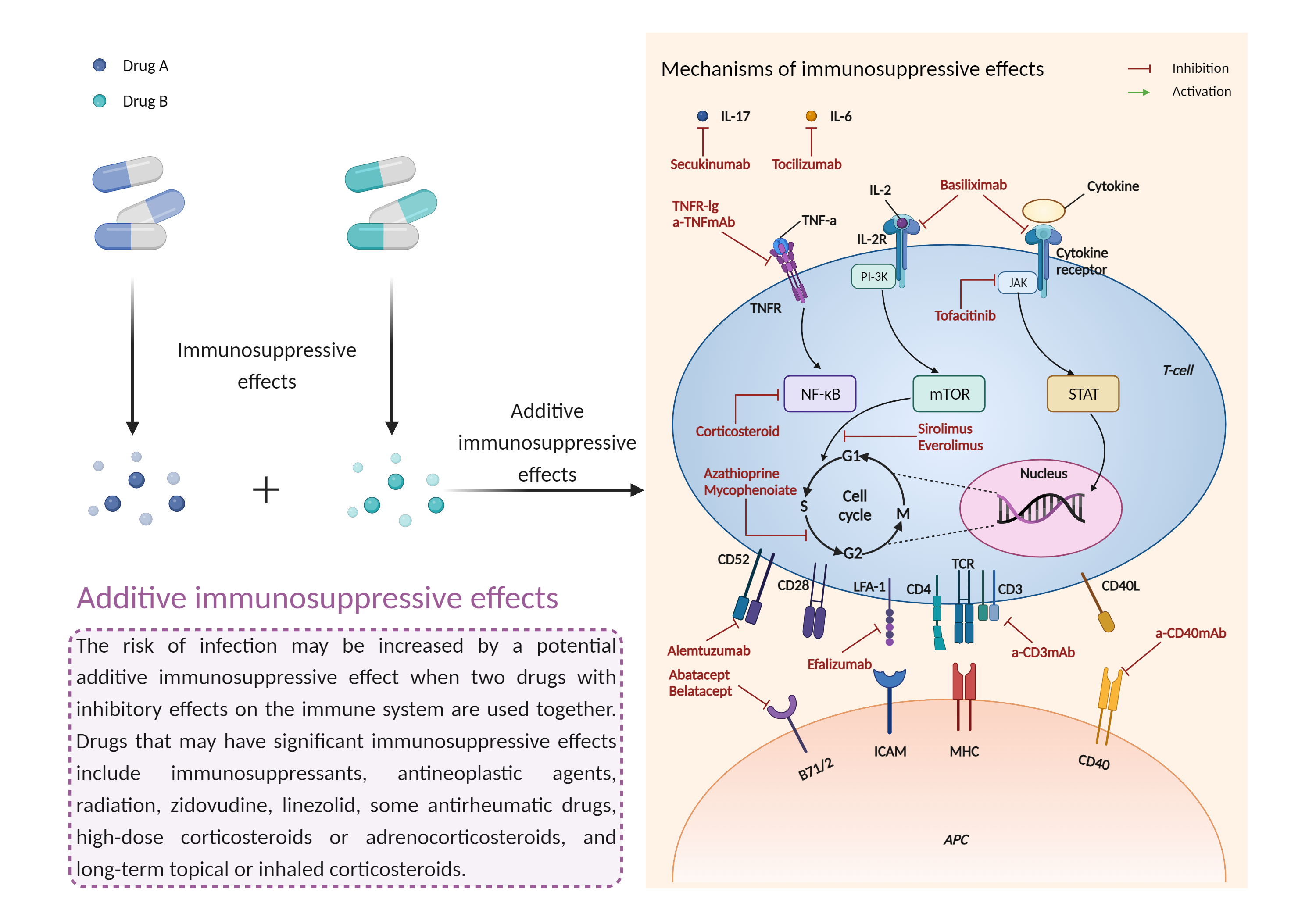
| Additive immunosuppressive effects Click to Show/Hide Mechanism Graph | |||||||||
 |
|||||||||
| Drug Name | Inotuzumab ozogamicin | Siponimod | |||||||
| Mechanism 1 | Immunosuppressive effects | Immunosuppressive effects | |||||||
| Key Mechanism Factor 1 | |||||||||
| Factor Name | Immunosuppressive effects | ||||||||
| Factor Description | Immunosuppression is when your immune system is not functioning as it should. The immune system is made up of cells, tissues and organs that help the body fight off infections. If the immune system is suppressed, an infection that your body was able to control may become serious or even fatal. | ||||||||
| Mechanism Description |
|
||||||||
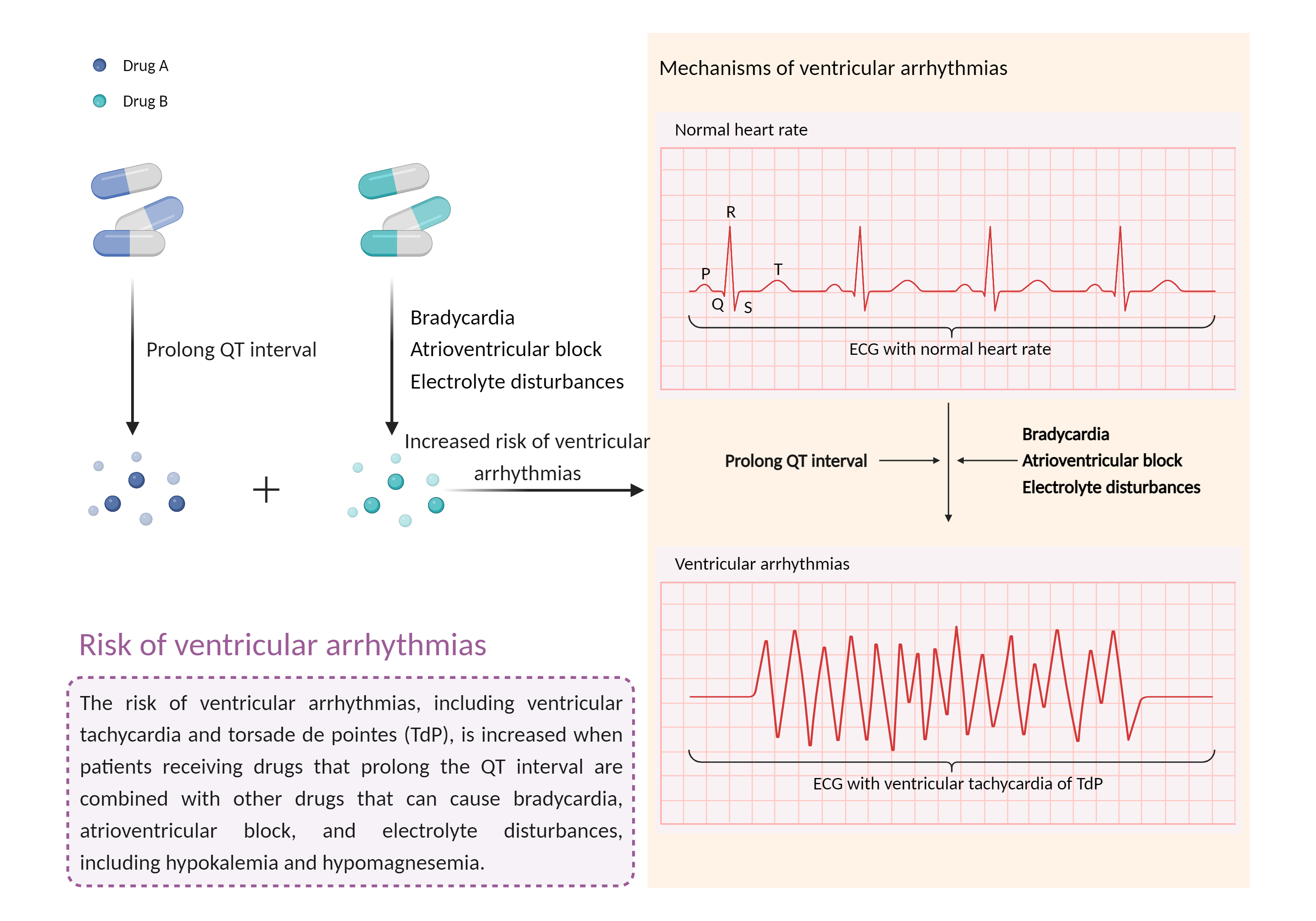
| Increased risk of ventricular arrhythmias Click to Show/Hide Mechanism Graph | |||||||||
 |
|||||||||
| Drug Name | Inotuzumab ozogamicin | Siponimod | |||||||
| Mechanism 2 | Prolong QT interval | Bradycardia | |||||||
| Key Mechanism Factor 2 | |||||||||
| Factor Name | Ventricular arrhythmias | ||||||||
| Factor Description | Ventricular arrhythmias are abnormal heart rhythms that cause your heart's lower chambers to pump blood instead of pumping it. This can limit or stop your heart from supplying blood to your body. While some of these arrhythmias are harmless and do not cause symptoms, others can have serious, even fatal, effects on your body. | ||||||||
| Mechanism Description |
|
||||||||
| Recommended Action | |||||||||
|---|---|---|---|---|---|---|---|---|---|
| Management | Siponimod has not been studied in patients receiving drugs that can prolong the QT interval. Because bradycardia and AV block are recognized risk factors for QT prolongation and torsade de pointes arrhythmia, treatment with siponimod should generally not be initiated in patients who are concurrently treated with QT prolonging drugs with known arrhythmogenic properties. Advice from a cardiologist should be sought if treatment with siponimod is considered in patients on concurrent therapy with QT prolonging drugs with a known risk of torsades de pointes or drugs that slow heart rate or AV conduction. The safety and efficacy of siponimod in combination with antineoplastic, immunosuppressive, or immune-modulating agents have not been evaluated. Caution is advised during coadministration and for 3 to 4 weeks after the last dose of siponimod. When switching from drugs with prolonged immune effects to siponimod, the half-life and mode of action of these drugs must be considered to avoid unintended additive immunosuppressive effects while at the same time minimizing risk of disease reactivation. | ||||||||
| References | |||||||||||||||||||
|---|---|---|---|---|---|---|---|---|---|---|---|---|---|---|---|---|---|---|---|
| 1 | Cerner Multum, Inc. "Australian Product Information.". | ||||||||||||||||||
| 2 | Product Information. Mayzent (siponimod). Novartis Pharmaceuticals, East Hanover, NJ. | ||||||||||||||||||