Drug General Information (ID: DDI0O1WIB8)
  Drug Name Methazolamide Drug Info Digitoxin Drug Info
  Drug Type Small molecule Small molecule
  Therapeutic Class Carbonic Anhydrase Inhibitors Antiarrhythmic Agents
  Structure

 Mechanism of Methazolamide-Digitoxin Interaction (Severity Level: Moderate)
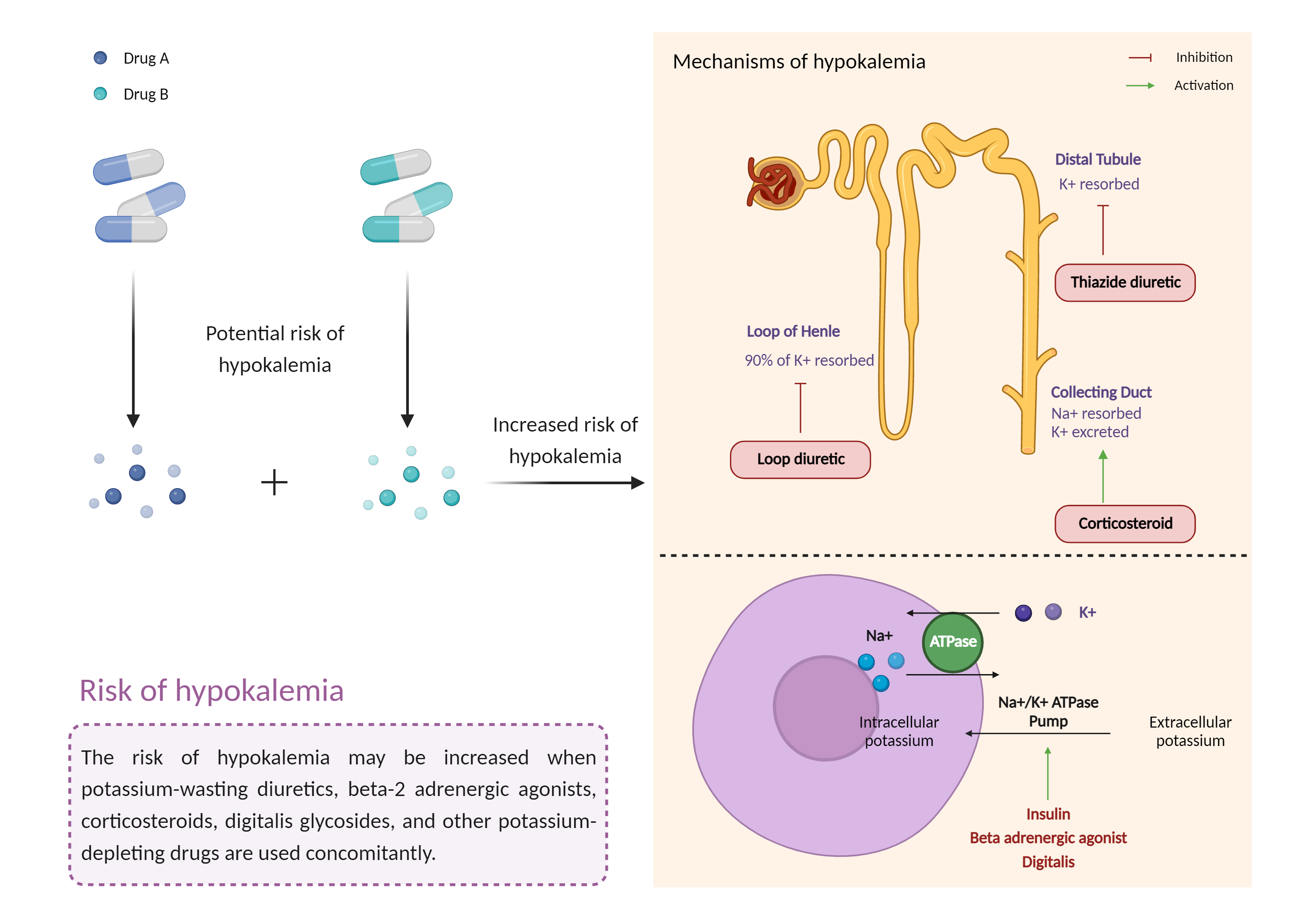
     Increased risk of hypokalemia Click to Show/Hide Mechanism Graph
Could Not Find 2D Structure
      Drug Name Methazolamide Digitoxin
      Mechanism 1 Hypokalemia Hypokalemia
      Key Mechanism Factor 1
Factor Name Hypokalemia
Factor Description Hypokalemia is a condition in which the amount of potassium in your blood is lower than normal. If you are mildly hypokalemic, you may not have any signs or symptoms, but severe hypokalemia may have the following symptoms: fatigue, constipation, frequent or heavy urination, muscle cramps or skin tingling, muscle weakness, and a fast or irregular heartbeat.
      Mechanism Description
  • Increased risk of hypokalemia by the combination of Methazolamide and Digitoxin 
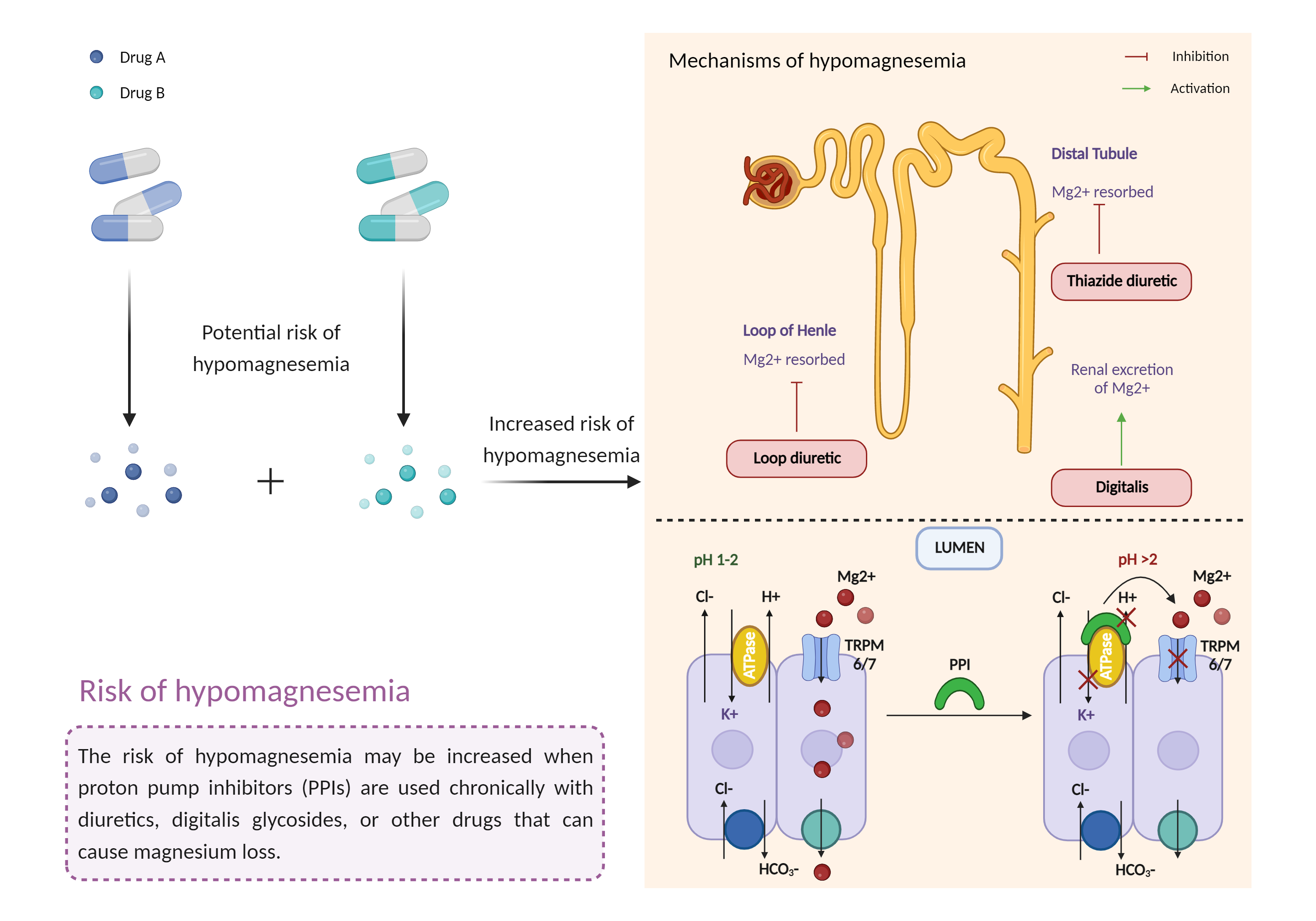
     Increased risk of hypomagnesemia Click to Show/Hide Mechanism Graph
Could Not Find 2D Structure
      Drug Name Methazolamide Digitoxin
      Mechanism 2 Hypomagnesemia Hypomagnesemia
      Key Mechanism Factor 2
Factor Name Hypomagnesemia
Factor Description Hypomagnesemia is a condition that occurs when you have too much magnesium in your body. Symptoms of hypomagnesemia include: nausea, vomiting, neurological damage, abnormally low blood pressure (hypotension), flushing, and headaches.
      Mechanism Description
  • Increased risk of hypomagnesemia by the combination of Methazolamide and Digitoxin 

Recommended Action
      Management Digoxin, potassium and magnesium levels should be followed closely. Hypokalemia and hypomagnesemia should be treated appropriately. Digitalis dose adjustments may be required. Patients should be advised to notify their physicians if they experience signs of possible digoxin toxicity or electrolyte disturbances, such as weakness, lethargy, muscle pains or cramps, nausea, anorexia, visual disturbances, or irregular heartbeats.

References
1 Brown DD, Dormois JC, Abraham GN, et al "Effect of furosemide on the renal excretion of digoxin." Clin Pharmacol Ther 20 (1976): 395-400. [PMID: 975715]
2 Cohen L, Kitzes R "Magnesium Sulfate and digitalis-toxic arrhythmias." JAMA 249 (1983): 2808-10. [PMID: 6842789]
3 Leary WP, Reyes AJ "Drug interactions with diuretics." S Afr Med J 65 (1984): 455-61. [PMID: 6701709]
4 Macolic V, Vrhovac B "Pharmacokinetics and interactions of digoxin, theophylline and furosemide in diseases with edema." Int J Clin Pharmacol Ther Toxicol 31 (1993): 6-11. [PMID: 8444517]
5 Malcolm AD, Leung FY, Fuchs JC, Duarte JE "Digoxin kinetics during furosemide administration." Clin Pharmacol Ther 21 (1977): 567-74. [PMID: 870271]
6 McAllister RG, Howell SM, Gomer MS, Selby JB "Effect of intravenous furosemide on the renal excretion of digoxin." J Clin Pharmacol 16 (1976): 110-7. [PMID: 943423]
7 Semple P, Tilstone WJ, Lawson DH "Furosemide and urinary digoxin clearance." N Engl J Med 293 (1975): 612-3. [PMID: 902451]
8 Tilstone WJ, Semple PF, Lawson DH, Boyle JA "Effects of furosemide on glomerular filtration rate and clearance of practolol, digoxin, cephaloridine, and gentamicin." Clin Pharmacol Ther 22 (1977): 389-94. [PMID: 902451]
9 Waldorff S, Hansen PB, Kjaergard H, Buch J, Egeblad H, Steiness E "Amiloride-induced changes in digoxin dynamics and kinetics: abolition of digoxin-induced inotropism with amiloride." Clin Pharmacol Ther 30 (1981): 172-6. [PMID: 7249501]
10 Whang R, Oei TO, Watanabe A "Frequency of hypomagnesemia in hospitalized patients receiving digitalis." Arch Intern Med 145 (1985): 655-6. [PMID: 3985729]