
Details of Drug-Drug Interaction
| Drug General Information (ID: DDI0ACU5EI) | |||||||||
|---|---|---|---|---|---|---|---|---|---|
| Drug Name | Lidocaine (ophthalmic) | Drug Info | Silver sulfadiazine (topical) | Drug Info | |||||
| Drug Type | Small molecule | Small molecule | |||||||
| Therapeutic Class | Anesthetics | Antiinfective Agents | |||||||
| Structure | |||||||||
| Mechanism of Lidocaine (ophthalmic)-Silver sulfadiazine (topical) Interaction (Severity Level: Moderate) | |||||||||
|---|---|---|---|---|---|---|---|---|---|
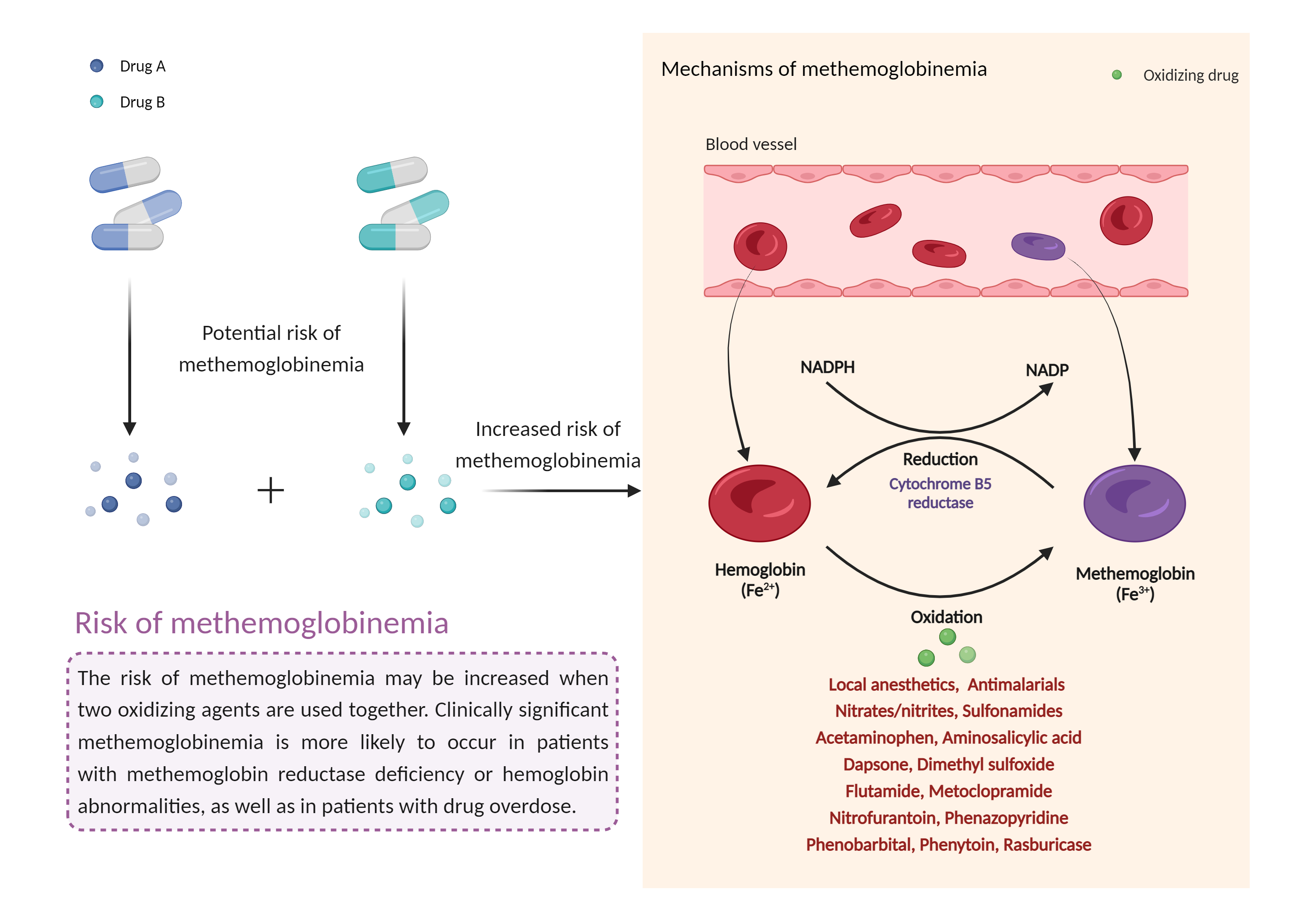
| Increased risk of methemoglobinemia Click to Show/Hide Mechanism Graph | |||||||||
 |
|||||||||
| Drug Name | Lidocaine (ophthalmic) | Silver sulfadiazine (topical) | |||||||
| Mechanism | Methemoglobinemia | Methemoglobinemia | |||||||
| Key Mechanism Factor 1 | |||||||||
| Factor Name | Methemoglobinemia | ||||||||
| Factor Description | Methemoglobinemia is a condition in which higher than normal levels of methemoglobin are found in the blood. Methemoglobinemia is a potentially life-threatening condition in which the oxygen-carrying capacity of circulating hemoglobin is reduced due to the conversion of some or all of the four iron species from the reduced ferrous (Fe2+) state to the oxidized iron (Fe3+) state. | ||||||||
| Mechanism Description |
|
||||||||
| Recommended Action | |||||||||
|---|---|---|---|---|---|---|---|---|---|
| Management | Caution is advised when topical anesthetics are used concomitantly with other methemoglobin-inducing agents. Clinicians should be aware of the potential for methemoglobinemia, particularly when topical anesthetics are applied to mucous membranes or given via the oropharyngeal route. Patients or their caregivers should be advised to seek medical attention if they notice signs and symptoms of methemoglobinemia such as slate-grey cyanosis in buccal mucous membranes, lips, and nail beds nausea headache dizziness lightheadedness lethargy fatigue dyspnea tachypnea tachycardia palpitation anxiety and confusion. | ||||||||