
Details of Drug-Drug Interaction
| Drug General Information (ID: DDI04XEOKH) | |||||||||
|---|---|---|---|---|---|---|---|---|---|
| Drug Name | Amantadine | Drug Info | Metoclopramide | Drug Info | |||||
| Drug Type | Small molecule | Small molecule | |||||||
| Therapeutic Class | Antiviral Agents | Antiemetics | |||||||
| Structure | |||||||||
| Mechanism of Amantadine-Metoclopramide Interaction (Severity Level: Moderate) | |||||||||
|---|---|---|---|---|---|---|---|---|---|
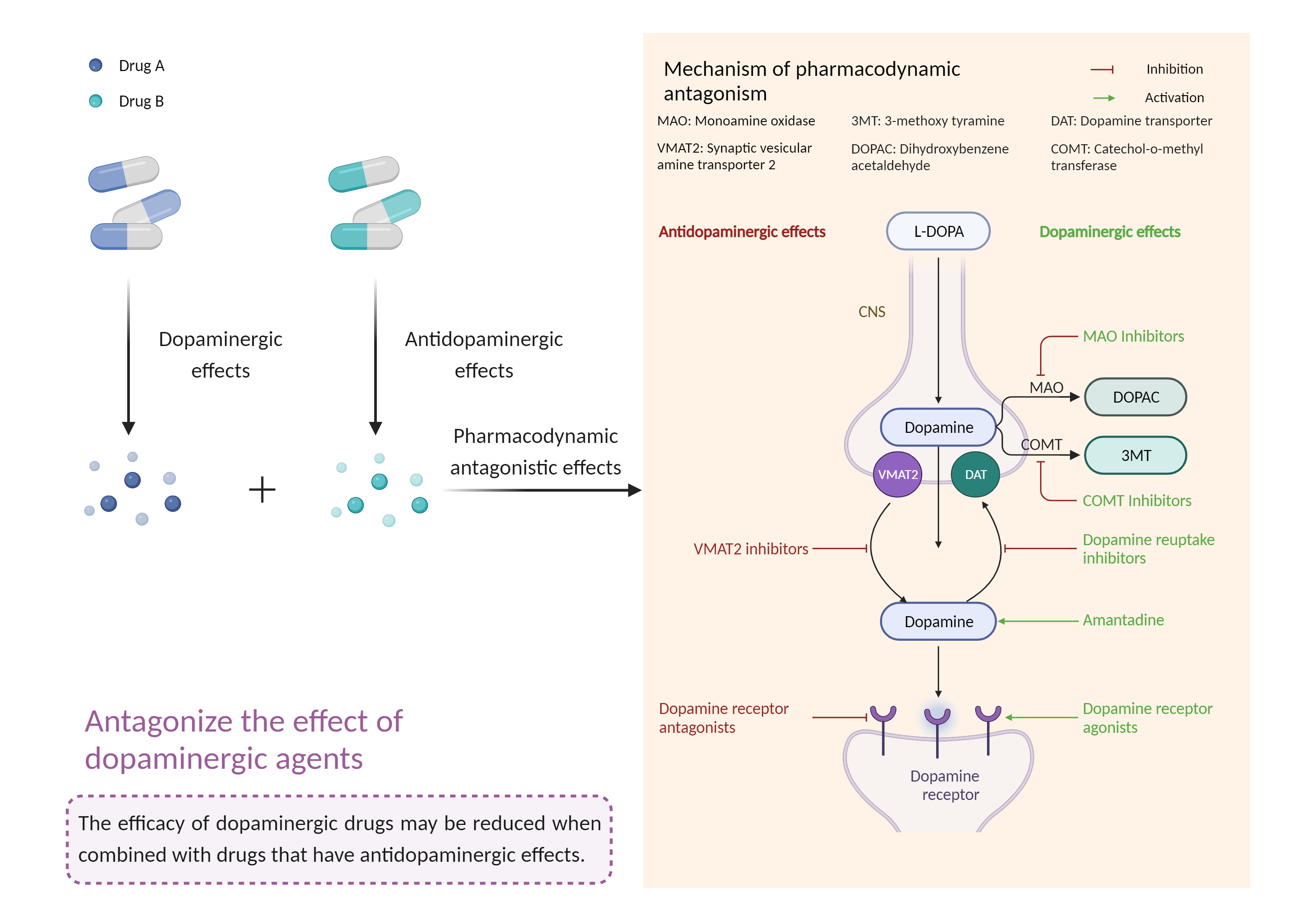
| Antagonize the effect of dopaminergic agents Click to Show/Hide Mechanism Graph | |||||||||
 |
|||||||||
| Drug Name | Amantadine | Metoclopramide | |||||||
| Mechanism |
Dopaminergic effects Dopamine receptor Agonist |
Antidopaminergic effects Dopamine receptor Antagonist |
|||||||
| Key Mechanism Factor 1 | |||||||||
| Factor Name | Dopamine receptor | Structure Sequence | |||||||
| Protein Family | G-protein coupled receptor 1 family | ||||||||
| Protein Function |
Dopamine receptor whose activity is mediated by G proteins which activate adenylyl cyclase.
Click to Show/Hide
|
||||||||
| Mechanism Description |
|
||||||||
| Recommended Action | |||||||||
|---|---|---|---|---|---|---|---|---|---|
| Management | Patients receiving amantadine for Parkinson's disease or drug-induced extrapyramidal reactions should generally avoid antidopaminergic agents including metoclopramide. If these agents have been administered together chronically, amantadine dosing should not be abruptly reduced or discontinued due to the potential to precipitate a parkinsonian crisis, delirium, agitation, delusions, hallucinations, paranoid reaction, stupor, anxiety, depression, slurred speech, and rarely, neuroleptic malignant syndrome. In patients receiving amantadine for influenza A prophylaxis or treatment, the possibility of diminished efficacy of metoclopramide should be considered during coadministration. | ||||||||
| References | |||||||||||||||||||
|---|---|---|---|---|---|---|---|---|---|---|---|---|---|---|---|---|---|---|---|
| 1 | Product Information. Reglan (metoclopramide). Wyeth-Ayerst Laboratories, Philadelphia, PA. | ||||||||||||||||||
| 2 | Product Information. Symmetrel (amantadine). DuPont Pharmaceuticals, Wilmington, DE. | ||||||||||||||||||