
Details of Drug-Drug Interaction
| Drug General Information (ID: DDIXA3BO6K) | |||||||||
|---|---|---|---|---|---|---|---|---|---|
| Drug Name | Betamethasone | Drug Info | Frangula purshiana bark | Drug Info | |||||
| Drug Type | Small molecule | Natural product | |||||||
| Therapeutic Class | Antiinflammatory Agents | Herbal Products | |||||||
| Mechanism of Betamethasone-Frangula purshiana bark Interaction (Severity Level: Moderate) | |||||||||
|---|---|---|---|---|---|---|---|---|---|
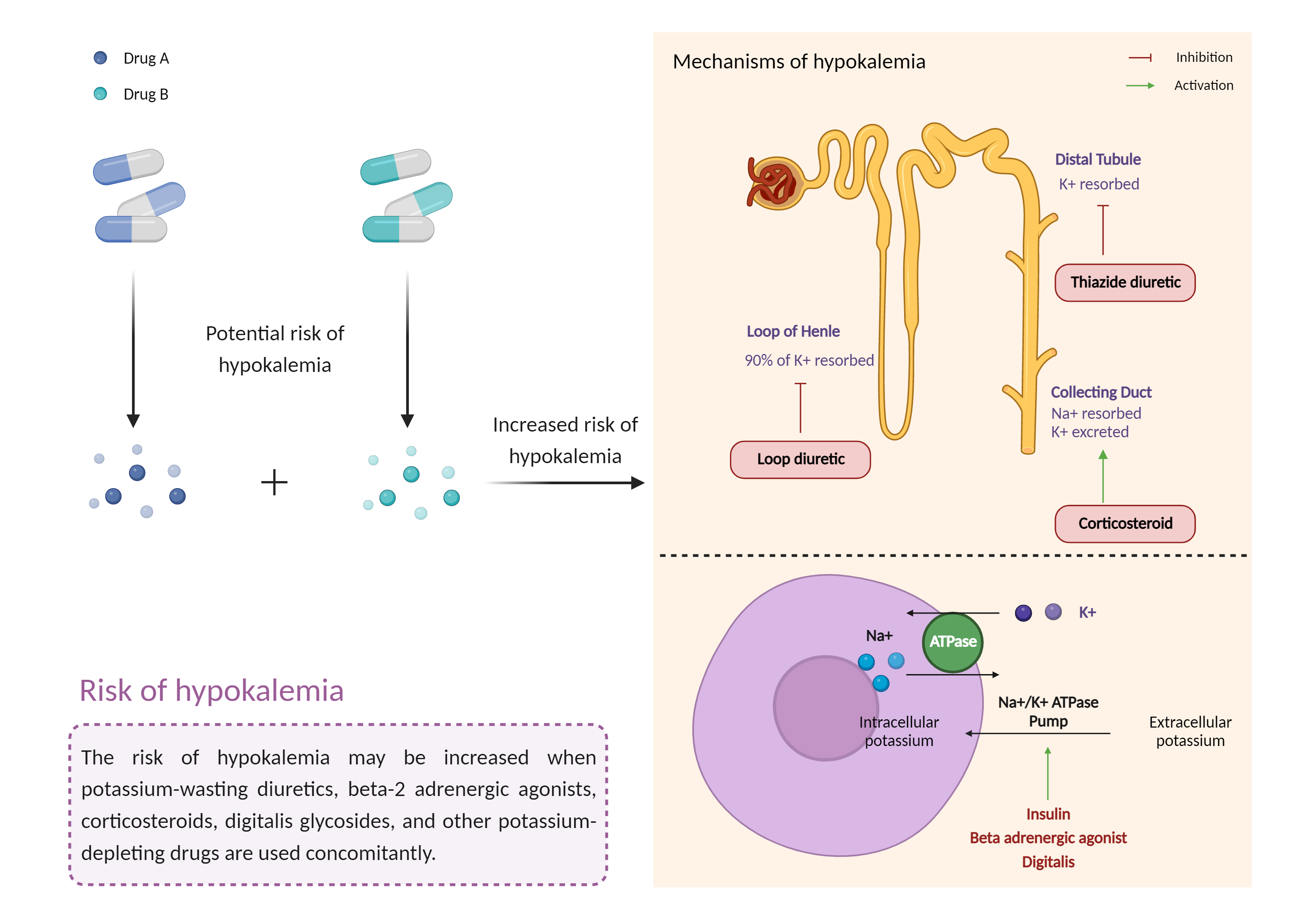
| Increased risk of hypokalemia Click to Show/Hide Mechanism Graph | |||||||||
 |
|||||||||
| Drug Name | Betamethasone | Frangula purshiana bark | |||||||
| Mechanism | Hypokalemia | Increases the risk of hypokalemia (laxatives can cause loss of electrolytes) | |||||||
| Key Mechanism Factor 1 | |||||||||
| Factor Name | Hypokalemia | ||||||||
| Factor Description | Hypokalemia is a condition in which the amount of potassium in your blood is lower than normal. If you are mildly hypokalemic, you may not have any signs or symptoms, but severe hypokalemia may have the following symptoms: fatigue, constipation, frequent or heavy urination, muscle cramps or skin tingling, muscle weakness, and a fast or irregular heartbeat. | ||||||||
| Mechanism Description |
|
||||||||
| Recommended Action | |||||||||
|---|---|---|---|---|---|---|---|---|---|
| Management | In general, laxatives should only be used on a short-term, intermittent basis in recommended dosages. During concomitant therapy with corticosteroids, particularly if fludrocortisone or large doses of a glucocorticoid or adrenocorticotropic agent is given, patients should be counseled to recognize potential signs and symptoms of hypokalemia such as fatigue, myalgia, and muscle weakness. If maintenance of bowel regularity is required, patients should be advised to exercise and increase fiber in the diet and/or consider the use of bulk-forming laxatives. | ||||||||