
Details of Drug-Drug Interaction
| Drug General Information (ID: DDIX9EPVYT) | |||||||||
|---|---|---|---|---|---|---|---|---|---|
| Drug Name | Triamcinolone | Drug Info | Meclofenamic acid | Drug Info | |||||
| Drug Type | Small molecule | Small molecule | |||||||
| Therapeutic Class | Antiinflammatory Agents | Analgesics | |||||||
| Structure | |||||||||
| Mechanism of Triamcinolone-Meclofenamic acid Interaction (Severity Level: Moderate) | |||||||||
|---|---|---|---|---|---|---|---|---|---|
| Increased risk of GI mucosal injury/bleeding risk Click to Show/Hide Mechanism Graph | |||||||||
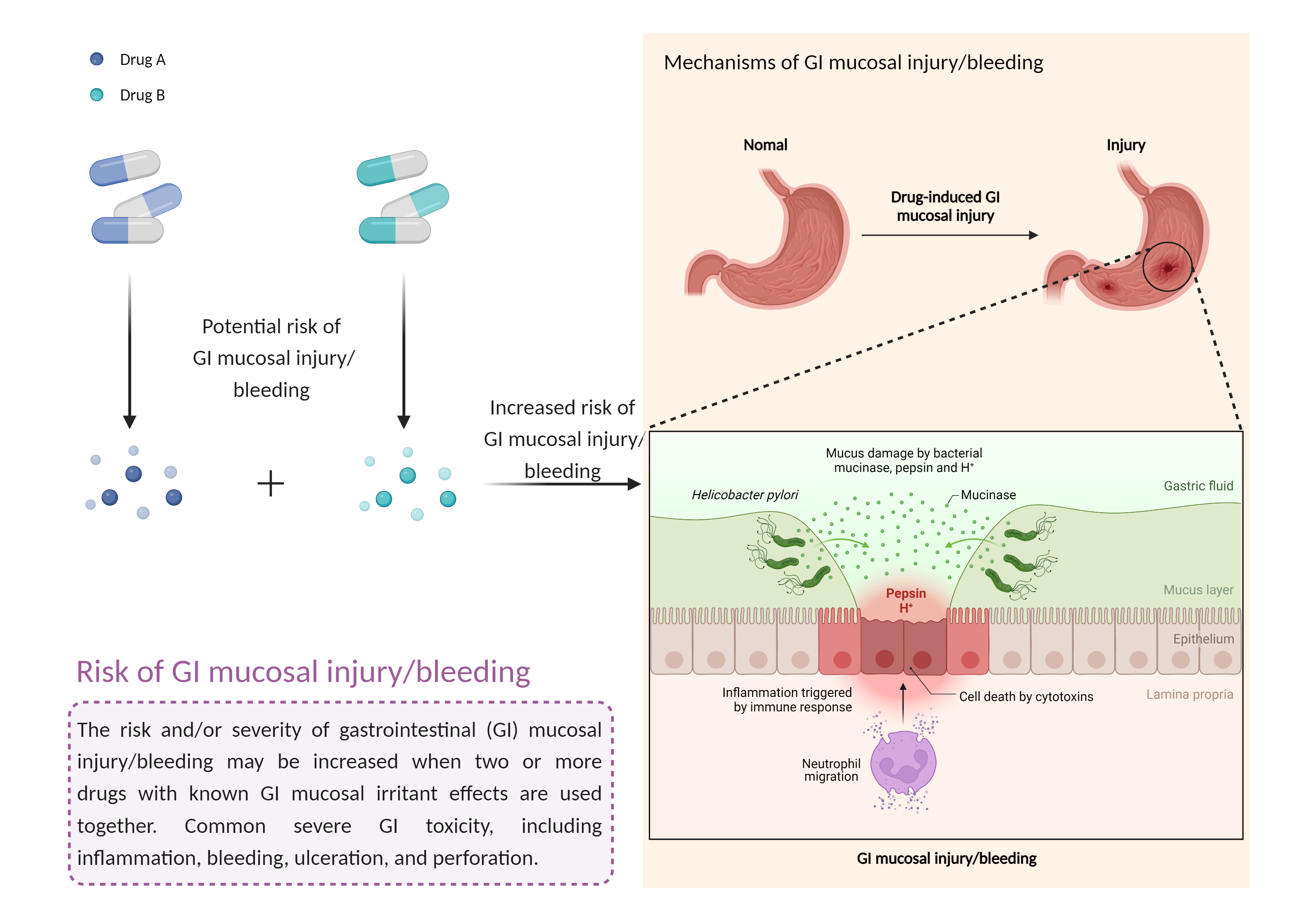 |
|||||||||
| Drug Name | Triamcinolone | Meclofenamic acid | |||||||
| Mechanism | GI mucosal injury/bleeding risk | GI mucosal injury/bleeding risk | |||||||
| Key Mechanism Factor 1 | |||||||||
| Factor Name | Gastrointestinal toxicity | ||||||||
| Factor Description | The risk and severity of gastrointestinal toxicity, including inflammation, bleeding, ulceration, and perforation, increases when drugs with gastrointestinal mucosal irritant effects are combined. | ||||||||
| Mechanism Description |
|
||||||||
| Recommended Action | |||||||||
|---|---|---|---|---|---|---|---|---|---|
| Management | Caution is advised if corticosteroids and NSAIDs are used together, especially in patients with a prior history of peptic ulcer disease or GI bleeding and in elderly and debilitated patients. During concomitant therapy, patients should be advised to take the medications with food and to immediately report signs and symptoms of GI ulceration and bleeding such as severe abdominal pain, dizziness, lightheadedness, and the appearance of black, tarry stools. The selective use of prophylactic anti-ulcer therapy (e.g., antacids, H2-antagonists) may be considered. | ||||||||