
Details of Drug-Drug Interaction
| Drug General Information (ID: DDIWYJ8O70) | |||||||||
|---|---|---|---|---|---|---|---|---|---|
| Drug Name | Disopyramide | Drug Info | Ibutilide | Drug Info | |||||
| Drug Type | Small molecule | Small molecule | |||||||
| Therapeutic Class | Antiarrhythmic Agents | Antiarrhythmic Agents | |||||||
| Structure | |||||||||
| Mechanism of Disopyramide-Ibutilide Interaction (Severity Level: Major) | |||||||||
|---|---|---|---|---|---|---|---|---|---|
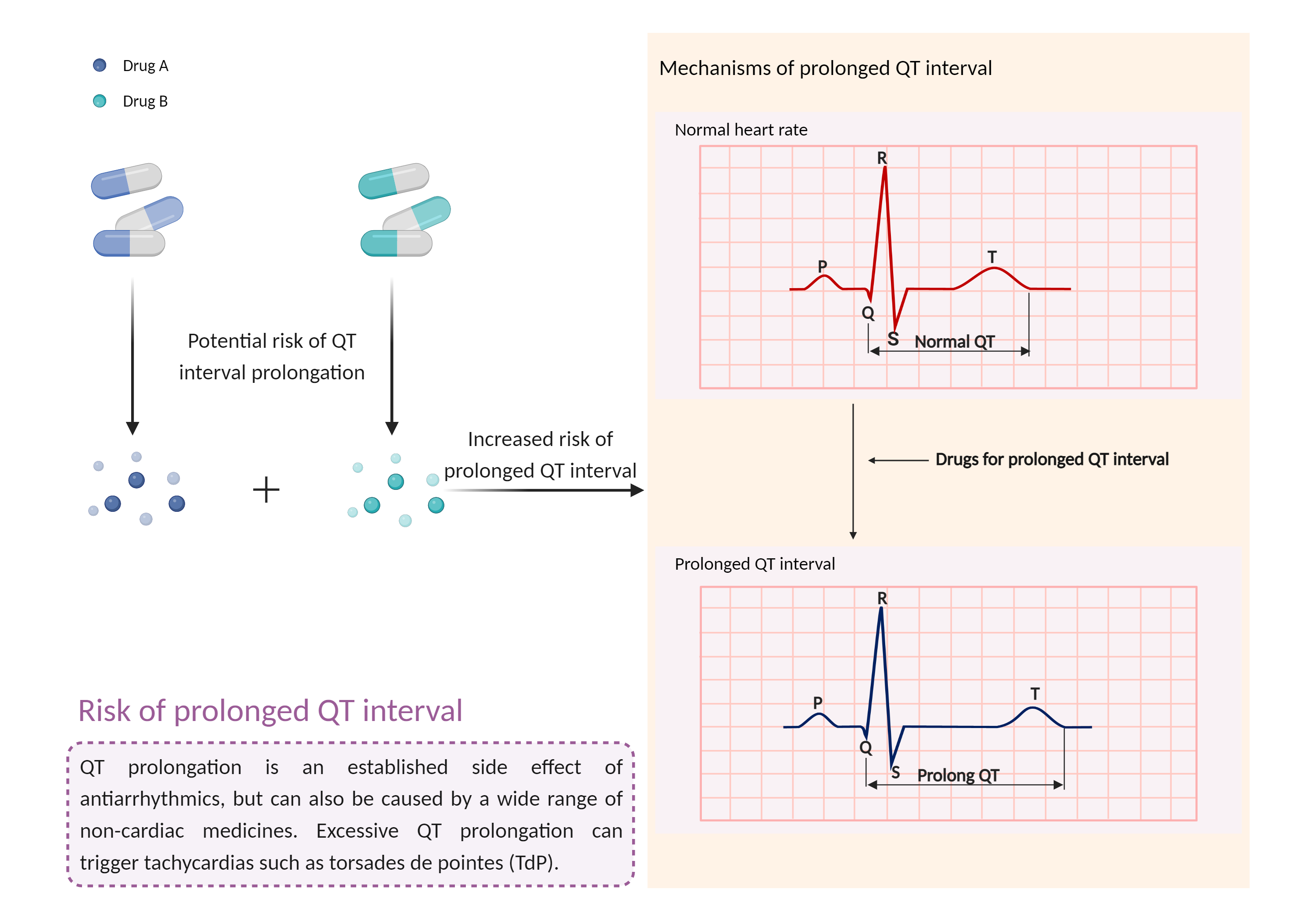
| Increased risk of prolong QT interval Click to Show/Hide Mechanism Graph | |||||||||
 |
|||||||||
| Drug Name | Disopyramide | Ibutilide | |||||||
| Mechanism | Prolong QT interval | Prolong QT interval | |||||||
| Key Mechanism Factor 1 | |||||||||
| Factor Name | QT interval | ||||||||
| Factor Description | Long QT syndrome is a heart signaling disorder that can cause a fast, chaotic heartbeat (arrhythmia). Many people may not exhibit symptoms, and usually the condition is detected during routine medical tests. In others, the most common symptoms include: sudden fainting, palpitations, dizziness, seizures, sudden death. | ||||||||
| Mechanism Description |
|
||||||||
| Recommended Action | |||||||||
|---|---|---|---|---|---|---|---|---|---|
| Management | Class I antiarrhythmic agents should not be given concomitantly with ibutilide or within four hours after ibutilide is given. In clinical trials, other class I agents were withheld for at least five half-lives prior to ibutilide infusion and for four hours after dosing, but thereafter were allowed at the physician's discretion. | ||||||||