| Mechanism of Tramadol-Oxymorphone Interaction
(Severity Level: Major)
|
|
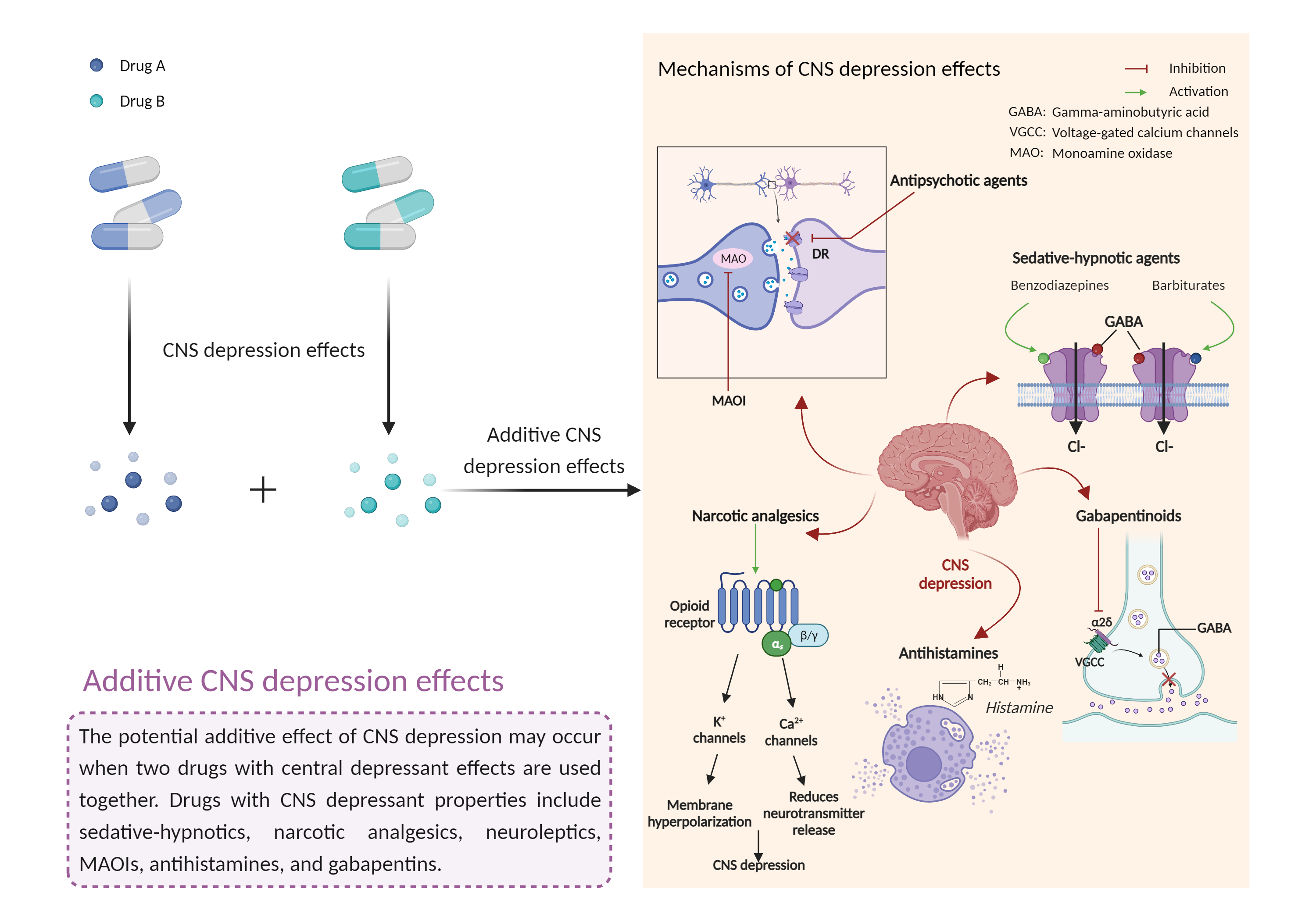
Additive CNS depression effects
Click to Show/Hide Mechanism Graph
|
 |
| Drug Name |
Tramadol |
Oxymorphone |
|
Mechanism 1
|
CNS depression effects |
CNS depression effects |
| Key Mechanism Factor 1 |
| Factor Name |
CNS depression effects |
| Factor Description |
CNS depressants are drugs that inhibit or suppress brain activity and can reduce mental and physical processes. Excessive CNS depression can lead to decreased heart rate, slow breathing (less than 10 breaths per minute), extreme confusion or loss of memory, nausea and vomiting, poor judgment, blue lips or fingertips, irritability and aggression, and clammy or cold skin. |
| Mechanism Description |
- Additive CNS depression effects by the combination of Tramadol and Oxymorphone
|
|
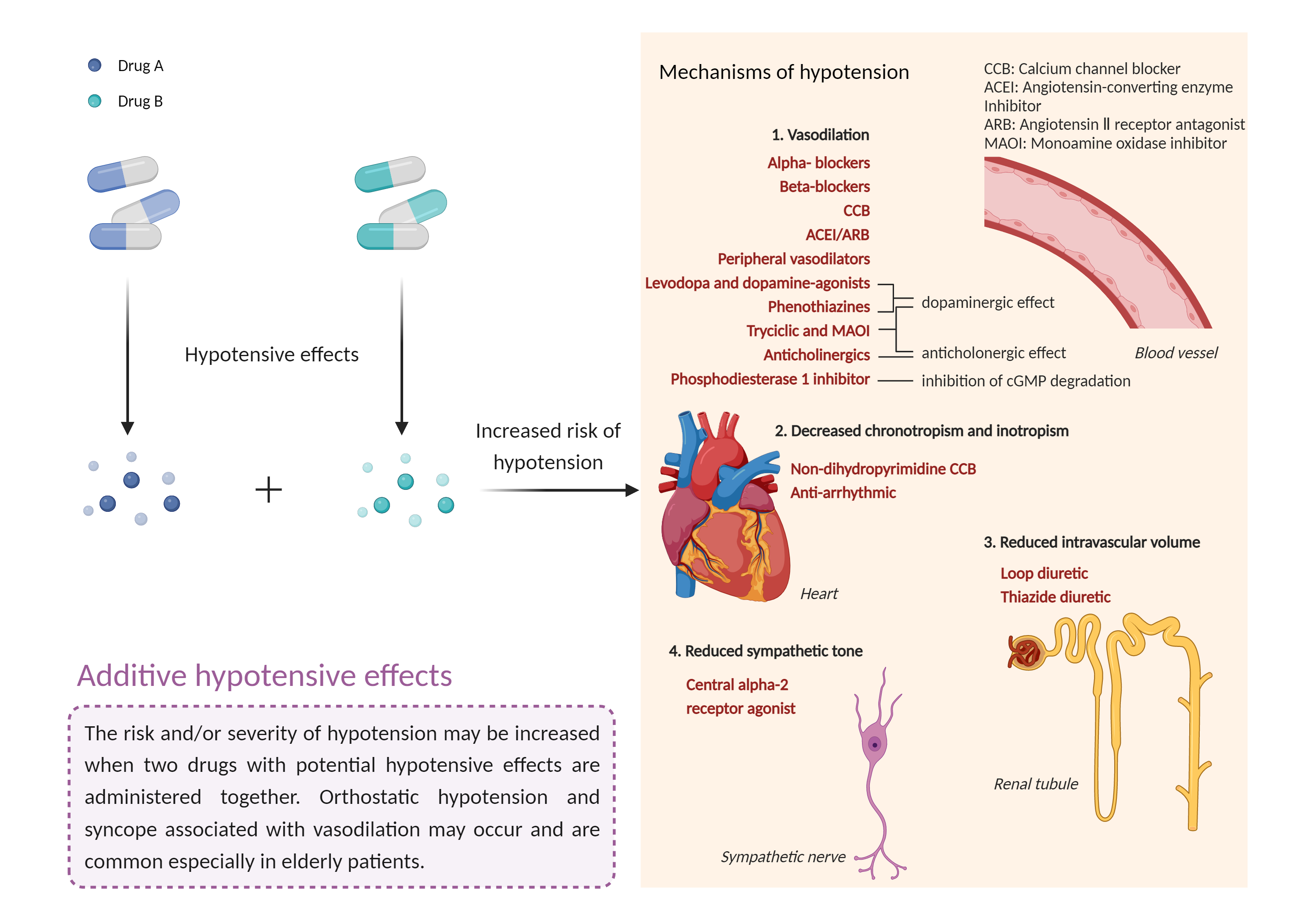
Additive hypotensive effects
Click to Show/Hide Mechanism Graph
|
 |
| Drug Name |
Tramadol |
Oxymorphone |
| Mechanism 2 |
Antihypertensive agent |
Antihypertensive agent |
| Key Mechanism Factor 2 |
| Factor Name |
Hypotensive effects |
| Factor Description |
Hypotension is a blood pressure reading below the prescribed limit (90/60 mmHg). Symptoms of hypotension may include: blurred or faded vision , dizziness or light-headedness, fainting , fatigue , difficulty concentrating, nausea. |
| Mechanism Description |
- Additive hypotensive effects by the combination of Tramadol and Oxymorphone
|
| Mechanism 3 |
Hypotensive effects |
Antihypertensive agent |
| Key Mechanism Factor 3 |
| Factor Name |
Hypotensive effects |
| Factor Description |
Hypotension is a blood pressure reading below the prescribed limit (90/60 mmHg). Symptoms of hypotension may include: blurred or faded vision , dizziness or light-headedness, fainting , fatigue , difficulty concentrating, nausea. |
| Mechanism Description |
- Additive hypotensive effects by the combination of Tramadol and Oxymorphone
|
| Mechanism 4 |
Antihypertensive agent |
Hypotensive effects |
| Key Mechanism Factor 4 |
| Factor Name |
Hypotensive effects |
| Factor Description |
Hypotension is a blood pressure reading below the prescribed limit (90/60 mmHg). Symptoms of hypotension may include: blurred or faded vision , dizziness or light-headedness, fainting , fatigue , difficulty concentrating, nausea. |
| Mechanism Description |
- Additive hypotensive effects by the combination of Tramadol and Oxymorphone
|
| Mechanism 5 |
Hypotensive effects |
Hypotensive effects |
| Key Mechanism Factor 5 |
| Factor Name |
Hypotensive effects |
| Factor Description |
Hypotension is a blood pressure reading below the prescribed limit (90/60 mmHg). Symptoms of hypotension may include: blurred or faded vision , dizziness or light-headedness, fainting , fatigue , difficulty concentrating, nausea. |
| Mechanism Description |
- Additive hypotensive effects by the combination of Tramadol and Oxymorphone
|
|
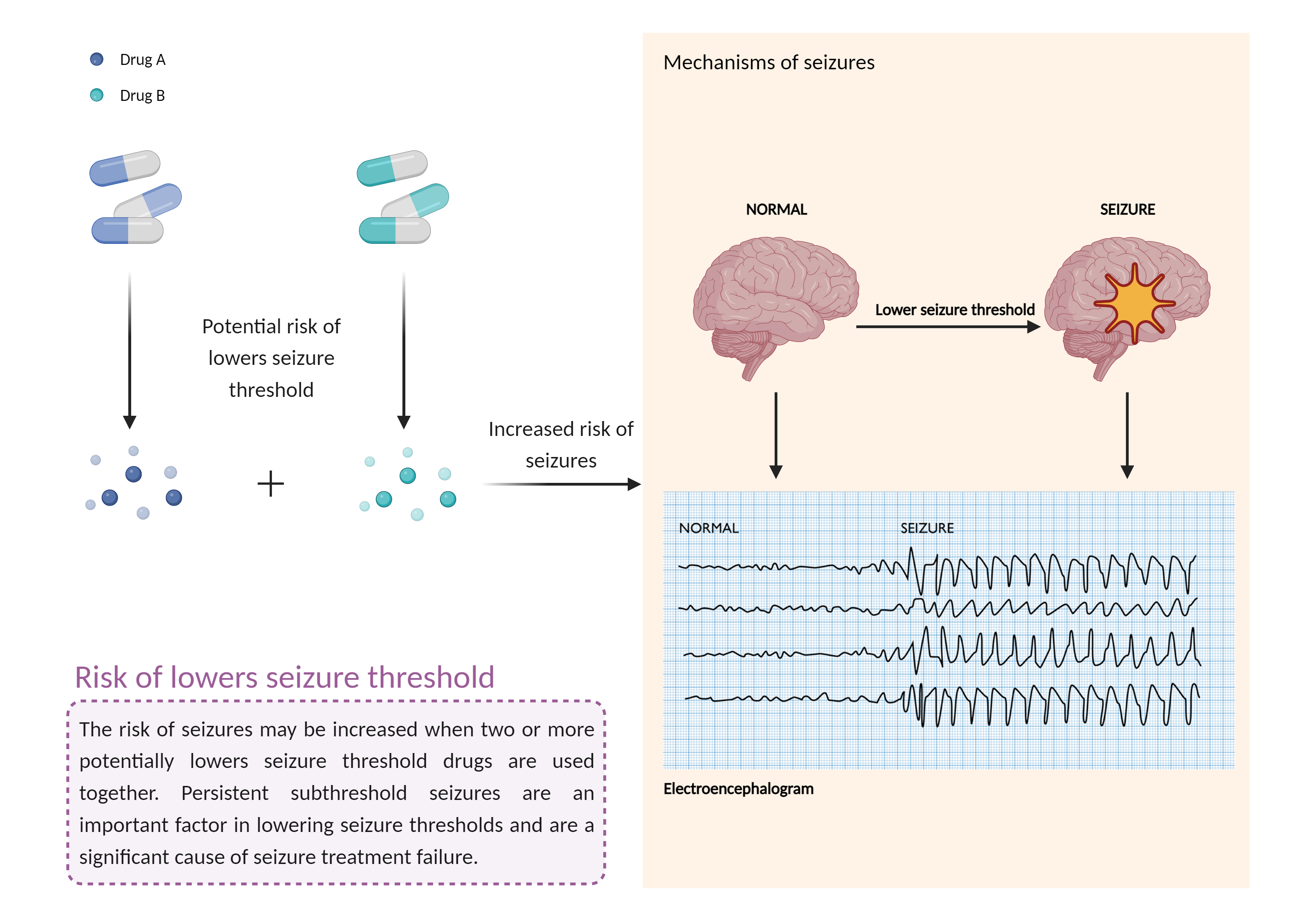
Increased risk of lowers seizure threshold
Click to Show/Hide Mechanism Graph
|
 |
| Drug Name |
Tramadol |
Oxymorphone |
|
Mechanism 6
|
Lower seizure threshold |
Lower seizure threshold |
| Key Mechanism Factor 6 |
| Factor Name |
Lowers seizure threshold |
| Factor Description |
The combination of medications that lower the seizure threshold is a factor that makes people with epilepsy more likely to have seizures. A seizure is a sudden, uncontrolled electrical disturbance in the brain that can cause changes in your behavior, movements or sensations, and level of consciousness. |
| Mechanism Description |
- Increased risk of lowers seizure threshold by the combination of Tramadol and Oxymorphone
|
