
Details of Drug-Drug Interaction
| Drug General Information (ID: DDIVREC7WO) | |||||||||
|---|---|---|---|---|---|---|---|---|---|
| Drug Name | Sotalol | Drug Info | Doxacurium | Drug Info | |||||
| Drug Type | Small molecule | Small molecule | |||||||
| Therapeutic Class | Antiarrhythmic Agents | Analgesics | |||||||
| Structure | |||||||||
| Mechanism of Sotalol-Doxacurium Interaction (Severity Level: Moderate) | |||||||||
|---|---|---|---|---|---|---|---|---|---|
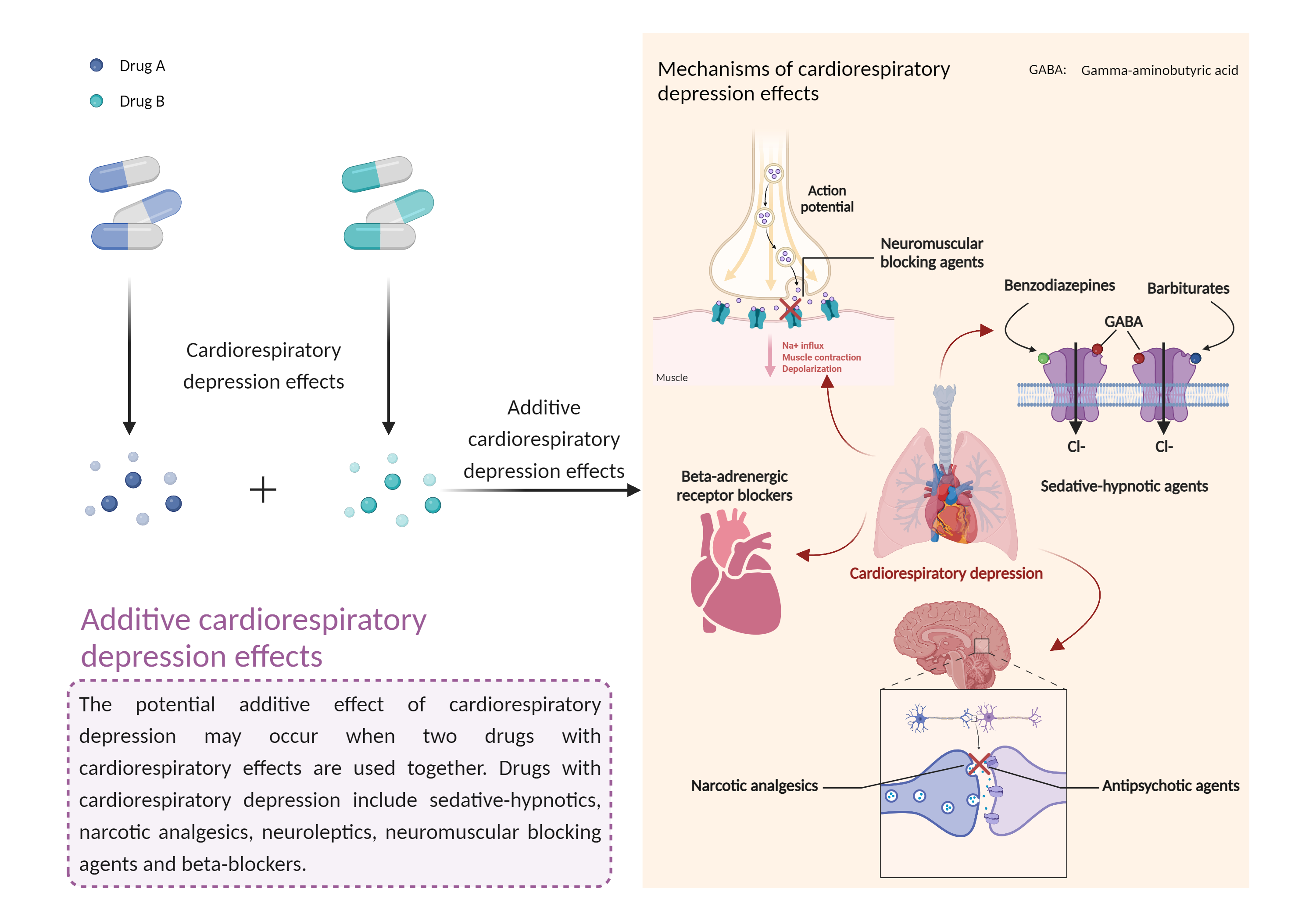
| Additive cardiorespiratory depression effects Click to Show/Hide Mechanism Graph | |||||||||
 |
|||||||||
| Drug Name | Sotalol | Doxacurium | |||||||
| Mechanism 1 | Cardiorespiratory depression effects | Cardiorespiratory depression effects | |||||||
| Key Mechanism Factor 1 | |||||||||
| Factor Name | Cardiorespiratory depression effects | ||||||||
| Factor Description | Cardiorespiratory depression is a reduction or inhibition of the normal function of the heart and lungs. The heart and lungs are the most important organs of the body's circulatory system, and when excessively depressed may result in decreased heart rate, decreased blood pressure, heart failure, slowed breathing (little to no visible chest movement), apnea, narrowed or pinpoint pupils, and seizures. | ||||||||
| Mechanism Description |
|
||||||||
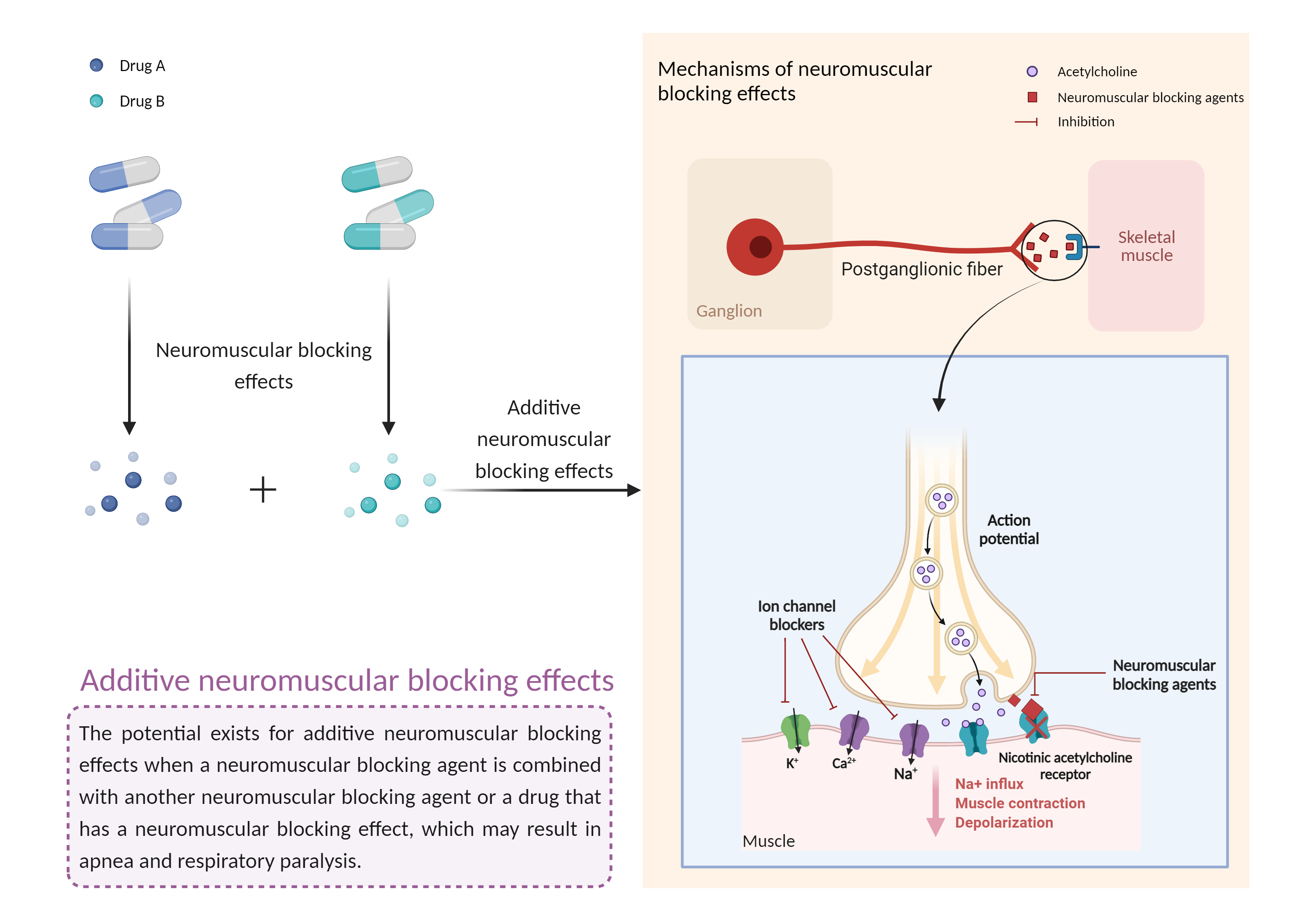
| Additive neuromuscular blocking effects Click to Show/Hide Mechanism Graph | |||||||||
 |
|||||||||
| Drug Name | Sotalol | Doxacurium | |||||||
| Mechanism 2 | Potentiates neuromuscular blockade |
Neuromuscular blocking agent Neuronal acetylcholine receptor Antagonist |
|||||||
| Key Mechanism Factor 2 | |||||||||
| Factor Name | Neuronal acetylcholine receptor | Structure Sequence | |||||||
| Protein Family | Ligand-gated ion channel (TC 1.A.9) family | ||||||||
| Protein Function |
After binding acetylcholine, the AChR responds by an extensive change in conformation that affects all subunits and leads to opening of an ion-conducting channel across the plasma membrane.
Click to Show/Hide
|
||||||||
| Mechanism Description |
|
||||||||
| Recommended Action | |||||||||
|---|---|---|---|---|---|---|---|---|---|
| Management | Clinicians should recognize the potential for altered effects of neuromuscular blocking agents in the presence of beta-blockers. Respiratory and cardiovascular status should be closely monitored. | ||||||||