
Details of Drug-Drug Interaction
| Drug General Information (ID: DDIVIGBSX5) | |||||||||
|---|---|---|---|---|---|---|---|---|---|
| Drug Name | Metformin | Drug Info | Insulin glulisine | Drug Info | |||||
| Drug Type | Small molecule | Hormones | |||||||
| Therapeutic Class | Antidiabetic Agents | Antidiabetic Agents | |||||||
| Structure | |||||||||
| Mechanism of Metformin-Insulin glulisine Interaction (Severity Level: Moderate) | |||||||||
|---|---|---|---|---|---|---|---|---|---|
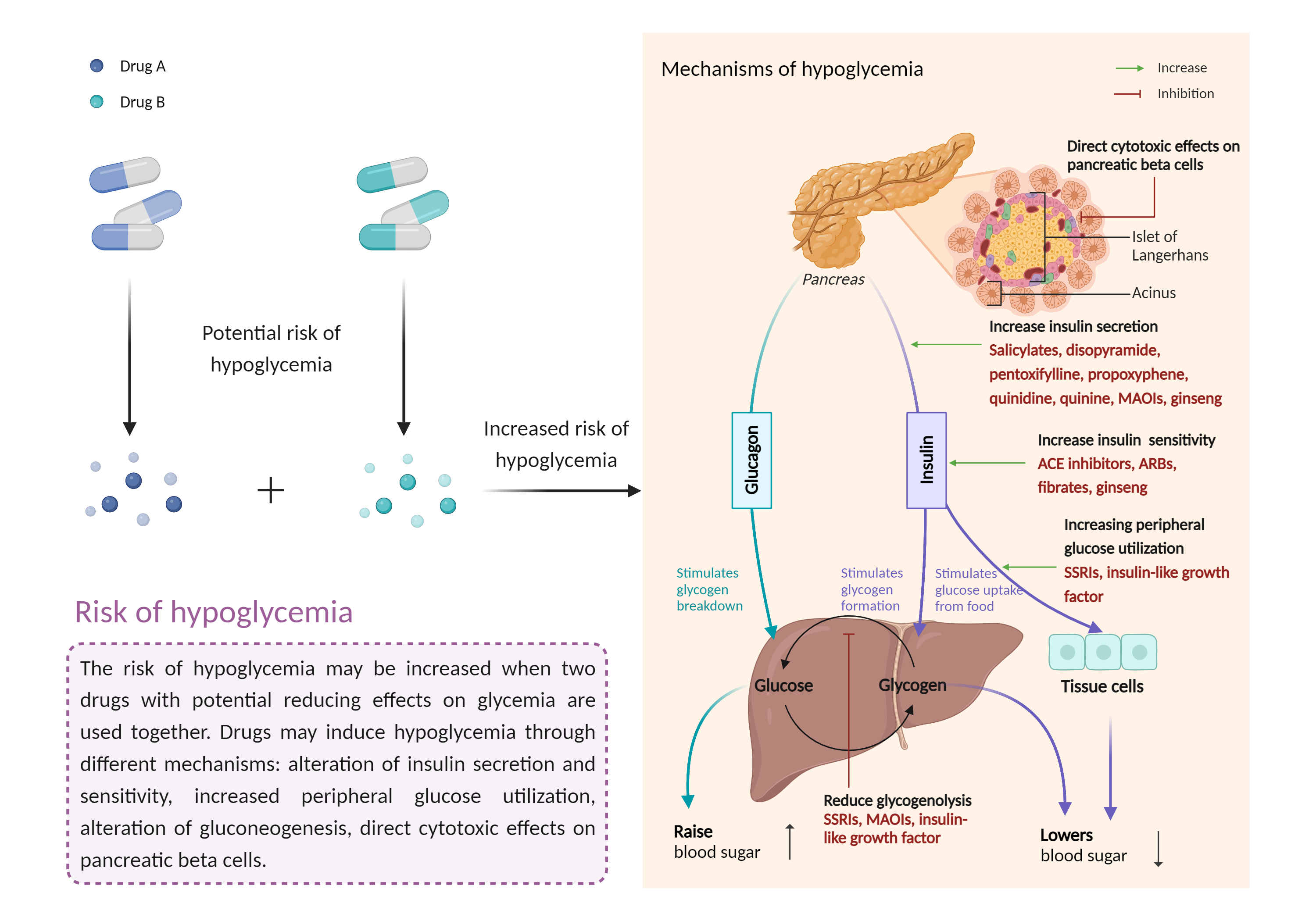
| Increased risk of hypoglycemia Click to Show/Hide Mechanism Graph | |||||||||
 |
|||||||||
| Drug Name | Metformin | Insulin glulisine | |||||||
| Mechanism | Increase the risk of hypoglycemia combined with insulin/insulin secretagogue | Insulin/insulin secretagogue | |||||||
| Key Mechanism Factor 1 | |||||||||
| Factor Name | Hypoglycemia | ||||||||
| Factor Description | Hypoglycemia is a condition in which your blood sugar (glucose) level is below the standard range. It causes irregular or rapid heartbeat, pale skin, numbness of the lips, tongue or cheeks, and sweating. | ||||||||
| Mechanism Description |
|
||||||||
| Recommended Action | |||||||||
|---|---|---|---|---|---|---|---|---|---|
| Management | A lower dosage of the insulin secretagogue or insulin may be required when used with metformin. Blood glucose should be closely monitored, and patients should be educated on the potential signs and symptoms of hypoglycemia (e.g., headache, dizziness, drowsiness, nervousness, confusion, tremor, hunger, weakness, perspiration, palpitation, tachycardia) and appropriate remedial actions to take if it occurs. Patients should also be advised to take precautions to avoid hypoglycemia while driving or operating hazardous machinery. | ||||||||