Drug General Information (ID: DDITV5XGSB)
  Drug Name Tramadol Drug Info Pimavanserin Drug Info
  Drug Type Small molecule Small molecule
  Therapeutic Class Analgesics Atypical Antipsychotics
  Structure

 Mechanism of Tramadol-Pimavanserin Interaction (Severity Level: Major)
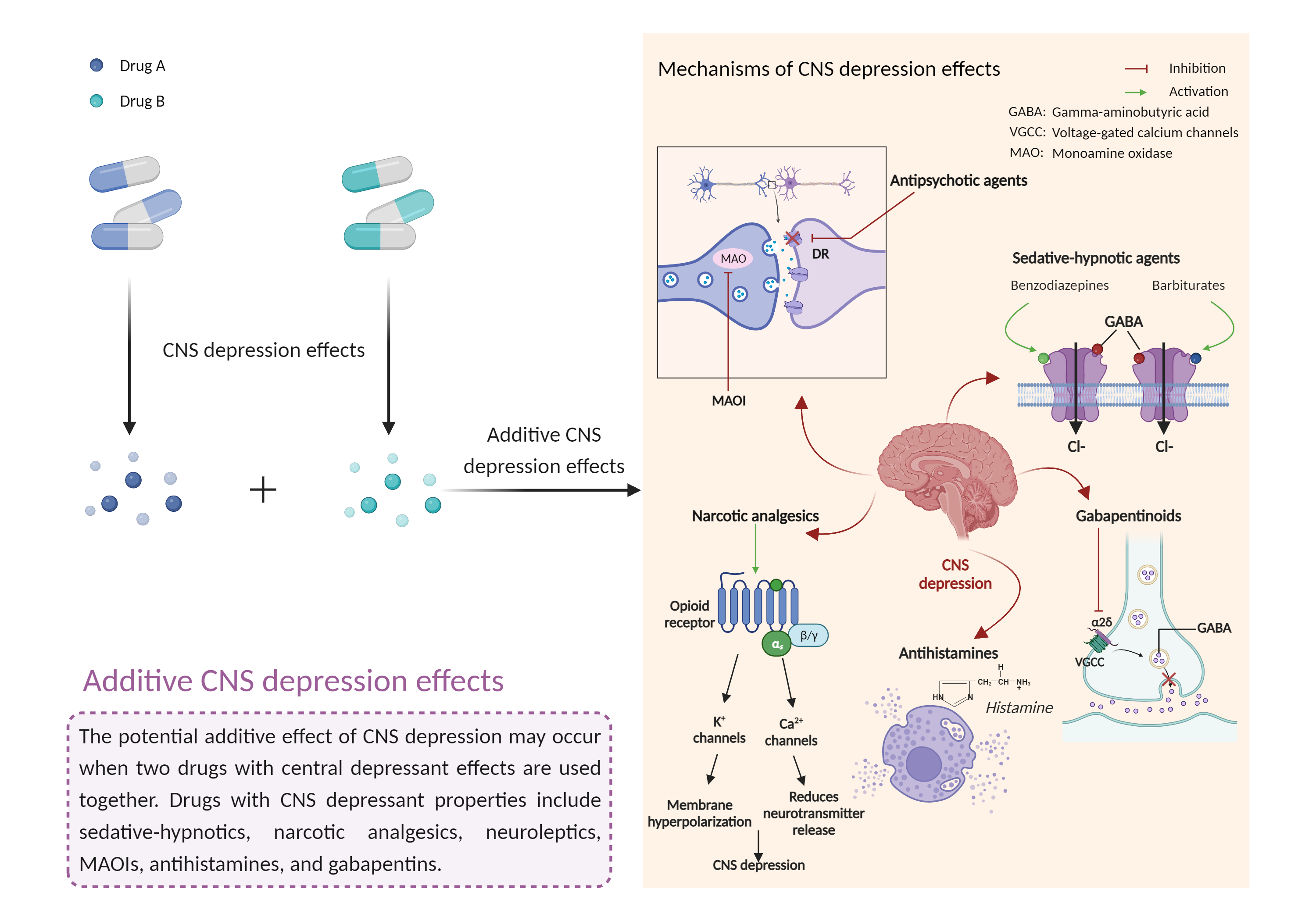
     Additive CNS depression effects Click to Show/Hide Mechanism Graph
Could Not Find 2D Structure
      Drug Name Tramadol Pimavanserin
      Mechanism 1 CNS depression effects CNS depression effects
      Key Mechanism Factor 1
Factor Name CNS depression effects
Factor Description CNS depressants are drugs that inhibit or suppress brain activity and can reduce mental and physical processes. Excessive CNS depression can lead to decreased heart rate, slow breathing (less than 10 breaths per minute), extreme confusion or loss of memory, nausea and vomiting, poor judgment, blue lips or fingertips, irritability and aggression, and clammy or cold skin.
      Mechanism Description
  • Additive CNS depression effects by the combination of Tramadol and Pimavanserin 
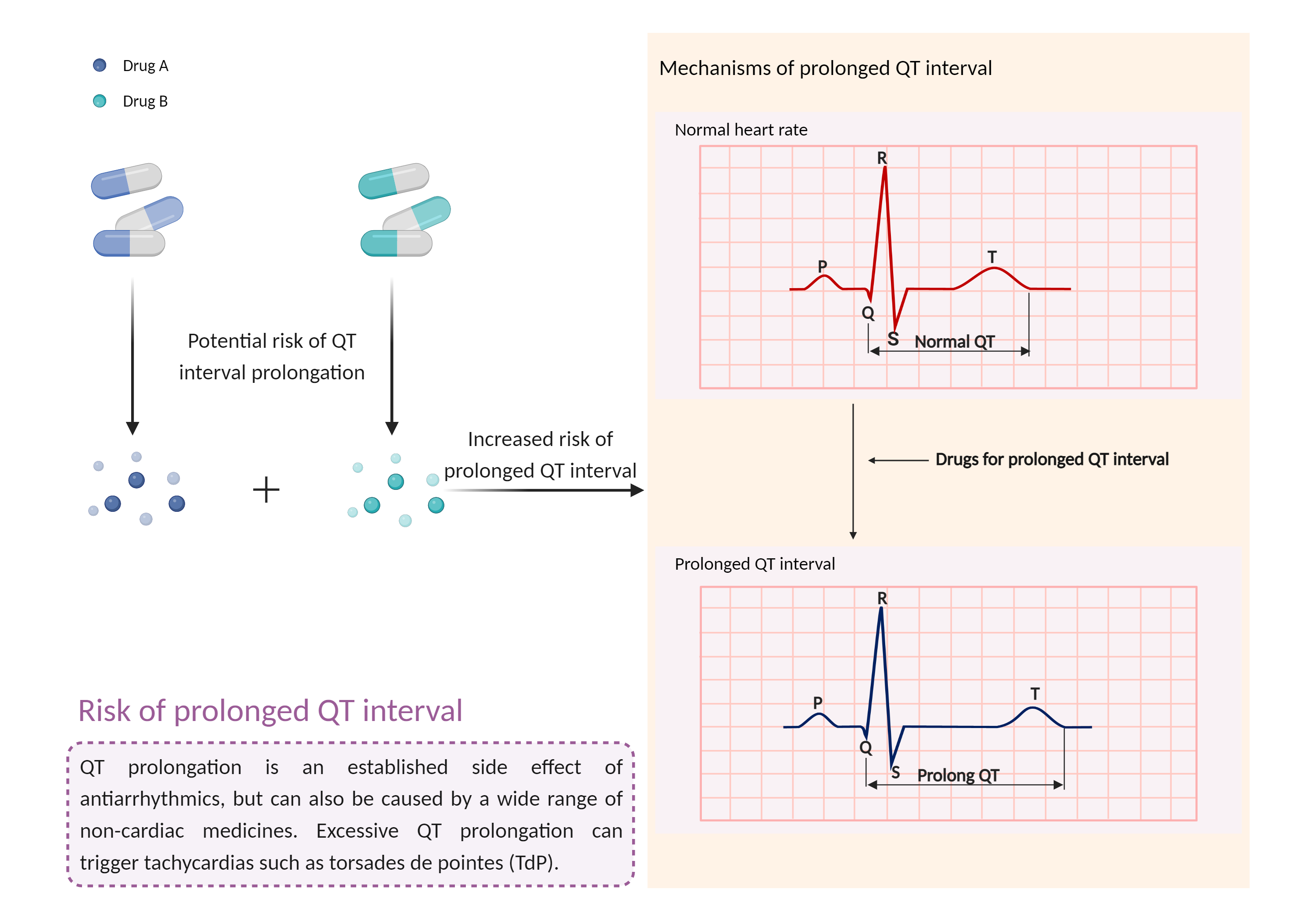
     Increased risk of prolong QT interval Click to Show/Hide Mechanism Graph
Could Not Find 2D Structure
      Drug Name Tramadol Pimavanserin
      Mechanism 2 Prolong QT interval Prolong QT interval
      Key Mechanism Factor 2
Factor Name QT interval
Factor Description Long QT syndrome is a heart signaling disorder that can cause a fast, chaotic heartbeat (arrhythmia). Many people may not exhibit symptoms, and usually the condition is detected during routine medical tests. In others, the most common symptoms include: sudden fainting, palpitations, dizziness, seizures, sudden death.
      Mechanism Description
  • Increased risk of prolong QT interval by the combination of Tramadol and Pimavanserin 

Recommended Action
      Management Coadministration of pimavanserin with tramadol should generally be avoided. If coadministration is necessary, the dosage and duration of each drug should be limited to the minimum required to achieve the desired clinical effect. Patients should have regular ECGs and be monitored for arrhythmias when the QT interval is prolonged. Persistent QTc measurements exceeding 500 msec will require suspension of pimavanserin therapy and immediate action to correct any concomitant risk factors before resuming treatment. Particular care should be exercised in patients suspected to be at an increased risk of torsade de pointes. Patients should be advised to seek prompt medical attention if they experience symptoms that could indicate the occurrence of torsade de pointes such as dizziness, lightheadedness, fainting, palpitation, irregular heart rhythm, shortness of breath, or syncope. In addition, patients should be monitored closely for signs and symptoms of respiratory depression and sedation, and advised to avoid driving or operating hazardous machinery until they know how these medications affect them.

References
1 US Food and Drug Administration "FDA warns about serious risks and death when combining opioid pain or cough medicines with benzodiazepines requires its strongest warning.".
2 Product Information. Nuplazid (pimavanserin). Accelis Pharma, East Windsor, NJ.