
Details of Drug-Drug Interaction
| Drug General Information (ID: DDIPMKYVI6) | |||||||||
|---|---|---|---|---|---|---|---|---|---|
| Drug Name | Betaxolol (ophthalmic) | Drug Info | Ephedrine | Drug Info | |||||
| Drug Type | Small molecule | Small molecule | |||||||
| Therapeutic Class | Antihypertensive Agents | Cns Stimulants | |||||||
| Structure | |||||||||
| Mechanism of Betaxolol (ophthalmic)-Ephedrine Interaction (Severity Level: Moderate) | |||||||||
|---|---|---|---|---|---|---|---|---|---|
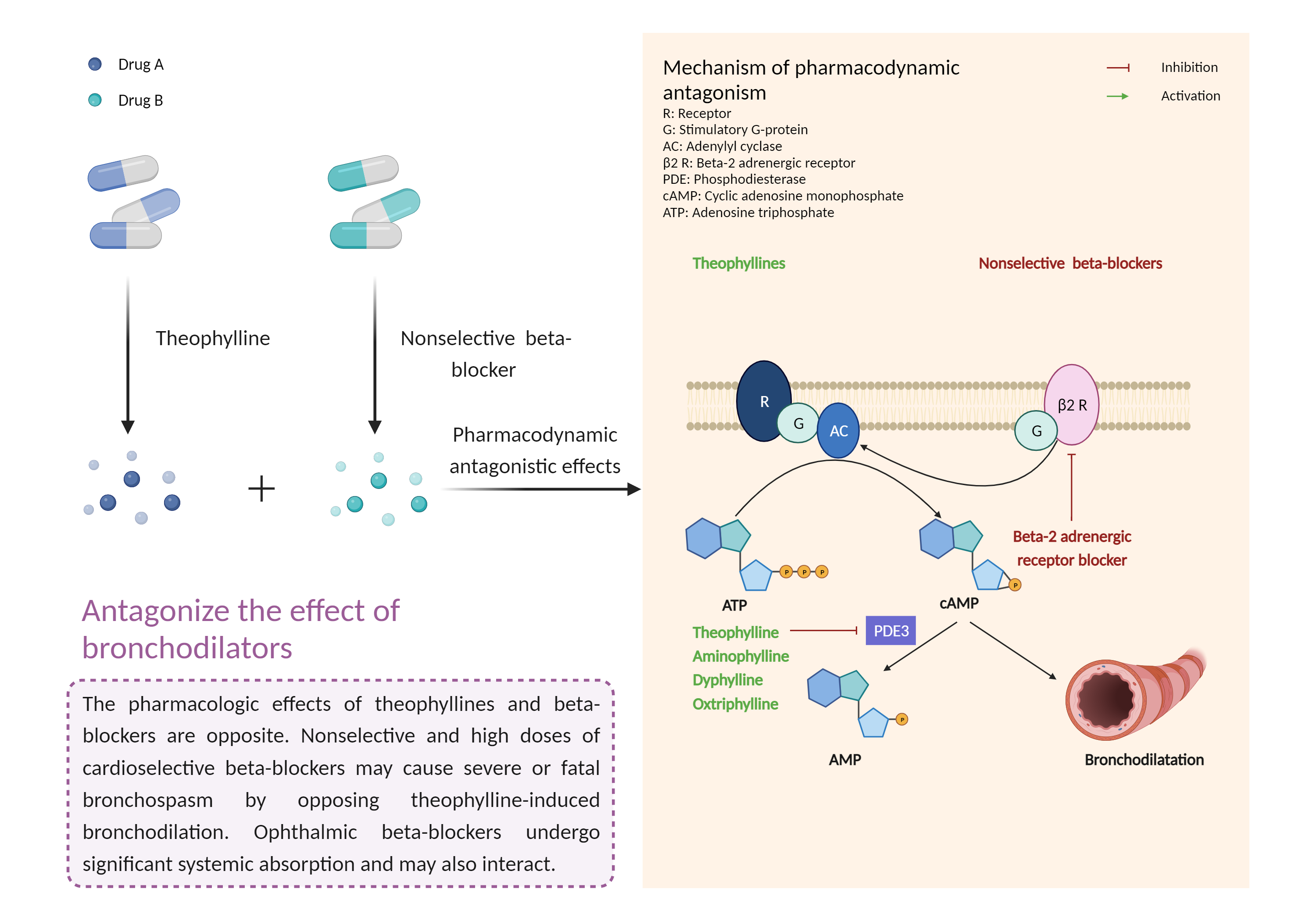
| Antagonize the effect of bronchodilators Click to Show/Hide Mechanism Graph | |||||||||
 |
|||||||||
| Drug Name | Betaxolol (ophthalmic) | Ephedrine | |||||||
| Mechanism |
Bronchospasm effects Beta-2 adrenergic receptor Antagonist |
Bronchodilator effects Beta-2 adrenergic receptor Agonist |
|||||||
| Key Mechanism Factor 1 | |||||||||
| Factor Name | Adrenergic receptor beta-2 |
×
Structure
Sequence
MGQPGNGSAFLLAPNGSHAPDHDVTQERDEVWVVGMGIVMSLIVLAIVFGNVLVITAIAKFERLQTVTNYFITSLACADLVMGLAVVPFGAAHILMKMWTFGNFWCEFWTSIDVLCVTASIETLCVIAVDRYFAITSPFKYQSLLTKNKARVIILMVWIVSGLTSFLPIQMHWYRATHQEAINCYANETCCDFFTNQAYAIASSIVSFYVPLVIMVFVYSRVFQEAKRQLQKIDKSEGRFHVQNLSQVEQDGRTGHGLRRSSKFCLKEHKALKTLGIIMGTFTLCWLPFFIVNIVHVIQDNLIRKEVYILLNWIGYVNSGFNPLIYCRSPDFRIAFQELLCLRRSSLKAYGNGYSSNGNTGEQSGYHVEQEKENKLLCEDLPGTEDFVGHQGTVPSDNIDSQGRNCSTNDSLL
|
|||||||
| Gene Name | ADRB2 | ||||||||
| Uniprot ID | ADRB2_HUMAN | ||||||||
| KEGG Pathway | hsa:154 | ||||||||
| Protein Family | G-protein coupled receptor 1 family | ||||||||
| Protein Function |
Beta-adrenergic receptors mediate the catecholamine-induced activation of adenylate cyclase through the action of G proteins. The beta-2-adrenergic receptor binds epinephrine with an approximately 30-fold greater affinity than it does norepinephrine.
Click to Show/Hide
|
||||||||
| Mechanism Description |
|
||||||||
| Recommended Action | |||||||||
|---|---|---|---|---|---|---|---|---|---|
| Management | Clinicians should be alert to the potential for diminished cardiac response when parenteral ephedrine is used in patients treated with beta-blockers, including ophthalmic formulations. Noncardioselective beta-blockers, including ophthalmic formulations, should generally be avoided in patients using ephedrine-containing preparations for bronchospastic diseases. If beta-blocker therapy is necessary, an agent with beta-1 selectivity (e.g., atenolol, metoprolol, betaxolol) is considered safer. However, caution is advised, especially with higher dosages of the beta-blocker. | ||||||||
| References | |||||||||||||||||||
|---|---|---|---|---|---|---|---|---|---|---|---|---|---|---|---|---|---|---|---|
| 1 | Product Information. Ephedrine Sulfate (ephedrine). Akorn Inc, Buffalo Grove, IL. | ||||||||||||||||||