
Details of Drug-Drug Interaction
| Drug General Information (ID: DDIPA5Q7WH) | |||||||||
|---|---|---|---|---|---|---|---|---|---|
| Drug Name | Carteolol (ophthalmic) | Drug Info | Oxtriphylline | Drug Info | |||||
| Drug Type | Small molecule | Small molecule | |||||||
| Therapeutic Class | Antihypertensive Agents | Bronchodilators | |||||||
| Structure | |||||||||
| Mechanism of Carteolol (ophthalmic)-Oxtriphylline Interaction (Severity Level: Major) | |||||||||
|---|---|---|---|---|---|---|---|---|---|
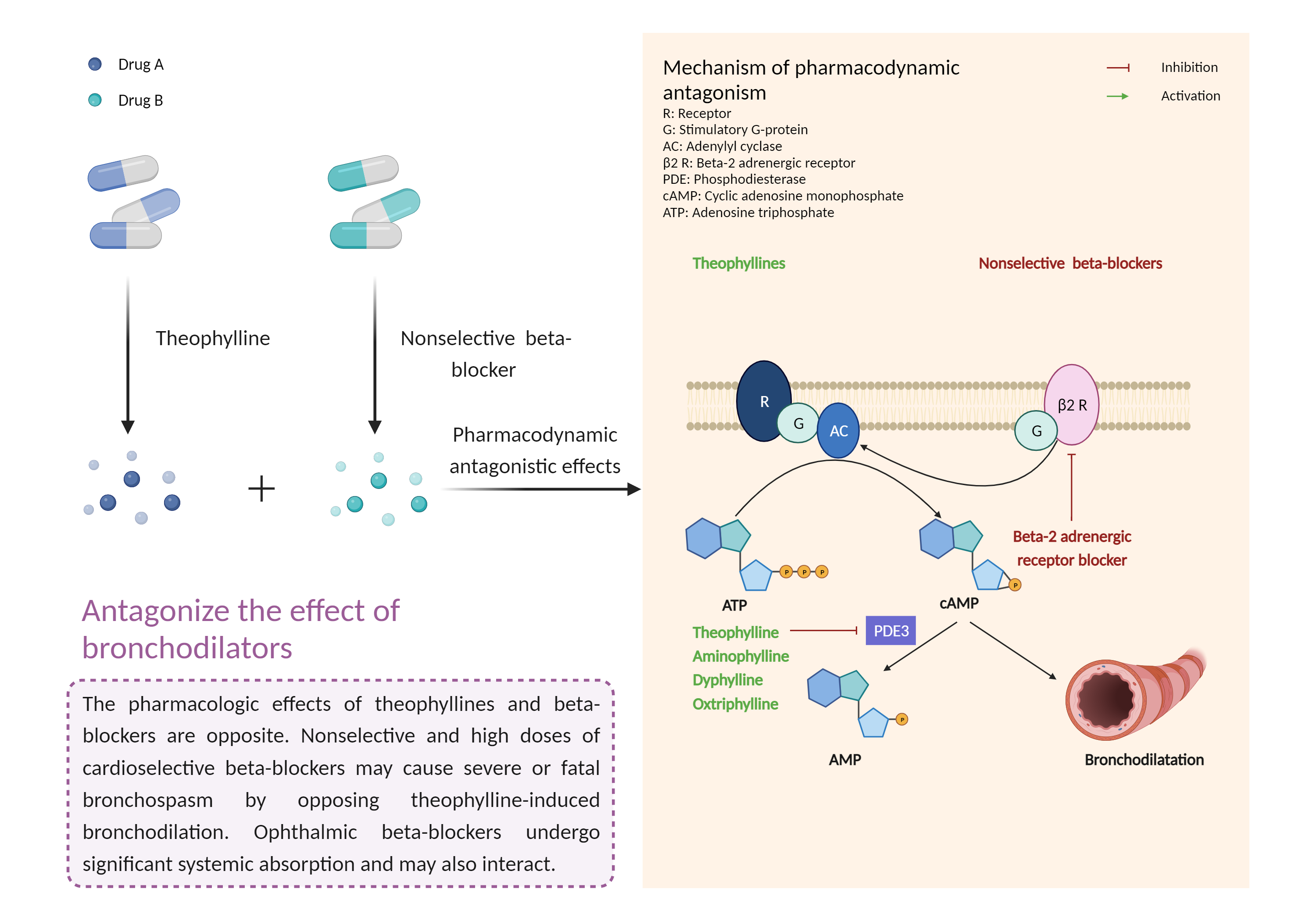
| Antagonize the effect of bronchodilators Click to Show/Hide Mechanism Graph | |||||||||
 |
|||||||||
| Drug Name | Carteolol (ophthalmic) | Oxtriphylline | |||||||
| Mechanism |
Bronchospasm effects Beta-2 adrenergic receptor Antagonist |
Bronchodilator effects Phosphodiesterase 3A Antagonist |
|||||||
| Key Mechanism Factor 1 | |||||||||
| Factor Name | Adrenergic receptor beta-2 |
×
Structure
Sequence
MGQPGNGSAFLLAPNGSHAPDHDVTQERDEVWVVGMGIVMSLIVLAIVFGNVLVITAIAKFERLQTVTNYFITSLACADLVMGLAVVPFGAAHILMKMWTFGNFWCEFWTSIDVLCVTASIETLCVIAVDRYFAITSPFKYQSLLTKNKARVIILMVWIVSGLTSFLPIQMHWYRATHQEAINCYANETCCDFFTNQAYAIASSIVSFYVPLVIMVFVYSRVFQEAKRQLQKIDKSEGRFHVQNLSQVEQDGRTGHGLRRSSKFCLKEHKALKTLGIIMGTFTLCWLPFFIVNIVHVIQDNLIRKEVYILLNWIGYVNSGFNPLIYCRSPDFRIAFQELLCLRRSSLKAYGNGYSSNGNTGEQSGYHVEQEKENKLLCEDLPGTEDFVGHQGTVPSDNIDSQGRNCSTNDSLL
|
|||||||
| Gene Name | ADRB2 | ||||||||
| Uniprot ID | ADRB2_HUMAN | ||||||||
| KEGG Pathway | hsa:154 | ||||||||
| Protein Family | G-protein coupled receptor 1 family | ||||||||
| Protein Function |
Beta-adrenergic receptors mediate the catecholamine-induced activation of adenylate cyclase through the action of G proteins. The beta-2-adrenergic receptor binds epinephrine with an approximately 30-fold greater affinity than it does norepinephrine.
Click to Show/Hide
|
||||||||
| Key Mechanism Factor 2 | |||||||||
| Factor Name | Phosphodiesterase 3A |
×
Structure
Sequence
MAVPGDAARVRDKPVHSGVSQAPTAGRDCHHRADPASPRDSGCRGCWGDLVLQPLRSSRKLSSALCAGSLSFLLALLVRLVRGEVGCDLEQCKEAAAAEEEEAAPGAEGGVFPGPRGGAPGGGARLSPWLQPSALLFSLLCAFFWMGLYLLRAGVRLPLAVALLAACCGGEALVQIGLGVGEDHLLSLPAAGVVLSCLAAATWLVLRLRLGVLMIALTSAVRTVSLISLERFKVAWRPYLAYLAGVLGILLARYVEQILPQSAEAAPREHLGSQLIAGTKEDIPVFKRRRRSSSVVSAEMSGCSSKSHRRTSLPCIPREQLMGHSEWDHKRGPRGSQSSGTSITVDIAVMGEAHGLITDLLADPSLPPNVCTSLRAVSNLLSTQLTFQAIHKPRVNPVTSLSENYTCSDSEESSEKDKLAIPKRLRRSLPPGLLRRVSSTWTTTTSATGLPTLEPAPVRRDRSTSIKLQEAPSSSPDSWNNPVMMTLTKSRSFTSSYAISAANHVKAKKQSRPGALAKISPLSSPCSSPLQGTPASSLVSKISAVQFPESADTTAKQSLGSHRALTYTQSAPDLSPQILTPPVICSSCGRPYSQGNPADEPLERSGVATRTPSRTDDTAQVTSDYETNNNSDSSDIVQNEDETECLREPLRKASACSTYAPETMMFLDKPILAPEPLVMDNLDSIMEQLNTWNFPIFDLVENIGRKCGRILSQVSYRLFEDMGLFEAFKIPIREFMNYFHALEIGYRDIPYHNRIHATDVLHAVWYLTTQPIPGLSTVINDHGSTSDSDSDSGFTHGHMGYVFSKTYNVTDDKYGCLSGNIPALELMALYVAAAMHDYDHPGRTNAFLVATSAPQAVLYNDRSVLENHHAAAAWNLFMSRPEYNFLINLDHVEFKHFRFLVIEAILATDLKKHFDFVAKFNGKVNDDVGIDWTNENDRLLVCQMCIKLADINGPAKCKELHLQWTDGIVNEFYEQGDEEASLGLPISPFMDRSAPQLANLQESFISHIVGPLCNSYDSAGLMPGKWVEDSDESGDTDDPEEEEEEAPAPNEEETCENNESPKKKTFKRRKIYCQITQHLLQNHKMWKKVIEEEQRLAGIENQSLDQTPQSHSSEQIQAIKEEEEEKGKPRGEEIPTQKPDQ
|
|||||||
| Gene Name | PDE3A | ||||||||
| Uniprot ID | PDE3A_HUMAN | ||||||||
| KEGG Pathway | hsa:5139 | ||||||||
| Protein Family | Cyclic nucleotide phosphodiesterase family | ||||||||
| Protein Function |
Cyclic nucleotide phosphodiesterase with specificity for the second messengers cAMP and cGMP, which are key regulators of many important physiological processes (PubMed:1315035, PubMed:8695850, PubMed:8155697, PubMed:25961942). Has also activity toward cUMP (PubMed:27975297). Independently of its catalytic activity it is part of an E2/17beta-estradiol-induced pro-apoptotic signaling pathway. E2 stabilizes the PDE3A/SLFN12 complex in the cytosol, promoting the dephosphorylation of SLFN12 and activating its pro-apoptotic ribosomal RNA/rRNA ribonuclease activity. This apoptotic pathway might be relevant in tissues with high concentration of E2 and be for instance involved in placenta remodeling (PubMed:31420216, PubMed:34707099).
Click to Show/Hide
|
||||||||
| Mechanism Description |
|
||||||||
| Recommended Action | |||||||||
|---|---|---|---|---|---|---|---|---|---|
| Management | Oral and ophthalmic nonselective beta-blockers (e.g., carteolol, carvedilol, levobunolol, metipranolol, nadolol, oxprenolol, penbutolol, pindolol, propranolol, sotalol, and timolol) are considered contraindicated in patients with bronchospastic diseases. Cardioselective beta-blockers should generally be avoided, or used with extreme caution if no other alternatives are available and the benefits outweigh the risks of potentially severe bronchospasm. If patients do receive this combination, they should be closely monitored for increased serum theophylline levels but decreased bronchodilatory effectiveness. | ||||||||