
Details of Drug-Drug Interaction
| Drug General Information (ID: DDIO1GET9M) | |||||||||
|---|---|---|---|---|---|---|---|---|---|
| Drug Name | Ziprasidone | Drug Info | Dexbrompheniramine | Drug Info | |||||
| Drug Type | Small molecule | Small molecule | |||||||
| Therapeutic Class | Antipsychotic Agents | Antihistamines | |||||||
| Structure | |||||||||
| Mechanism of Ziprasidone-Dexbrompheniramine Interaction (Severity Level: Moderate) | |||||||||
|---|---|---|---|---|---|---|---|---|---|
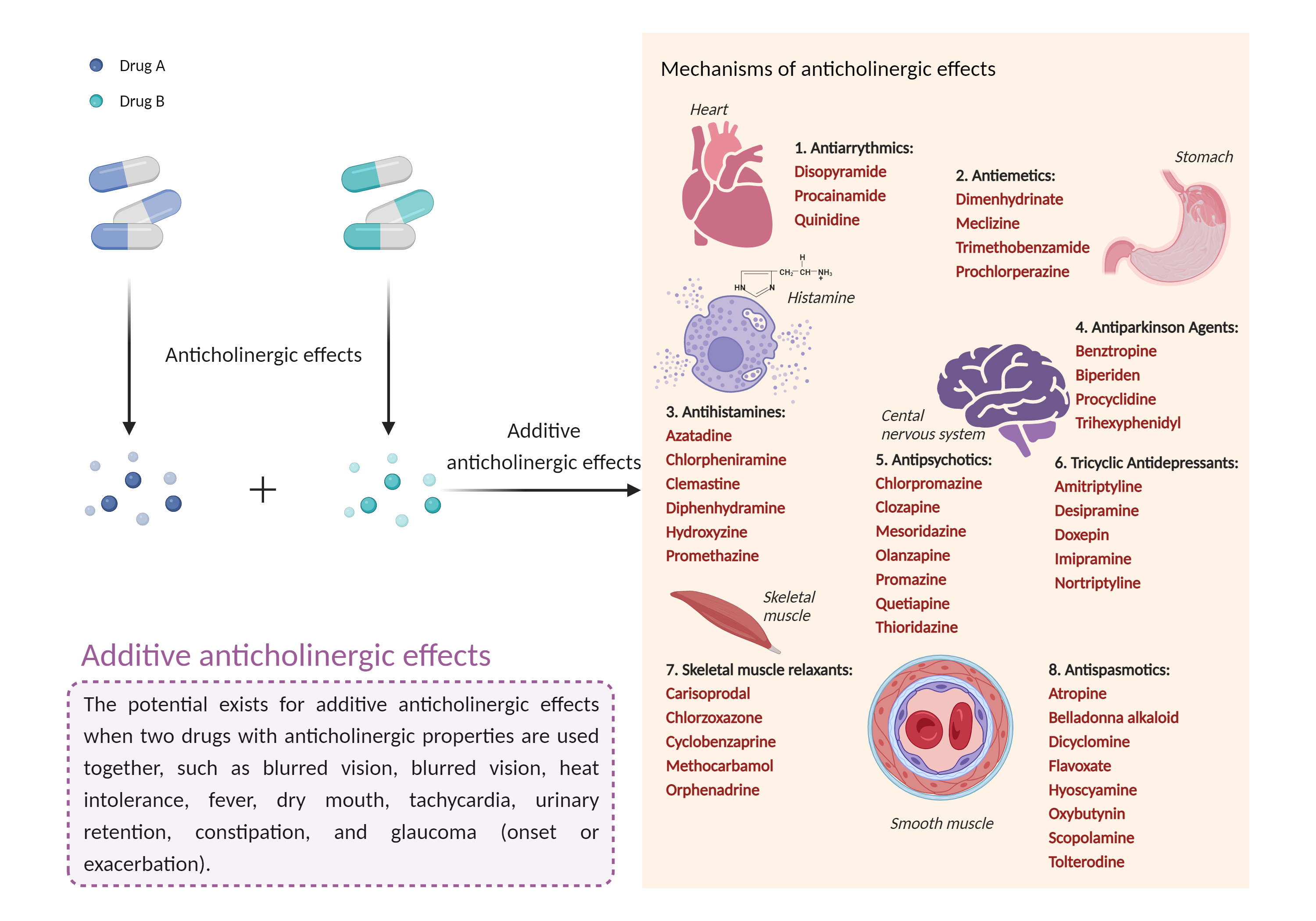
| Additive anticholinergic effects Click to Show/Hide Mechanism Graph | |||||||||
 |
|||||||||
| Drug Name | Ziprasidone | Dexbrompheniramine | |||||||
| Mechanism |
Anticholinergic effects Muscarinic acetylcholine receptor Antagonist |
Anticholinergic effects Muscarinic acetylcholine receptor Antagonist |
|||||||
| Key Mechanism Factor 1 | |||||||||
| Factor Name | Muscarinic acetylcholine receptor M | Structure Sequence | |||||||
| Protein Family | G-protein coupled receptor 1 family | ||||||||
| Protein Function |
The muscarinic acetylcholine receptor mediates various cellular responses, including inhibition of adenylate cyclase, breakdown of phosphoinositides and modulation of potassium channels through the action of G proteins. Primary transducing effect is Pi turnover.
Click to Show/Hide
|
||||||||
| Mechanism Description |
|
||||||||
| Recommended Action | |||||||||
|---|---|---|---|---|---|---|---|---|---|
| Management | Caution is advised when agents with anticholinergic properties are combined, particularly in the elderly and those with underlying organic brain disease, who tend to be more sensitive to the central anticholinergic effects of these drugs and in whom toxicity symptoms may be easily overlooked. Patients should be advised to notify their physician promptly if they experience potential symptoms of anticholinergic intoxication such as abdominal pain, fever, heat intolerance, blurred vision, confusion, and/or hallucinations. | ||||||||