
Details of Drug-Drug Interaction
| Drug General Information (ID: DDINWS54IO) | |||||||||
|---|---|---|---|---|---|---|---|---|---|
| Drug Name | Meclizine | Drug Info | Tranylcypromine | Drug Info | |||||
| Drug Type | Small molecule | Small molecule | |||||||
| Therapeutic Class | Antiallergic Agents | Antidepressants | |||||||
| Structure | |||||||||
| Mechanism of Meclizine-Tranylcypromine Interaction (Severity Level: Minor) | |||||||||
|---|---|---|---|---|---|---|---|---|---|
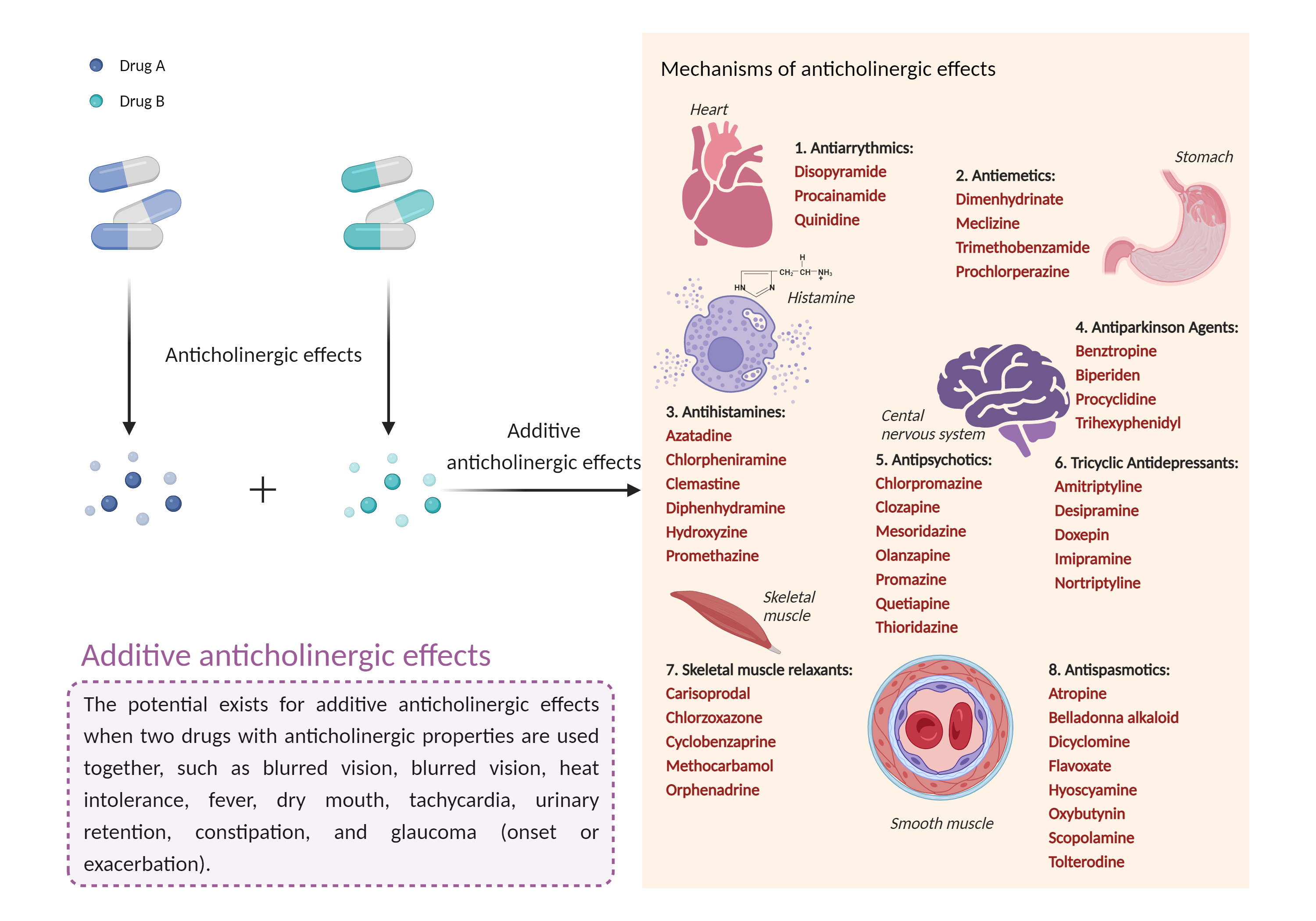
| Additive anticholinergic effects Click to Show/Hide Mechanism Graph | |||||||||
 |
|||||||||
| Drug Name | Meclizine | Tranylcypromine | |||||||
| Mechanism |
Anticholinergic effects Muscarinic acetylcholine receptor Antagonist |
Anticholinergic effects Monoamine oxidase non-selective Inhibitor |
|||||||
| Key Mechanism Factor 1 | |||||||||
| Factor Name | Muscarinic acetylcholine receptor M | Structure Sequence | |||||||
| Protein Family | G-protein coupled receptor 1 family | ||||||||
| Protein Function |
The muscarinic acetylcholine receptor mediates various cellular responses, including inhibition of adenylate cyclase, breakdown of phosphoinositides and modulation of potassium channels through the action of G proteins. Primary transducing effect is Pi turnover.
Click to Show/Hide
|
||||||||
| Key Mechanism Factor 2 | |||||||||
| Factor Name | Monoamine oxidase | Structure Sequence | |||||||
| Protein Family | Flavin monoamine oxidase family | ||||||||
| Protein Function |
Catalyzes the oxidative deamination of primary and some secondary amine such as neurotransmitters, with concomitant reduction of oxygen to hydrogen peroxide and has important functions in the metabolism of neuroactive and vasoactive amines in the central nervous system and peripheral tissues (PubMed:20493079, PubMed:8316221, PubMed:18391214, PubMed:24169519). Preferentially oxidizes serotonin (PubMed:20493079, PubMed:24169519). Also catalyzes the oxidative deamination of kynuramine to 3-(2-aminophenyl)-3-oxopropanal that can spontaneously condense to 4-hydroxyquinoline (By similarity).
Click to Show/Hide
|
||||||||
| Mechanism Description |
|
||||||||