
Details of Drug-Drug Interaction
| Drug General Information (ID: DDIMUPJLBC) | |||||||||
|---|---|---|---|---|---|---|---|---|---|
| Drug Name | Carteolol (ophthalmic) | Drug Info | Isoprenaline | Drug Info | |||||
| Drug Type | Small molecule | Small molecule | |||||||
| Therapeutic Class | Antihypertensive Agents | Cardiotonic Agents | |||||||
| Structure | |||||||||
| Mechanism of Carteolol (ophthalmic)-Isoprenaline Interaction (Severity Level: Moderate) | |||||||||
|---|---|---|---|---|---|---|---|---|---|
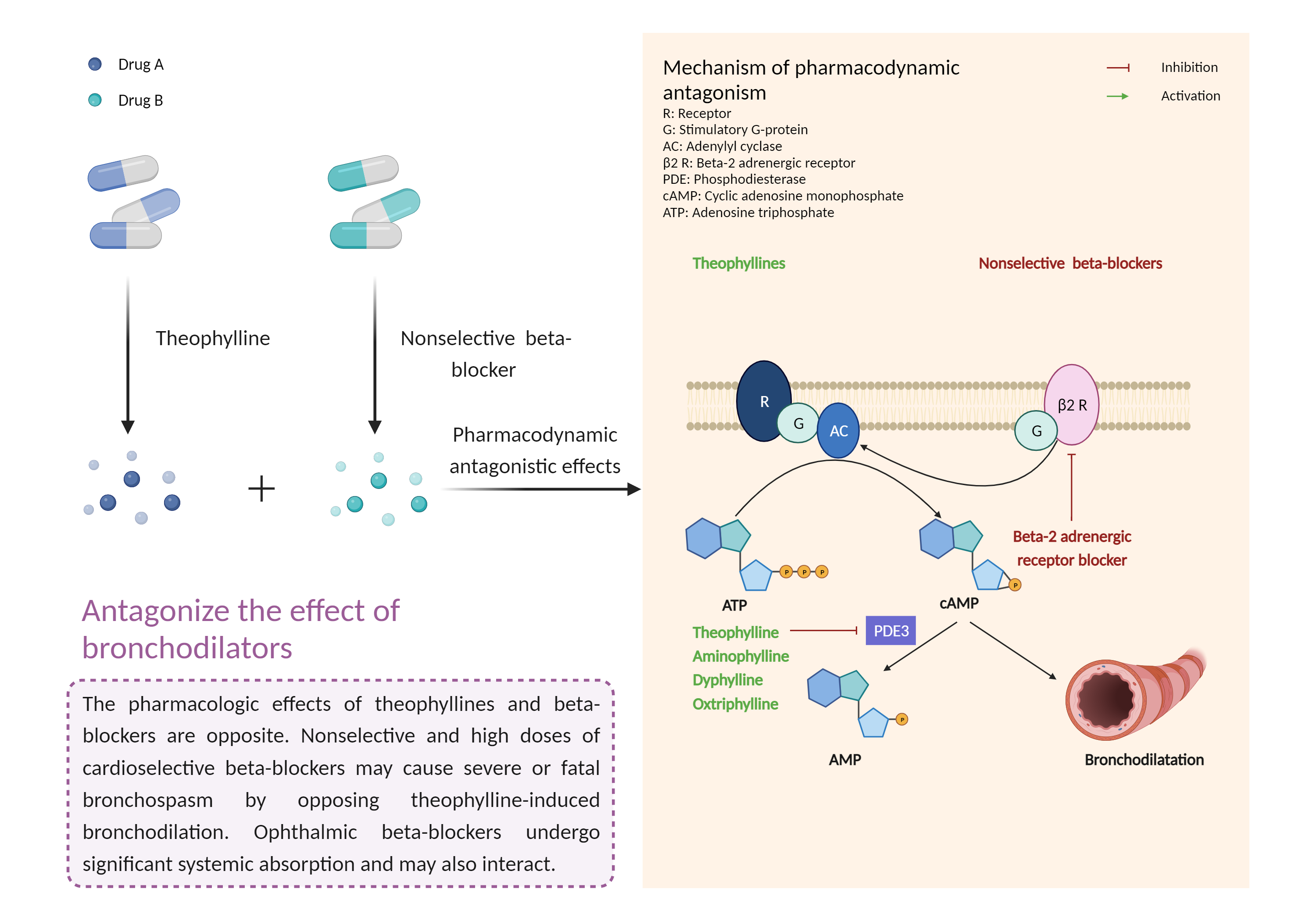
| Antagonize the effect of bronchodilators Click to Show/Hide Mechanism Graph | |||||||||
 |
|||||||||
| Drug Name | Carteolol (ophthalmic) | Isoprenaline | |||||||
| Mechanism 1 |
Bronchospasm effects Beta-2 adrenergic receptor Antagonist |
Bronchodilator effects Beta-2 adrenergic receptor Agonist |
|||||||
| Key Mechanism Factor 1 | |||||||||
| Factor Name | Adrenergic receptor beta-2 |
×
Structure
Sequence
MGQPGNGSAFLLAPNGSHAPDHDVTQERDEVWVVGMGIVMSLIVLAIVFGNVLVITAIAKFERLQTVTNYFITSLACADLVMGLAVVPFGAAHILMKMWTFGNFWCEFWTSIDVLCVTASIETLCVIAVDRYFAITSPFKYQSLLTKNKARVIILMVWIVSGLTSFLPIQMHWYRATHQEAINCYANETCCDFFTNQAYAIASSIVSFYVPLVIMVFVYSRVFQEAKRQLQKIDKSEGRFHVQNLSQVEQDGRTGHGLRRSSKFCLKEHKALKTLGIIMGTFTLCWLPFFIVNIVHVIQDNLIRKEVYILLNWIGYVNSGFNPLIYCRSPDFRIAFQELLCLRRSSLKAYGNGYSSNGNTGEQSGYHVEQEKENKLLCEDLPGTEDFVGHQGTVPSDNIDSQGRNCSTNDSLL
|
|||||||
| Gene Name | ADRB2 | ||||||||
| Uniprot ID | ADRB2_HUMAN | ||||||||
| KEGG Pathway | hsa:154 | ||||||||
| Protein Family | G-protein coupled receptor 1 family | ||||||||
| Protein Function |
Beta-adrenergic receptors mediate the catecholamine-induced activation of adenylate cyclase through the action of G proteins. The beta-2-adrenergic receptor binds epinephrine with an approximately 30-fold greater affinity than it does norepinephrine.
Click to Show/Hide
|
||||||||
| Mechanism Description |
|
||||||||
| Antagonize the effects of beta receptor blockers Click to Show/Hide Mechanism Graph | |||||||||
| Drug Name | Carteolol (ophthalmic) | Isoprenaline | |||||||
| Mechanism 2 |
Bradycardia Beta adrenergic receptor Antagonist |
Increase heart rate Beta-1 adrenergic receptor Agonist |
|||||||
| Key Mechanism Factor 2 | |||||||||
| Factor Name | Adrenergic receptor beta | Structure Sequence | |||||||
| Protein Family | G-protein coupled receptor 1 family | ||||||||
| Protein Function |
Beta-adrenergic receptors mediate the catecholamine-induced activation of adenylate cyclase through the action of G proteins. This receptor binds epinephrine and norepinephrine with approximately equal affinity. Mediates Ras activation through G(s)-alpha- and cAMP-mediated signaling. Involved in the regulation of sleep/wake behaviors (PubMed:31473062).
Click to Show/Hide
|
||||||||
| Key Mechanism Factor 3 | |||||||||
| Factor Name | Adrenergic receptor beta-1 |
×
Structure
Sequence
MGAGVLVLGASEPGNLSSAAPLPDGAATAARLLVPASPPASLLPPASESPEPLSQQWTAGMGLLMALIVLLIVAGNVLVIVAIAKTPRLQTLTNLFIMSLASADLVMGLLVVPFGATIVVWGRWEYGSFFCELWTSVDVLCVTASIETLCVIALDRYLAITSPFRYQSLLTRARARGLVCTVWAISALVSFLPILMHWWRAESDEARRCYNDPKCCDFVTNRAYAIASSVVSFYVPLCIMAFVYLRVFREAQKQVKKIDSCERRFLGGPARPPSPSPSPVPAPAPPPGPPRPAAAAATAPLANGRAGKRRPSRLVALREQKALKTLGIIMGVFTLCWLPFFLANVVKAFHRELVPDRLFVFFNWLGYANSAFNPIIYCRSPDFRKAFQRLLCCARRAARRRHATHGDRPRASGCLARPGPPPSPGAASDDDDDDVVGATPPARLLEPWAGCNGGAAADSDSSLDEPCRPGFASESKV
|
|||||||
| Gene Name | ADRB1 | ||||||||
| Uniprot ID | ADRB1_HUMAN | ||||||||
| KEGG Pathway | hsa:153 | ||||||||
| Protein Family | G-protein coupled receptor 1 family | ||||||||
| Protein Function |
Beta-adrenergic receptors mediate the catecholamine-induced activation of adenylate cyclase through the action of G proteins. This receptor binds epinephrine and norepinephrine with approximately equal affinity. Mediates Ras activation through G(s)-alpha- and cAMP-mediated signaling. Involved in the regulation of sleep/wake behaviors (PubMed:31473062).
Click to Show/Hide
|
||||||||
| Mechanism Description |
|
||||||||
| Mechanism 3 |
Bradycardia Beta-1 adrenergic receptor Antagonist |
Increase heart rate Beta-1 adrenergic receptor Agonist |
|||||||
| Key Mechanism Factor 4 | |||||||||
| Factor Name | Adrenergic receptor beta-1 |
×
Structure
Sequence
MGAGVLVLGASEPGNLSSAAPLPDGAATAARLLVPASPPASLLPPASESPEPLSQQWTAGMGLLMALIVLLIVAGNVLVIVAIAKTPRLQTLTNLFIMSLASADLVMGLLVVPFGATIVVWGRWEYGSFFCELWTSVDVLCVTASIETLCVIALDRYLAITSPFRYQSLLTRARARGLVCTVWAISALVSFLPILMHWWRAESDEARRCYNDPKCCDFVTNRAYAIASSVVSFYVPLCIMAFVYLRVFREAQKQVKKIDSCERRFLGGPARPPSPSPSPVPAPAPPPGPPRPAAAAATAPLANGRAGKRRPSRLVALREQKALKTLGIIMGVFTLCWLPFFLANVVKAFHRELVPDRLFVFFNWLGYANSAFNPIIYCRSPDFRKAFQRLLCCARRAARRRHATHGDRPRASGCLARPGPPPSPGAASDDDDDDVVGATPPARLLEPWAGCNGGAAADSDSSLDEPCRPGFASESKV
|
|||||||
| Gene Name | ADRB1 | ||||||||
| Uniprot ID | ADRB1_HUMAN | ||||||||
| KEGG Pathway | hsa:153 | ||||||||
| Protein Family | G-protein coupled receptor 1 family | ||||||||
| Protein Function |
Beta-adrenergic receptors mediate the catecholamine-induced activation of adenylate cyclase through the action of G proteins. This receptor binds epinephrine and norepinephrine with approximately equal affinity. Mediates Ras activation through G(s)-alpha- and cAMP-mediated signaling. Involved in the regulation of sleep/wake behaviors (PubMed:31473062).
Click to Show/Hide
|
||||||||
| Mechanism Description |
|
||||||||
| Recommended Action | |||||||||
|---|---|---|---|---|---|---|---|---|---|
| Management | This combination should generally be avoided. Patients who are receiving isoproterenol for cardiac conditions should be closely monitored for adequate therapeutic effect if a beta blocker is added. If no alternative exists, small doses of a B-1 selective beta-blocker (e.g., acebutolol, atenolol, betaxolol, bisoprolol, or metoprolol) may be preferable however, respiratory status should be closely monitored in patients with obstructive pulmonary disease. | ||||||||