Drug General Information (ID: DDIMR7USQ3)
  Drug Name Gabapentin Drug Info Tapentadol Drug Info
  Drug Type Small molecule Small molecule
  Therapeutic Class Analgesics Narcotic Analgesics
  Structure

 Mechanism of Gabapentin-Tapentadol Interaction (Severity Level: Major)
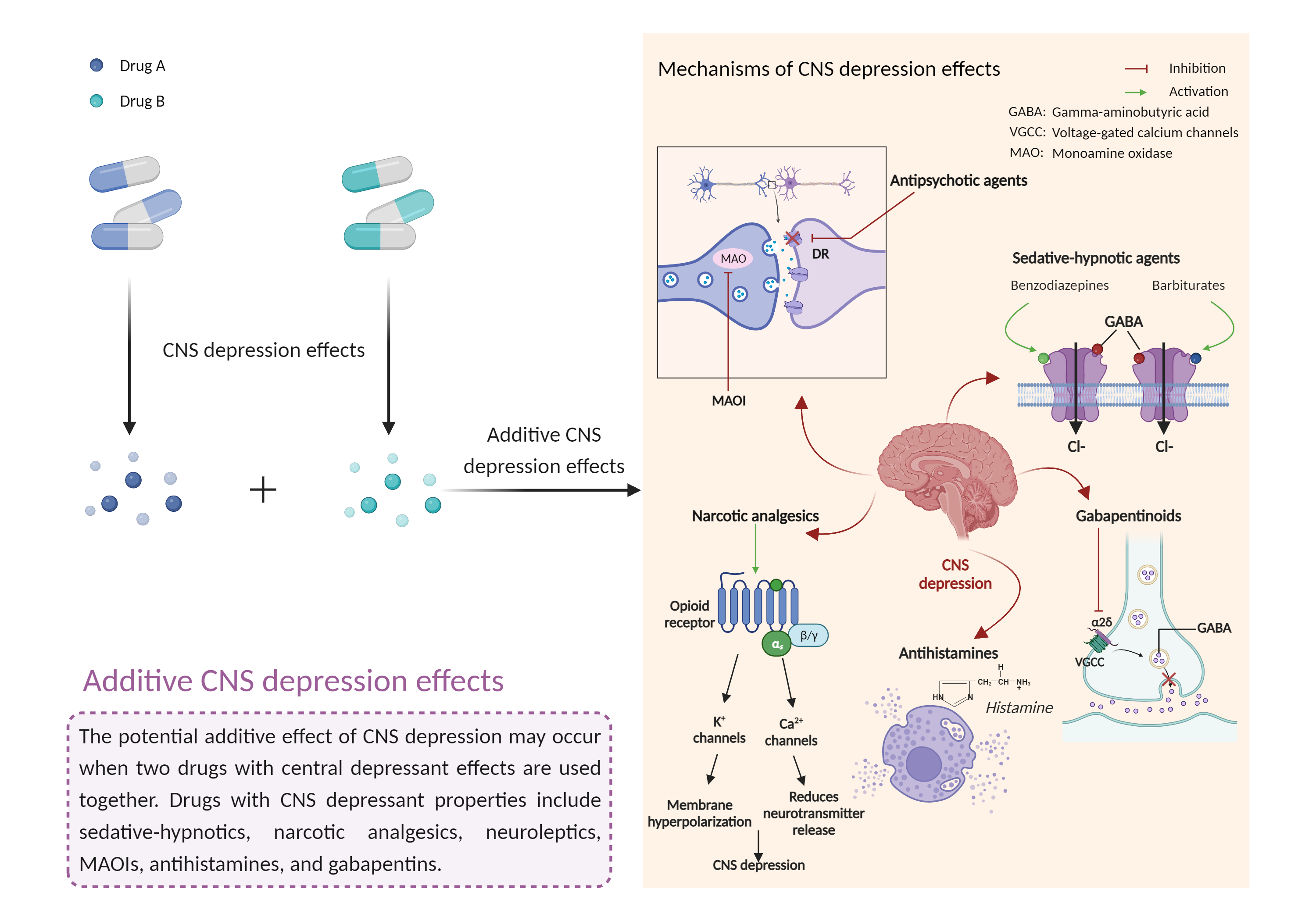
     Additive CNS depression effects Click to Show/Hide Mechanism Graph
Could Not Find 2D Structure
      Drug Name Gabapentin Tapentadol
      Mechanism CNS depression effects CNS depression effects
      Key Mechanism Factor 1
Factor Name CNS depression effects
Factor Description CNS depressants are drugs that inhibit or suppress brain activity and can reduce mental and physical processes. Excessive CNS depression can lead to decreased heart rate, slow breathing (less than 10 breaths per minute), extreme confusion or loss of memory, nausea and vomiting, poor judgment, blue lips or fingertips, irritability and aggression, and clammy or cold skin.
      Mechanism Description
  • Additive CNS depression effects by the combination of Gabapentin and Tapentadol 

Recommended Action
      Management Caution is advised when opioids and gabapentinoids are coadministered, particularly in patients with additional risk factors for respiratory depression such as advanced age, renal insufficiency, or chronic lung disease. The dosage and duration of each drug should be limited to the minimum required to achieve desired clinical effect, with cautious titration and dosage adjustments when needed. Use of additional central nervous system depressants should be avoided if possible. Patients should be monitored closely for signs and symptoms of respiratory depression and sedation, and advised to avoid driving or operating hazardous machinery until they know how these medications affect them. For patients who have been receiving extended therapy with both an opioid and a gabapentinoid (either for analgesia or seizure control) and require discontinuation of either medication, a gradual tapering of dose is advised, since abrupt withdrawal may lead to withdrawal symptoms and increased seizure risk.

References
1 Eckhardt K, Ammon S, Hofmann U, Riebe A, Gugeler N, Mikus G "Gabapentin enhances the analgesic effect of morphine in healthy volunteers." Anesth Analg 91 (2000): 185-91. [PMID: 10866910]
2 Eipe N, Penning J "Postoperative respiratory depression associated with pregabalin: a case series and a preoperative decision algorithm." Pain Res Manag 16 (2011): 353-6. [PMID: 22059207]
3 Peckham AM, Evoy KE, Covvey JR, Ochs L, Fairman KA, Sclar DA "Predictors of gabapentin overuse with or without concomitant opioids in a commercially insured U.S. population." Pharmacotherapy 38 (2018): 436-43. [PMID: 29484686]
4 Product Information. Lyrica (pregabalin). Pfizer U.S. Pharmaceuticals Group, New York, NY.
5 Product Information. Neurontin (gabapentin). Parke-Davis, Morris Plains, NJ.
6 Smith RV, Havens JR, Walsh SL "Gabapentin misuse, abuse and diversion: a systematic review." Addiction 111 (2016): 1160-74. [PMID: 27265421]
7 Government of Canada "Summary Safety Review - Gabapentin - Assessing the Potential Risk of Serious Breathing Problems.".
8 US Food and Drug Administration "FDA warns about serious breathing problems with seizure and nerve pain medicines gabapentin (Neurontin, Gralise, Horizant) and pregabalin (Lyrica, Lyrica CR) When used with CNS depressants or in patients with lung problems.".