
Details of Drug-Drug Interaction
| Drug General Information (ID: DDIKP318FB) | |||||||||
|---|---|---|---|---|---|---|---|---|---|
| Drug Name | Efavirenz | Drug Info | Glasdegib | Drug Info | |||||
| Drug Type | Small molecule | Small molecule | |||||||
| Therapeutic Class | Anti-Hiv Agents | Antineoplastics/Hedgehog Pathway Inhibitors | |||||||
| Structure | |||||||||
| Mechanism of Efavirenz-Glasdegib Interaction (Severity Level: Major) | |||||||||
|---|---|---|---|---|---|---|---|---|---|
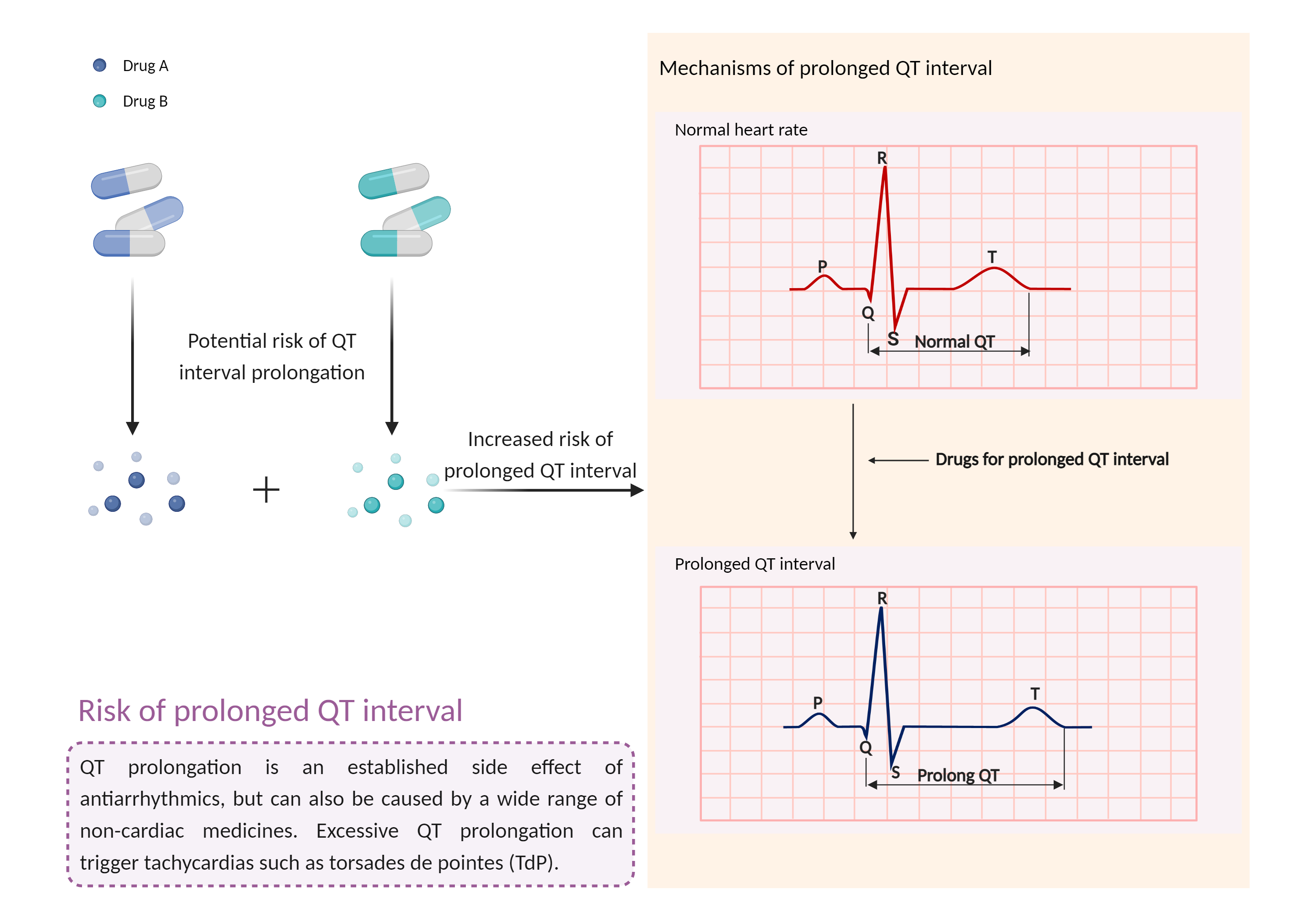
| Increased risk of prolong QT interval Click to Show/Hide Mechanism Graph | |||||||||
 |
|||||||||
| Drug Name | Efavirenz | Glasdegib | |||||||
| Mechanism | Prolong QT interval | Prolong QT interval | |||||||
| Key Mechanism Factor 1 | |||||||||
| Factor Name | QT interval | ||||||||
| Factor Description | Long QT syndrome is a heart signaling disorder that can cause a fast, chaotic heartbeat (arrhythmia). Many people may not exhibit symptoms, and usually the condition is detected during routine medical tests. In others, the most common symptoms include: sudden fainting, palpitations, dizziness, seizures, sudden death. | ||||||||
| Mechanism Description |
|
||||||||
| Recommended Action | |||||||||
|---|---|---|---|---|---|---|---|---|---|
| Management | Coadministration of glasdegib with efavirenz should generally be avoided. Consider alternatives to efavirenz. Caution and clinical monitoring are recommended if concomitant use is required. Patients should have electrocardiograms (ECGs) performed prior to initiation of treatment with glasdegib, approximately one week after initiation, and then once monthly for the next two months, although patients with risk factors may require more frequent and ongoing ECG monitoring. If QTc interval is greater than 500 msec at any time during treatment, interrupt and reduce glasdegib dosing in accordance with product labeling recommendations. Glasdegib should be permanently discontinued in patients who develop QTc interval prolongation with signs or symptoms of life-threatening arrhythmia. Because hypokalemia and hypomagnesemia are risk factors for ventricular arrhythmias, electrolyte levels should also be obtained prior to and during treatment, and any abnormalities corrected as necessary. | ||||||||
| References | |||||||||||||||||||
|---|---|---|---|---|---|---|---|---|---|---|---|---|---|---|---|---|---|---|---|
| 1 | Product Information. Daurismo (glasdegib). Pfizer U.S. Pharmaceuticals Group, New York, NY. | ||||||||||||||||||
| 2 | Product Information. Sustiva (efavirenz). DuPont Pharmaceuticals, Wilmington, DE. | ||||||||||||||||||