Drug General Information (ID: DDIKJRQ1VO)
  Drug Name Ibutilide Drug Info Adenosine Drug Info
  Drug Type Small molecule Small molecule
  Therapeutic Class Antiarrhythmic Agents Antiarrhythmic Agents
  Structure

 Mechanism of Ibutilide-Adenosine Interaction (Severity Level: Major)
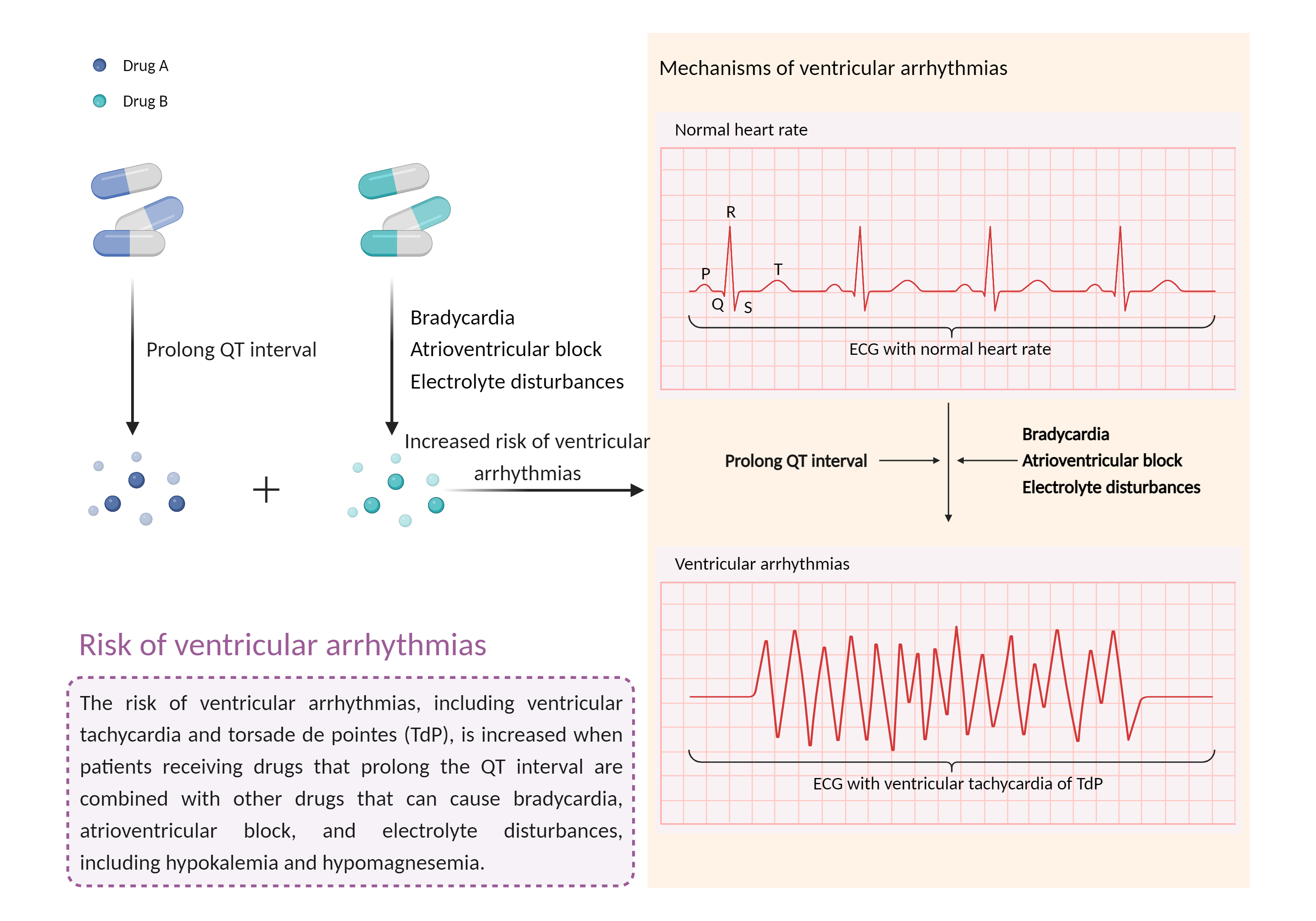
     Increased risk of ventricular arrhythmias Click to Show/Hide Mechanism Graph
Could Not Find 2D Structure
      Drug Name Ibutilide Adenosine
      Mechanism 1 Prolong QT interval Bradycardia
      Key Mechanism Factor 1
Factor Name Ventricular arrhythmias
Factor Description Ventricular arrhythmias are abnormal heart rhythms that cause your heart's lower chambers to pump blood instead of pumping it. This can limit or stop your heart from supplying blood to your body. While some of these arrhythmias are harmless and do not cause symptoms, others can have serious, even fatal, effects on your body.
      Mechanism Description
  • Increased risk of ventricular arrhythmias by the combination of Ibutilide and Adenosine 
      Mechanism 2 Prolong QT interval Delay atrioventricular conduction
      Key Mechanism Factor 2
Factor Name Ventricular arrhythmias
Factor Description Ventricular arrhythmias are abnormal heart rhythms that cause your heart's lower chambers to pump blood instead of pumping it. This can limit or stop your heart from supplying blood to your body. While some of these arrhythmias are harmless and do not cause symptoms, others can have serious, even fatal, effects on your body.
      Mechanism Description
  • Increased risk of ventricular arrhythmias by the combination of Ibutilide and Adenosine 

Recommended Action
      Management Adenosine should be used with caution in patients receiving drugs that are known to prolong the QT interval. Adenosine should be discontinued immediately if severe bradycardia occurs.

References
1 Celiker A, Tokel K, Cil E, Ozkutlu S, Ozme S "Adenosine induced torsades de pointes in a child with congenital long QT syndrome." Pacing Clin Electrophysiol 17 (1994): 1814-7. [PMID: 7838793]
2 Cerner Multum, Inc. "UK Summary of Product Characteristics.".
3 Teodorovich N, Margolin E, Kogan Y, Paz O, Swissa M. Torsades de pointes after adenosine administration. J Electrocardiol. 2016;49(2):171-173. [PMID: 26850499]
4 Harrington GR, Froelich EG "Adenosine-induced torsades de pointes." Chest 103 (1993): 1299-1301. [PMID: 8131497]
5 Mallet ML "Proarrhythmic effects of adenosine: a review of the literature." Emerg Med J 21 (2004): 408-10. [PMID: 15208219]
6 Michalets EL, Williams CR "Drug interactions with cisapride: clinical implications." Clin Pharmacokinet 39 (2000): 49-75. [PMID: 10926350]
7 Tachakra SS, Robinson S "Adenosine and cardiac arrhythmias." BMJ 305 (1992): 422. [PMID: 1392935]
8 Wesley RC Jr, Turnquest P "Torsades de pointe after intravenous adenosine in the presence of prolonged QT syndrome." Am Heart J 123 (1992): 794-6. [PMID: 1539535]