
Details of Drug-Drug Interaction
| Drug General Information (ID: DDIKFEBLMC) | |||||||||
|---|---|---|---|---|---|---|---|---|---|
| Drug Name | Lepirudin | Drug Info | Deferasirox | Drug Info | |||||
| Drug Type | Small molecule | Small molecule | |||||||
| Therapeutic Class | Antithrombotic Agents | Chelating Agents | |||||||
| Structure | |||||||||
| Mechanism of Lepirudin-Deferasirox Interaction (Severity Level: Major) | |||||||||
|---|---|---|---|---|---|---|---|---|---|
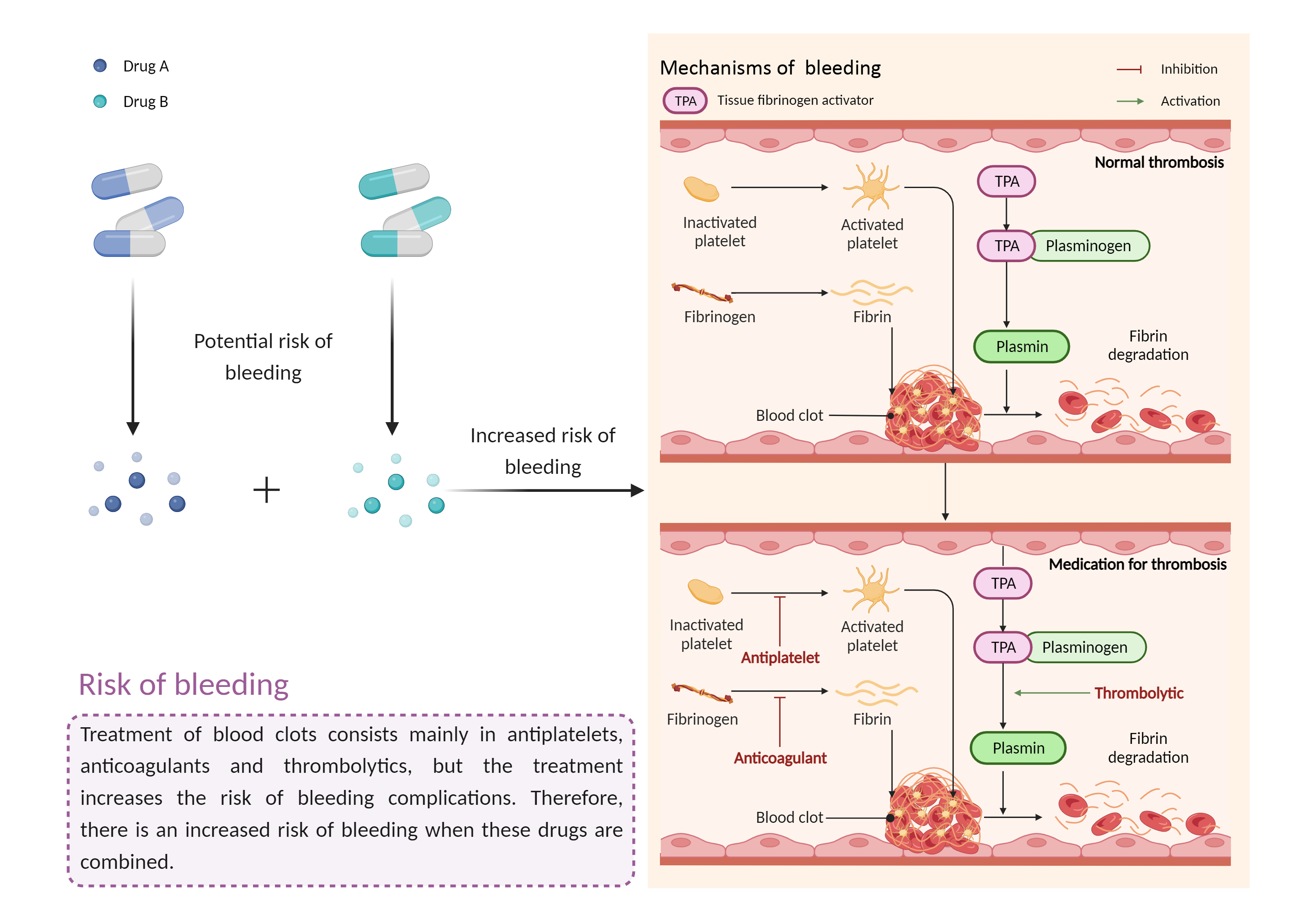
| Increased risk of bleeding Click to Show/Hide Mechanism Graph | |||||||||
 |
|||||||||
| Drug Name | Lepirudin | Deferasirox | |||||||
| Mechanism |
Risk of bleeding Anticoagulant |
Risk of bleeding GI mucosal injury/bleeding risk |
|||||||
| Key Mechanism Factor 1 | |||||||||
| Factor Name | Bleeding | ||||||||
| Factor Description | Patients may be at risk for bleeding when the outcome of a disease or disease treatment confounds the standard mechanisms for maintaining hemostasis. Signs or symptoms of abnormal bleeding include: bleeding that takes a long time to stop (including nosebleeds, bleeding gums, bleeding from cuts and abrasions, and menstrual bleeding); severe unexplained bruising, or bruising that becomes larger; blood in the urine or stool, etc. | ||||||||
| Mechanism Description |
|
||||||||
| Recommended Action | |||||||||
|---|---|---|---|---|---|---|---|---|---|
| Management | Caution is advised if deferasirox is prescribed with drugs that have known ulcerogenic or hemorrhagic potential, including but not limited to NSAIDs, salicylates, corticosteroids, oral bisphosphonates, platelet inhibitors, anticoagulants, thrombolytic agents, or agents that commonly cause thrombocytopenia. Patients should be advised to contact their physician if they develop potential signs and symptoms of gastrointestinal injury such as abdominal pain, bloating, dizziness, lightheadedness, hematemesis, anorexia, and/or black, tarry stools. | ||||||||
| References | |||||||||||||||||||
|---|---|---|---|---|---|---|---|---|---|---|---|---|---|---|---|---|---|---|---|
| 1 | Product Information. Brukinsa (zanubrutinib). BeiGene USA, Inc, San Mateo, CA. | ||||||||||||||||||
| 2 | Product Information. Exjade (deferasirox). Novartis Pharmaceuticals, East Hanover, NJ. | ||||||||||||||||||